



Свяжитесь с нами
-
3-2-1003 Software park, Weifang Hi-tech Zone, Шаньдун, Китай
- +8615095247272
- sales@uleengen.com
-


Top 7 Causes of Gas Generator Failure: Troubleshooting Guide


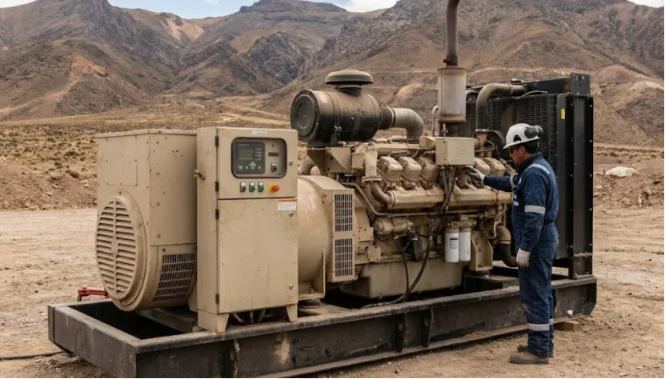
Working in the tough industrial areas of South America is hard work. You might be digging for minerals high up in the Andes mountains. Or maybe you are drilling for oil deep in the Amazon basin. In these places, having steady power is not just a nice thing to have. It is a must. It is the backbone of your whole job.
Imagine this. You are miles away from the nearest city grid. If your generator goes quiet, everything stops. You stop making products. Your safety gear might stop working. You start losing money every single minute.
Most people think that when a generator breaks, the machine must be bad. But that is usually not true. The machine is often fine. The real problem is usually small. Maybe someone skipped a maintenance check. Maybe the environment is too harsh. Gas generator troubleshooting helps you find these small problems. You don’t need to be a master mechanic. You just need to know where to look before the lights go out.
This is why Uleengen focuses so much on strong design. They are based in the Weifang Hi-tech Zone in Shandong province. They are not just a factory that puts parts together. They are experts in power solutions. They take strong engines, like the Cummins 6LTAA8.9-NG model, and build them into systems that can handle real work. They follow strict ISO standards. They build units to run, not to sit and look pretty. When you look at their list of parts, you see things like shock absorbers and motorized breakers. This tells you that they know your job site is rough.
Is Your Battery Actually Dead?
The biggest reason a generator won’t start is very simple. It has nothing to do with the gas. It has nothing to do with the engine parts. It is the battery. It sits there quietly. You might ignore it. Then, when you need it, it is dead.
If you look at your control panel, you might see a “Low Battery Volt” alarm. Or maybe you see a “Start Failure” alarm. This is your sign. The battery is the problem.
In the old days, batteries were a pain. You had to check the water levels all the time. If you forgot, they dried out. Then they died. You should look for systems that use maintenance-free starting batteries. These are much better. They mean your crew has one less thing to worry about every day.
You also need to watch the charging alternator volts on your screen. Sometimes a unit sits still for weeks. If it does not have a charger, the battery loses power on its own. Then, when you try to turn it on, the DC24 electric starter won’t work. It won’t have the power to turn the engine over.
Are You Ignoring Low Oil Pressure?
Oil is like the blood of your generator. If the pressure drops, bad things happen fast. Friction builds up inside. The engine can seize. That means it locks up. A machine that costs a lot of money turns into a heavy block of useless metal.
Your controller is smart. It watches this for you. It will trigger a “Low Oil Pressure” alarm to stop the engine before it breaks.
You need to know how much oil your machine needs. For example, the 150KW model with the Cummins engine has a lubrication system capacity of 27.6 liters. That is a specific amount. If you are running low, you are taking a big risk.
Make it a habit to look for leaks. Check around the Oil Drain Valve. A small drip today can mean a shutdown tomorrow. Also, look at the “Lub. Oil pressure” numbers on your LED display. Watch them closely. If the numbers start to go down, fix it before the machine stops itself.
Is the Cooling System Handling the Heat?
Summer in South America can be very hot. Engines also make a lot of heat when they run. If that heat stays inside, the system has to protect itself. It quits. A “Высокая температура двигателя” shutdown is a very common problem in hot places.
You have to look at the radiator specs. Many standard radiators are rated for an ambient temperature of 40°C. That is okay for many places. But in direct sun or a small room, it gets hotter than that.
This is why a radiator design temperature of 50°C is a big help. It gives you a safety buffer. It handles the heat better.
You should also check your coolant. This machine uses a closed water-cooled system. Keep the levels right. Also, look at the radiator fins. Make sure they are not full of dust or leaves. If the air can’t flow through, the water can’t cool down. Then your power cuts out.
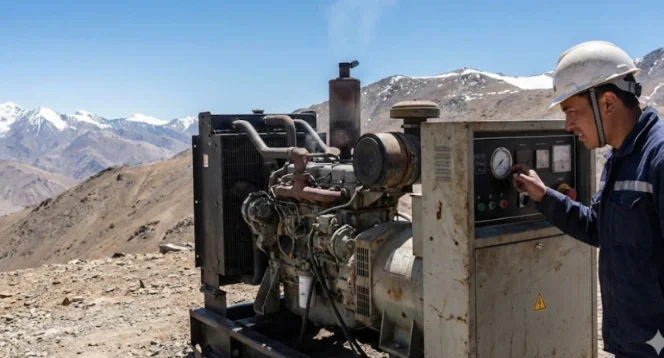
Is the Gas Supply Consistent?
Diesel fuel sits in a tank. It is easy. Gas is different. It often comes from a pipeline. Or maybe it comes from a biogas setup. The engine is picky. It needs a specific diet to run smooth.
If the fuel quality changes, the engine gets confused. It might hunt for a steady speed. Or it might just die. For models that use pipeline natural gas, the Methane content needs to be 90% or higher. If you are using gas from a wellhead, the methane might be lower. You might need to change the setup.
Pressure is the other big killer. The gas supply pressure has a limit. The maximum inlet is 50 kPa. If your regulator breaks and sends high pressure into the line, the system won’t run. You need to make sure your gas supply matches what the machine needs. It consumes about 0.286 cubic meters or less per kilowatt-hour.
Have You Accounted for High Altitude?
If you work in the Andes, you are fighting physics. If you are anywhere above sea level, pay attention. The air is thinner up there. This means there is less oxygen to burn fuel. There is also less air to cool the engine.
The standard ratings you see on the paper are for an altitude of 1000 meters. Once you go higher than that, the rules change. For every 300 meters you climb above 1000 meters, you lose 4% of your power.
Let’s say you are at 2500 meters. If you try to pull the full 150KW from the generator, you will overload it. The machine isn’t broken. It just can’t breathe. You have to do the math. You have to figure out this “de-rating” before you hook up your equipment.
Are You Overloading the System?
It is tempting to plug in “just one more” tool. But every generator has a limit. When you cross it, the 400A Breaker will trip. Or the controller will shout an “Over Current” alarm.
You need to know the difference between the two power ratings. First, there is Prime Power (PRP). This is for running all the time. Unlimited hours. This is your marathon pace.
Then there is Standby Power (ESP). This is a sprint. The engine can only run up to 200 hours per year at this level.
There is a 10% overload capability. But you can only use it for 1 hour out of every 12 hours. If you push the machine into overload all the time, you will break it. You aren’t just tripping breakers. You are hurting the inside of the alternator.
Are You Listening to the Controller?
Modern generators are smart. They talk to you. The control panel is the brain. It might be the Smartgen HGM6120 or the Deepsea DSE8610. It uses digital tech to tell you what is going on.
Operators often ignore the screen. They wait until the lights go out. Don’t do that. The LCD display gives you real-time numbers. It tells you generator volts, amps, and frequency. It tells you the engine speed RPM.
You can even use the “three remote” functions. This means remote control, remote measure, and remote communication. You can check on a unit in a remote jungle without leaving your office. If you see an alarm for “Under/Over Generator Voltage” or “Charge fail”, fix it now. The controller is trying to save you money.
Часто задаваемые вопросы
Q1: What is the acceptable voltage deviation for these gas generators?
A: The voltage stays very steady. The steady-state voltage deviation is less than ±5%. This is good. It ensures that your sensitive electronic tools won’t get fried by power spikes.
Q2: Are these generators loud enough to disturb a work camp?
A: It depends on the box it comes in. The open type is loud. It hits about 96 dB(A) at 7 meters. But the silent type is much quieter. It drops down to 75 dB(A). This is much better for sites where people need to sleep.
Q3: How much gas does the 150KW model actually consume?
A: At full load, the gas consumption is rated at ≤0.286 NM3/kw.h. If you look at volume per hour, that translates to less than 42.9 cubic meters per hour.
Q4: Will the generator shut down if the speed gets too high?
A: Yes, it will. The controller has alarms for “Over and Under Speed”. This protects the engine. It stops mechanical damage if the governor fails or the load changes too fast.
Q5: How big is the silent version of the 150KW generator?
A: The silent type unit is bigger than the open one. It is 3700mm long. It is 1200mm wide. And it is 1900mm high. It is larger because it has a sound-proof box around it.


