
新闻
新闻 行业新闻 Oilfield Generators: Diesel vs Gas for Remote Projects

目录

    Oilfield Generators: Diesel vs Gas for Remote Projects

    2026-06-19 00:00:33
    通过管理员

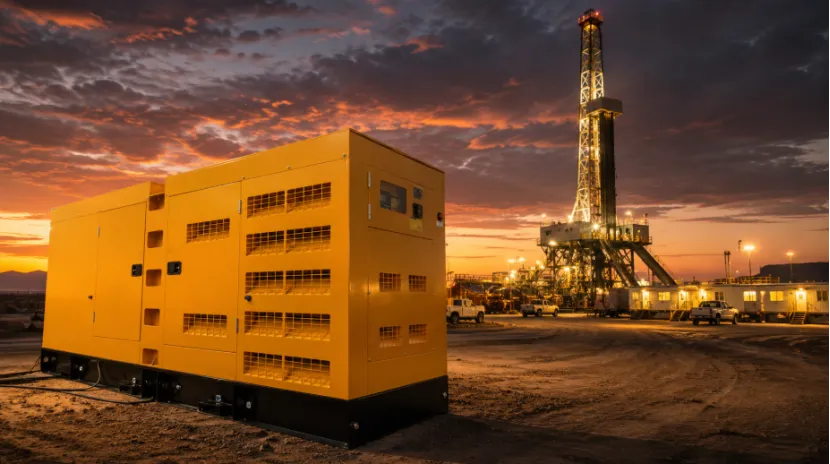
    Containerized yellow generator set at an oil drilling rig at dusk

    Oilfield power is rarely simple. A drilling site may sit hours from the nearest grid line. A gas station may run day and night with pumps, lighting, control panels, heaters, compressors, and workers’ living areas all drawing power at the same time. In this kind of place, oilfield generator sets are not just backup equipment. They are often the main power source for remote energy projects.

    The real question is not only whether you should choose a diesel generator for oilfield work or a gas generator for oilfield operation. You also need to check fuel access, runtime, load changes, site safety, maintenance distance, and whether your project needs generator synchronization for oilfield expansion later.

    Why Do Oilfield Projects Need Dedicated Generator Sets?

    Oilfield sites place heavier stress on power equipment than ordinary commercial buildings. Loads change fast. Dust, heat, rain, and vibration are common. If a genset stops during a key operation, the cost is not just fuel or repair. It may delay drilling, damage equipment, or stop production.

    Remote Sites Need Stable Power

    For a remote oilfield power supply, the grid may be weak or not available at all. That makes an off-grid generator set a practical choice. A remote drilling site generator must handle long working hours, sudden motor starts, and basic site power at the same time. Small errors in sizing can become big problems in the field. A pump that starts hard at night does not care what the catalog said.

    Loads Are Heavy and Not Always Predictable

    Oilfield loads often include drilling tools, mud pumps, lighting towers, control cabins, water systems, welding machines, and camp power. Some run all day. Some start for only a few minutes but draw high current. That is why generator sets for drilling sites should be selected by real load behavior, not by rated kW alone.

    When Is a Diesel Generator Better for Oilfield Use?

    A diesel generator is often chosen for rough, remote, and temporary work. Diesel fuel can be stored on site, and that matters when the project is far from gas pipelines.

    Diesel Works Well Where Fuel Storage Is Easier

    A. diesel generator for oilfield projects makes sense when diesel delivery is more reliable than gas supply. It is also easier to move between field camps, test wells, and temporary drilling locations. For short-term work, a mobile trailer generator set can save time because it can be moved as the job moves.

    Diesel Handles High Loads Well

    A diesel generator is usually a good fit for heavy starting loads and long working days. It can serve pumps, compressors, construction equipment, and camp loads. For harsh weather or outdoor sites, a containerized generator set can help protect the genset from dust, rain, and site impact. That little steel box may not look exciting, but on a muddy oilfield road, it earns its keep.

    When Does a Gas Generator for Oilfield Projects Make Sense?

    A gas generator for oilfield projects can be the better choice when your site has stable gas resources. This is common in natural gas stations, gas gathering areas, and oilfields with usable associated gas.

    Gas Supply Can Reduce Diesel Transport Pressure

    A natural gas generator for oilfield use can cut the need for regular diesel transport if the site has reliable gas pressure and gas quality. For generator sets for natural gas stations, this can be a strong advantage. You still need to check gas purity, pressure, heating value, and safety design before choosing the system.

    Gas Can Suit Long Runtime Projects

    A gas genset can work well as a continuous operation generator when the gas source is steady. It may also be attractive when cleaner combustion and lower noise are important. But it is not always the safer answer. If the gas line is unstable, diesel may still be the more dependable option.

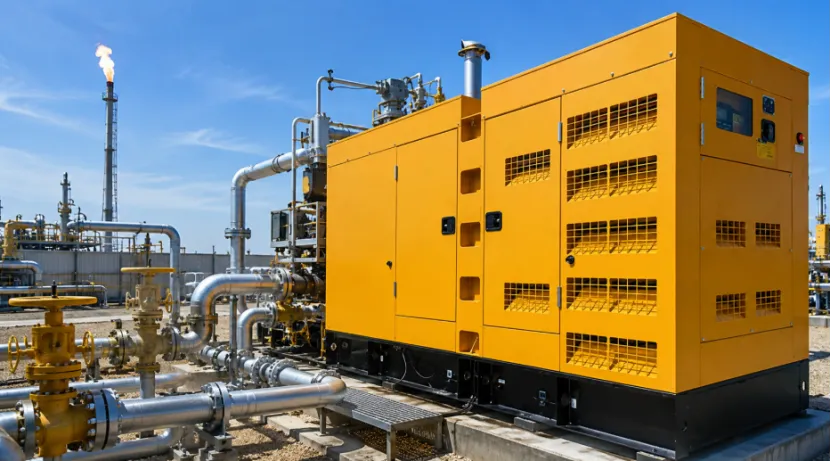
    Yellow natural gas generator connected to pipelines at an oilfield facility

    How Should You Compare Diesel and Gas Power?

    Choosing between diesel and gas should start with the site, not the machine. For remote energy projects, fuel access often decides the direction before price does.

    Compare Fuel, Runtime, and Safety

    A diesel generator gives you fuel independence because diesel can be stored on site. A gas generator can run for long periods if the gas supply remains stable. Diesel storage needs spill control and fire planning. Gas systems need leak detection, ventilation, and pressure control. For oilfield power supply, both choices can work, but each one has different risks.

    Think About Maintenance Access

    If the project is far from a service team, choose a genset with easy maintenance access, common filters, clear control logic, and strong protection systems. An ATS机柜 is useful when automatic transfer is needed. For larger sites, synchronization cabinet planning becomes more important than many buyers first think.

    Why Does Generator Synchronization Matter for Oilfields?

    Large oilfield bases rarely rely on one machine forever. Loads grow. New pumps arrive. A camp expands. Then one generator becomes two, or three, or more.

    Parallel Systems Support Bigger Loads

    Generator synchronization for oilfield projects allows several gensets to work together. Synchronized generator sets share the load and reduce the risk caused by relying on one unit. A parallel generator system also lets you stop one unit for service while others keep key loads running.

    Synchronization Helps with Future Expansion

    For oilfield backup power, synchronization can give you redundancy. For production sites, it can help match power output to real load. That means less waste during light-load hours and more available power when drilling or pumping demand rises.

    Why Choose UleenGen for Oilfield Generator Sets?

    Shandong Uleen Generator focuses on intelligent generator sets for industrial and project-based power. Its product range includes diesel generator sets, gas generator sets, open type units, silent type units, mobile trailer type units, containerized units, marine generator sets, medium and high voltage generators.

    The company has worked in generator manufacturing since 2011 and provides technical consultation, training, installation, and maintenance support. When comparing oilfield generator sets, this matters because oilfield projects need more than a machine. You need the right fuel plan, structure, control system, and service thinking before the genset reaches the site.

    Uleengen’s case page includes gas generator for oilfield applications and generator synchronization for oilfield projects, which gives useful reference for similar field power plans. Oil and gas fields are often located in remote areas—such as deserts or offshore platforms—beyond the reach of the public power grid. Gas / diesel generators form independent microgrids that directly power drilling equipment, high-pressure water injection pumps, and oil-gas separation units, ensuring continuous, round the clock production.

    UleenGen Gas Generator Specification

    发电机组模型

    50HZ,400/230V,3ph

    燃气发动机

    交流发电机

    Overall size   (mm)

    重量(kg)

    主功率KW

    Prime power       KVA

    发动机型号

    模型

    UW100GF-T

    100

    125

    WP6D120E200NG

    TCU228K

    2700*1000*1600

    1200

    UW120GF-T

    120

    150

    WP10D158E300NG

    tcu228米

    3000*1100*1600

    1700

    UW150GF-T

    150

    188

    WP10D200E200NG

    TCU288C

    3000*1100*1600

    1700

    UW200GF-T

    200

    250

    WP12D264E200NG

    TCU288F

    3200*1200*1600

    2100

    UW400GF-T

    400

    500

    6M33D450E310NG

    TCU318E

    3500*1450*2060

    4550

    UW500GF-T

    500

    625

    12M26D605E300NG

    TCU368D

    4200*1800*2100

    7500

    UW800GF-T

    800

    1000

    12M33D900E310NG

    TCU428C

    4600*2000*2300

    8600

    UW1000GF-T

    1000

    1250

    16毫米33英寸128纳克10

    TCU428E

    6090*2300*2800

    12300


    结论

    There is no single winner between diesel and gas. A diesel generator for oilfield work is often the practical answer for remote drilling, heavy loads, and mobile projects. A gas generator for oilfield projects can be a smart choice where stable gas supply already exists.

    For larger remote energy projects, pay close attention to oilfield power supply planning, fuel access, maintenance, and synchronization. The right genset is the one that fits the site, not just the one with the best number on paper.

    常见问题解答

    Q1: Is a diesel generator for oilfield projects better than a gas generator?
    A: A diesel generator for oilfield projects is often better for remote, high-load, and temporary work. A gas generator for oilfield projects can be better when gas supply is stable and long runtime is needed.

    Q2: Can a natural gas generator for oilfield use site gas?
    A: Yes, a natural gas generator for oilfield use can run on available gas, but gas pressure, purity, heating value, and safety design must be checked first.

    Q3: Why Is generator synchronization for oilfield power systems important?
    A: Generator synchronization for oilfield systems lets several gensets share loads. Synchronized generator sets and a parallel generator system also support backup and future expansion.

    Q4: What Is the best structure for oilfield generator sets?
    A: It depends on the site. A mobile trailer generator set suits temporary drilling. A 集装箱式发电机组 suits harsh outdoor use and long-term field projects.

    Q5: What information should you prepare before buying oilfield generator sets?
    A: You should prepare total load, motor starting current, voltage, frequency, runtime, fuel type, site temperature, altitude, and whether the oilfield power supply needs future expansion.