
新闻
新闻 公司新闻 Diesel Generator Set Room Layout and Installation Suggestion

目录

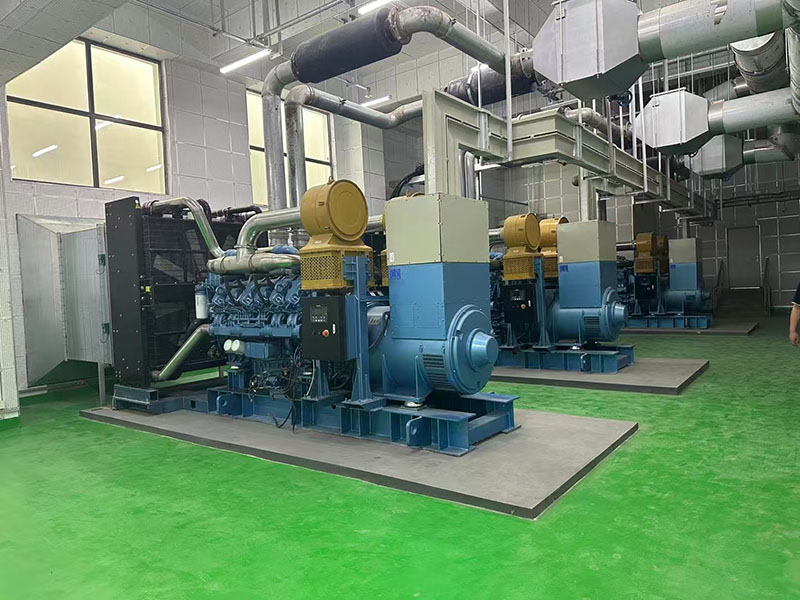
    Diesel Generator Set Room Layout and Installation Suggestion

    2024-02-19 14:04:57
    通过管理员

    The installation of a diesel generator set is a complex systems engineering project involving multiple specialized disciplines, including civil engineering for foundations, electrical connections, ventilation and exhaust systems, and vibration and noise reduction.


    🏗️ Generator Room and Foundation

    Site Selection:

    The location should ideally be close to the load center to facilitate power cable routing, while avoiding areas downwind of pollution sources or prone to water accumulation. The generator room must provide ample clearance for operation and maintenance activities.

    Foundation:

    A concrete foundation is the preferred choice. Typically, it should be raised 150–300 mm above ground level, with its length and width exceeding the generator set’s base dimensions by approximately 300 mm. The foundation’s load-bearing capacity must be calculated to support 1.8 times the total weight of the generator set (including the concrete pad itself).

    Vibration Isolation:

    Vibration isolators (such as rubber pads or spring mounts) must be installed between the generator set and the foundation. All isolators must bear the load evenly and be securely fastened using expansion bolts. Connections between the generator set and external piping systems must utilize flexible couplings to prevent the transmission of vibrations.


    🔥 Exhaust and Ventilation

    Exhaust System:

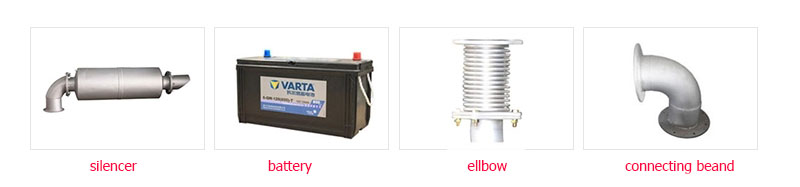
    Exhaust piping should be kept as short and straight as possible, minimizing the use of elbows. A stainless steel flexible bellows must be installed at the connection point with the generator’s exhaust outlet to provide vibration isolation. The piping should be sloped at a gradient of 1–2% toward the outdoors to facilitate the drainage of condensation. The indoor section of the piping must be wrapped with thermal insulation material; the outlet should be routed to a safe outdoor location and fitted with a rain cap.

    Ventilation System:

    The generator room must be equipped with air intake and exhaust vents of sufficient surface area to ensure smooth air convection and dissipate the substantial heat generated during the generator’s operation.


    ⚡ Electrical Connections

    Grounding:

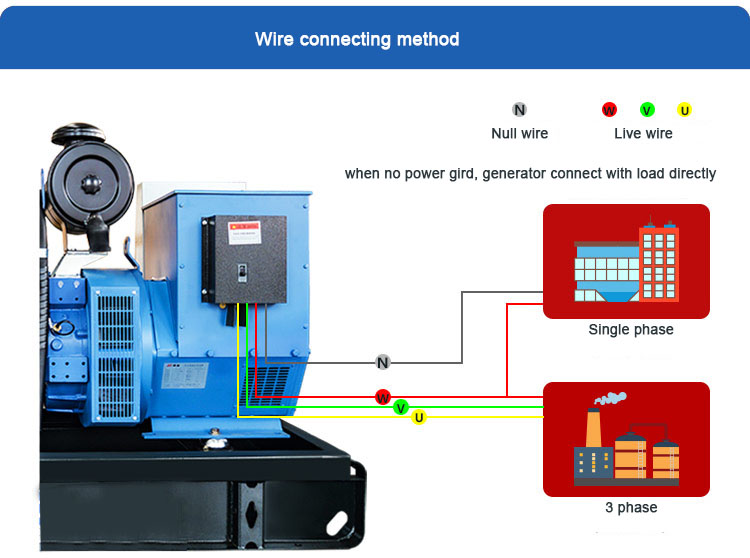
    The generator must be integrated into a power supply system where the neutral point is directly grounded. All metal components that are not normally energized (such as the base frame and enclosure) must be reliably grounded.

    Anti-Paralleling Protection:

    The generator’s power output must strictly *not* be operated in parallel with the utility grid lines; a reliable mechanical or electrical interlock device must be installed to prevent this.

    Phase Sequence Verification:

    Once the feeder cables have been connected, it is mandatory to strictly verify that the generator’s output phase sequence aligns correctly with the phase sequence of the existing power supply system.

    Firefighting Loads:

    If the generator set is intended to supply power to both firefighting-related loads and non-firefighting loads simultaneously, it must be verified that the system possesses the capability to automatically disconnect the non-firefighting loads in the event of a fire. Instrumentation Configuration: The control panel should be equipped with instruments such as voltmeters, ammeters, frequency meters, and power meters to facilitate the monitoring of operational status.


    🛠️ Fuel and Safety

    Fuel Storage:

    The fuel storage room should be established as a separate, dedicated space; fuel storage drums must not be kept within the equipment room. Furthermore, the facility must be equipped with fire extinguishers suitable for extinguishing electrical fires.