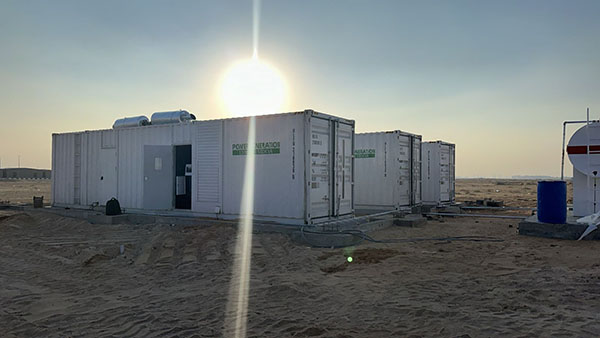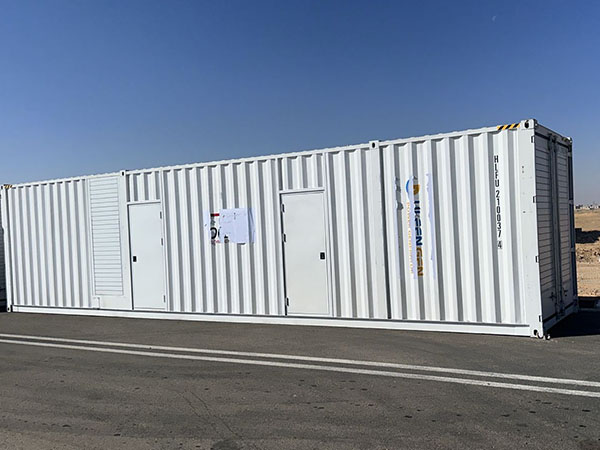

1600KVA Cummins Diesel Power Generator from Shandong Uleen Generator serves an airbase in the Middle East, operating reliably in high-temperature environments
Forging a “Great Wall of the Skies”: Six 1600kVA Cummins Generator Sets Construct a Power Fortress for an Air Force Base
In modern warfare, air power is the decisive factor for victory, and the air force base serves as the “Eagle’s Nest” of that power. From the precision radar navigation within the flight control tower to ground maintenance operations inside the hangars, and extending to the various lighting and navigation systems essential for fighter jet takeoffs—electricity is the lifeline that sustains the operations of an air force base. Faced with the high-mobility and high-intensity characteristics of modern warfare, as well as the potential for extreme natural disasters and battlefield conditions, the inherent vulnerability of traditional utility power supplies has become increasingly apparent.
To comprehensively resolve the critical challenge of reliable power supply for combat readiness—and to construct a robust power system characterized by “integrated peacetime and wartime capabilities with mutual redundancy”—a key air force base has commissioned six high-power 1280kW Cummins diesel generator sets to serve as its core primary power source. The deployment of these six “power behemoths” marks a transformative upgrade in the base’s power assurance capabilities, shifting from a purely “support-oriented” model to a fully “combat-oriented” paradigm.
I. The Power Core: An Industrial Heart with a 50.3-Liter Displacement
The core power package for the generator sets deployed in this initiative is the Cummins KTA50-GS8 diesel engine. As a classic masterpiece within the Cummins power portfolio, this engine features a V-16 cylinder configuration, a four-stroke cycle, and a turbocharged-aftercooled design, boasting a massive displacement of 50.3 liters per unit.
![]() |
![]() |
![]() |
GENERAL ENGINE DATA
Type……………………………………………………………………………………………………………………………………………. 4-Cycle; 60° Vee; 16-Cylinder Diesel
Aspiration…………………………………………………………………………………………………………………………………….. Turbocharged & Low Temp. Aftercooled
Bore x Stroke ………………………………………………………………………………………………..— in x in (mm x mm) 6.25 x 6.25 (159 x 159)
Displacement ………………………………………………………………………………………………………………— in3 (liter) 3067 (50.3)
Compression Ratio………………………………………………………………………………………………………………………. 14.9 : 1
Dry Weight
Fan to Flywheel Engine…………………………………………………………………………………………… — lb (kg) 11820 (5360)
Wet Weight
Fan to Flywheel Engine…………………………………………………………………………………………… — lb (kg) 12485 (5662)
Moment of Inertia of Rotating Components
- with FW 6009 Flywheel ………………………………………………………………………………. — lbm • ft2 (kg • m2) 271 (11.4)
- with FW 6017 Flywheel……………………………………………………………………………….. — lbm • ft2 (kg • m2) 515 (21.7)
Center of Gravity from Rear Face of Flywheel Housing (FH 6024)………………………………….. — in (mm) 47.5 (1206)
Center of Gravity Above Crankshaft Centerline……………………………………………………………… — in (mm) 11.0 (279)
Maximum Static Loading at Rear Main Bearing………………………………………………………………. — lb (kg) 2000 (908)
ENGINE MOUNTING
Maximum Bending Moment at Rear Face of Block…………………………………………………. — lb • ft (N • m) 4500 (6100)
EXHAUST SYSTEM
Maximum Back Pressure …………………………………………………………………………………. — in Hg (mm Hg) 2 (51)
AIR INDUCTION SYSTEM
Maximum Intake Air Restriction
- with Dirty Filter Element ……………………………………………………………………………. — in H2O (mm H2O) 25 (635)
- with Clean Filter Element ………………………………………………………………………….. — in H2O (mm H2O) 15 (381)
COOLING SYSTEM (Low Temperature Aftercooling)
Coolant Capacity — Engine Only………………………………………………………………………… — US gal (liter) 43.5 (165)
Maximum Coolant Friction Head External to Engine
— 1500 rpm [High Flow]…………..— psi (kPa) 10 (70)
— 1500 rpm [Low Flow]……………— psi (kPa) 5 (35)
Maximum Static Head of Coolant Above Engine Crank Centerline…………………………………….. — ft (m) 60 (18.3)
Standard Thermostat Modulating Range — High Flow (Jacket) ……………………………………. — °F (°C) 180 – 200 (82 – 93)
— Low Flow (Aftercooler)………………………………. — °F (°C) 150 – 175 (66 – 79)
Minimum Pressure Cap (For Cooling Systems with less than 2 m [6 ft.] Static Head) …….. — psi (kPa) 14 (96)
Maximum Top Tank Temperature for Overload Power / Prime Power……………………………… — °F (°C) 220 / 212 (104 / 100)
Target Coolant Inlet Temperature to Aftercoolers @ 77 °F (25 °C) Ambient ……………………..— °F (°C) 130 (55)
Maximum Coolant Temperature to Aftercoolers — Overload Power / Prime Power……………— °F (°C) 160 / 150 (71 / 66)
LUBRICATION SYSTEM
Oil Pressure @ Idle Speed……………………………………………………………………………………….. — psi (kPa) 20 (138)
@ Governed Speed……………………………………………………………………………… — psi (kPa) 50 – 70 (345 – 483)
Maximum Oil Temperature …………………………………………………………………………………………… — °F (°C) 250 (121)
Oil Capacity with OP 6027 Oil Pan : High – Low……………………………………………………… — US gal (liter) 47 – 39 (178 – 148)
Total System Capacity (Including Bypass Filter) …………………………………………………….. — US gal (liter) 54 (204)
FUEL SYSTEM
Type Injection System……………………………………………………………………………………………………………………………… Direct Injection Cummins PT
Maximum Restriction at PT Fuel Injection Pump — with Clean Fuel Filter……………… — in Hg (mm Hg) 4.0 (102)
— with Dirty Fuel Filter……………….. — in Hg (mm Hg) 8.0 (203)
Maximum Allowable Head on Injector Return Line
(Consisting of Friction Head and Static Head) — in Hg (mm Hg) 6.5 (165)
Maximum Fuel Flow to Injection Pump……………………………………………………………. — US gph (liter / hr) 151 (570)
This impressive displacement figure translates into an exceptional power reserve. With a standby power rating of 1200kW, this power system is capable of meeting any sudden surge in electricity demand within the base. Whether powering the high-intensity scanning of navigation radars during a fighter jet’s takeoff or simultaneously driving a bank of fuel transfer pumps, this “power heart” maintains a constant rotational speed of 1500 RPM while delivering exceptionally smooth torque output. Furthermore, its equipped PT fuel pump and STC (Step Timing Control) technology ensure optimal fuel combustion efficiency and economy, enabling the engine to unleash surging power even under harsh operating conditions involving high temperatures or high altitudes.
ELECTRICAL SYSTEM
Cranking Motor (Heavy Duty, Positive Engagement)…………………………………………………………………………………………… — volt 24
Battery Charging System, Negative Ground………………………………………………………………………………………………… — ampere 35
Maximum Allowable Resistance of Cranking Circuit…………………………………………………………………………………………… — ohm 0.002
Minimum Recommended Battery Capacity
- Cold Soak @ 50°F (10°C) and Above………………………………………………………………………………………………… — 0°F CCA 1280
- Cold Soak @ 32°F to 50°F (0°C to 10°C)……………………………………………………………………………………………. — 0°F CCA 1800
- Cold Soak @ 0°F to 32°F (-18°C to 0°C)…………………………………………………………………………………………….. — 0°F CCA 1800
COLD START CAPABILITY
Minimum Ambient Temperature for Aided (with Coolant Heater) Cold Start within 10 seconds …………………………. — °F (°C) 50 (10)
Minimum Ambient Temperature for Unaided Cold Start………………………………………………………………………………….. — °F (°C) 45 (7)
PERFORMANCE DATA
All data is based on:
- Engine operating with fuel system, water pump, lubricating oil pump, air cleaner and exhaust
silencer; not included are battery charging alternator, fan, and optional driven components.
- Engine operating with fuel corresponding to grade No. 2-D per ASTM D975.
- ISO 3046, Part 1, Standard Reference Conditions of:
Barometric Pressure : 100 kPa (29.53 in Hg) Air Temperature : 25 °C (77 °F)
Altitude : 110 m (361 ft) Relative Humidity : 30%
Steady State Stability Band at any Constant Load ……………………………………………………………………………………………….. — % +/- 0.25
Estimated Free Field Sound Pressure Level of a Typical Generator Set;
Excludes Exhaust Noise; at Rated Load and 7.5 m (24.6 ft); 1500 rpm………………………………………………………. — dBA 92.4
Exhaust Noise at 1 m Horizontally from Centerline of Exhaust Pipe Outlet Upwards at 45°………………………………….. — dBA N.A.
II. Power Quality: Safeguarding the “Pure Blood” of Precision Electronic Equipment
Air Force bases integrate a vast array of precision electronic equipment—such as landing guidance radar, communication and navigation systems, and command automation systems. These devices are extremely sensitive to power quality; even minute voltage fluctuations can lead to data errors or equipment damage.
These six generator sets are equipped with Stamford S7L1D-C41 series brushless alternators. Their Class H insulation rating and 2/3 pitch winding design not only ensure safe operation under sustained high temperatures but also keep voltage waveform distortion rates at an exceptionally low level. Data indicates that this alternator features a Telephone Harmonic Factor (THF) of less than 2% and a Telephone Interference Factor (TIF) of less than 50—fully meeting the rigorous standards for military communication power supplies. This signifies that the units deliver not merely electricity, but a “pure blood” supply that adheres to military specifications, ensuring that the base’s “brain” and “eyes” remain constantly alert and sharp.
III. Clustered Operations: Parallel Technology Enables “N+1” Redundancy Backup
While the 1280kW output of a single generator is undoubtedly impressive, the value of a power array comprising six such units extends far beyond that. Through an advanced automated parallel control system, these six units form a highly intelligent power matrix.
During peacetime, the system automatically calculates the optimal operating strategy based on the base’s load requirements. For instance, during low-load periods at night, the system activates only one or two generators, allowing them to operate efficiently within their economic load zone—thereby significantly saving on fuel and maintenance costs. Conversely, during wartime or under a state of heightened combat readiness, the system can achieve “zero-wait” full-power output.
The core of this “parallel operation” technology lies in load sharing and automatic synchronization. Utilizing high-speed microprocessors, the control system monitors the voltage, frequency, and phase of each individual unit in real time. Should the utility grid fail—whether due to an outage or a hostile attack—these six units can start up rapidly; via automatic synchronization controllers, they execute a precise, millisecond-level circuit closure, seamlessly merging six powerful currents into the main busbar. The greatest advantage of this model lies in its “N+1” redundant backup configuration: even if one of the units is taken offline for maintenance, the remaining five can still guarantee the power supply critical to combat readiness, thereby completely eliminating the risk of a single point of failure causing a base-wide blackout.
IV. Combat Readiness and Adaptability: A Design Proven to Withstand the “Test of the Battlefield”
The core performance metric for military equipment is reliability. From its inception, the design of this power supply system has deeply integrated considerations for adaptability to rigorous military standards:
Environmental Adaptability: Tailored to the reality that Air Force bases may be deployed across diverse geographical regions, this generator set possesses exceptional environmental adaptability. Its cooling system—featuring high-flow coolant channels and DCA additives—is engineered to withstand high-temperature environments reaching 45°C. Furthermore, the unit is equipped with a high-power 24V electric starting system, ensuring a near-instantaneous and successful engine start even under extreme low-temperature conditions.
Shock Resistance and Protection: The equipment is designed to withstand seismic forces (specifically, a horizontal acceleration of 0.2g and a vertical acceleration of 0.1g). Through the application of rigorous fastening principles and a high-strength base frame, the system maintains its structural integrity and operational stability even when subjected to the vibrations of aerial bombardment or the shockwaves generated by explosions in nearby ammunition depots.
Electromagnetic Compatibility (EMC): As a critical component of a military installation, electromagnetic stealth and compatibility are paramount. Throughout its design and manufacturing phases, this power supply system has strictly adhered to military specifications—such as GBBZ 24974-2012—to rigorously suppress electromagnetic emissions. This ensures that the generator set operates without causing interference to the base’s sensitive communication and detection equipment, while simultaneously minimizing its susceptibility to detection by hostile electromagnetic reconnaissance systems.