


contact us
-
3-2-1003 Software park, Weifang Hi-tech Zone, Shandong, China
- +8615095247272
- sales@uleengen.com
-


Marine Generator Installation Planning: Space, Service Access and Maintenance
A marine generator can fit inside an engine room and still be awkward to maintain. Before the layout is frozen, mark the complete installed set, the space needed to work on it, and the route for removing components.
Check all three against the same vessel drawing, with pipework, ladders and cable trays included.
Our marine generator range is a starting point for selecting equipment. For installation planning, the useful question is more specific.
Can the crew reach the service points and move a replacement part through the finished compartment? A reviewed layout should make that answer visible before steelwork and connections become expensive to change.
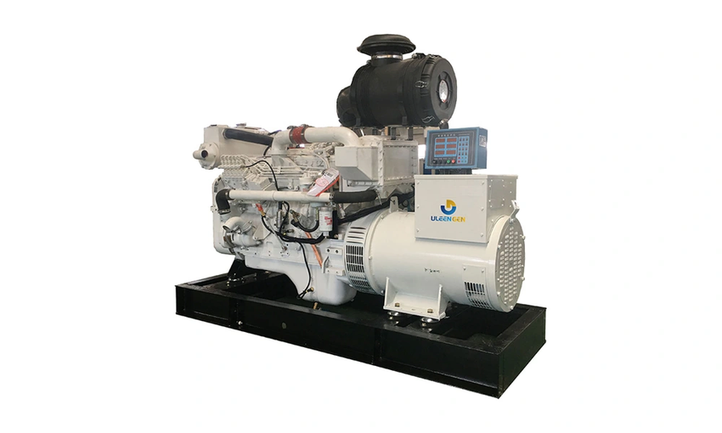
Start with a drawing for the exact offered set
Ask for the general arrangement drawing that matches the quotation. The engine, alternator, control cabinet, mounting arrangement and cooling package must belong to that configuration. Keep the model reference and drawing revision together on the layout register.
A catalogue footprint helps during an early feasibility check. It cannot show every connection or removal requirement. Even within our Cummins marine generators, the offered arrangement needs its own confirmation. A drawing for a similar power output should stay marked as preliminary.
Record the vessel datum, port and starboard orientation, and the intended service side. Check which side of the actual engine carries the filters, pumps and inspection points.
Then show the control cabinet door in its open position. A cabinet facing a narrow walkway may be easy to read but difficult to service.
Keep unresolved dimensions visible. If an accessory or connection position is awaiting confirmation, mark it on the drawing and assign an owner. Do not let a placeholder disappear when a cleaner drawing is issued. It should close only when the corresponding equipment information has arrived.
Mark three envelopes on the engine room layout
Draw the installed envelope around the complete supplied assembly, including projecting equipment. Add a separate service envelope for door movement, tools, working posture and the withdrawal of routine service items. Finally, trace the removal envelope for larger components that may eventually leave the compartment.
These outlines answer different questions. The base frame may clear the bulkhead while a filter bowl cannot be lowered into a collection container. An alternator may have room at its end but no usable route to the access hatch. Show the actual task behind each reserved area.
Check the layout in plan and elevation. Overhead trays can obstruct lifting or component withdrawal even when the floor plan looks clear. Include insulation, supports and nearby equipment in the view. Check hatch openings with their frames and hinges, together with the turns along the removal route.
Avoid applying a single clearance around the whole machine. Required space depends on the offered model, service procedure and vessel arrangement. Ask the equipment supplier and yard to confirm the relevant dimensions. Keep any structural opening or lifting provision subject to the vessel team’s engineering review.
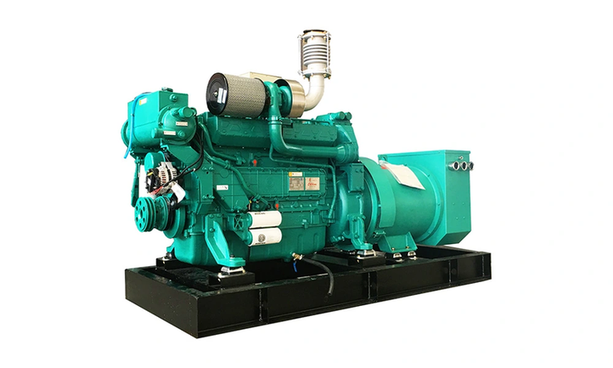
Trace connections without blocking service tasks
Place the connections on the layout before agreeing their routes. Identify the fuel supply and return, cooling connections, exhaust connection, electrical terminals and control interfaces that apply to the offered package. Each should have a reference on the current drawing.
Our Weichai marine generators provide another equipment family to review, but connection positions must follow the selected arrangement. Similar-looking sets can leave different space beside a pump or cabinet. Do not transfer pipe positions from a product photograph.
Ask what has to disconnect during maintenance. A pipe crossing a removable panel can turn a small inspection into several jobs. Cable trays over a service opening can create a similar obstruction. Where removal is necessary, the drawing should identify the joint, its access and who reconnects it.
Review supporting and flexible connections with the responsible designer. Pipework must not use the generator as an improvised support.
The approved arrangement also needs to accommodate the movement intended by the mounting system. Exact connection design belongs in the project engineering documents, with the applicable equipment instructions available to the yard.
Walk a maintenance job before steelwork is fixed
Choose a routine task and walk it through on the proposed layout. For a filter change, follow the technician from the compartment entrance to the filter. Allow for isolation, opening the access panel, placing a suitable container, removing the element and taking the used item out.
Repeat the exercise for a less frequent job. Consider how a pump, cooler component or alternator would move from its fitted position to a handling point. The supplier should identify the relevant procedure and component information. The yard should check the route and the provisions needed to handle it.
For example, a pump may be reachable by hand while its fasteners sit behind a pipe support. Moving the support on the drawing could preserve access. Leaving the conflict until commissioning could require dismantling adjacent work. This is a layout-review example, not a claim about a completed vessel installation.
Agree how the crew will obtain the correct parts and maintenance instructions. Our generator service support can be part of that discussion. Record the equipment identity and parts references in the handover information; avoid relying on a photograph when a replacement is needed.
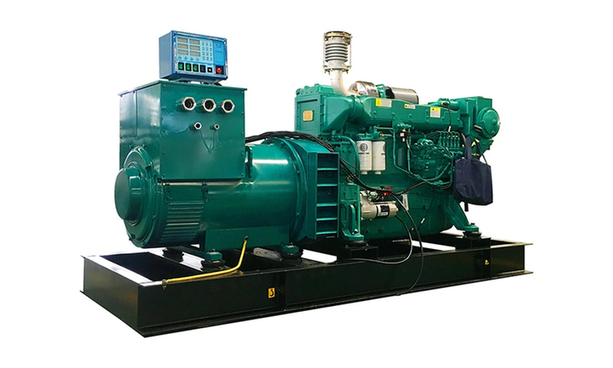
Use a layout handover schedule with named owners
A short interface schedule keeps drawing questions from being lost between the generator supplier, yard and vessel team. Each row should describe one physical interface or access task. Assign an owner and a specific document that will close the item.
| Layout item | Document or check required | Owner to confirm | Closure evidence |
|---|---|---|---|
| Generator base and orientation | Offered-set arrangement drawing and mounting review | Supplier and yard | Matching model and drawing revision |
| Filter service area | Tool, container and withdrawal walkthrough | Yard and maintenance representative | Marked service envelope accepted |
| Cooling connection beside service opening | Connection drawing and route check | Supplier and piping designer | Joint location and access recorded |
| Alternator removal route | Component information and compartment route review | Supplier and yard | Removal sequence and hatch route agreed |
| Control cabinet access | Door movement and electrical working arrangement | Yard electrical team | Open-door position checked on layout |
Replace the role names with actual project contacts. An entry labelled pending needs a due date or a decision point before layout release. Where a route crosses another discipline’s work, both owners should review the same drawing revision.
Keep closed items traceable when the arrangement changes. A larger cabinet, relocated pipe support or different alternator can reopen an access question. Review the affected task again rather than carrying its earlier acceptance forward automatically.
For a drawing change, record the previous revision, the changed item and the access task affected. A relocated connection might close a pipe clash while narrowing the route for a replacement component.
Check the consequence in both views before closing the entry. Keep the rejected route in the review history so it is not accidentally restored later.
Give the maintenance representative a copy of the marked arrangement before that review closes.
They should be able to follow each task from the compartment entrance to the service point, and identify where tools or removed parts can be placed. Record an unresolved task as open rather than assuming the crew will find a way around it.
Release the layout with the right documents
Before releasing the arrangement, bring the selected-set drawing, interface schedule and access walkthrough into one review. Check that the drawing revisions agree and that the remaining open items have an explicit disposition. Vessel-specific installation and approval decisions remain with the responsible project parties.
The maintenance handover should then identify the equipment, applicable manuals, service-point locations and agreed removal route. It should also show which surrounding items must remain removable. A clear walkway at delivery can gradually disappear behind stores or later modifications, so preserve those reserved areas in the vessel’s working layout.
For a marine layout review, send us the proposed compartment drawing, selected generator reference and current revision, with service and removal routes marked. Include the unresolved interfaces. That gives our team and the yard a concrete basis for checking the offered arrangement before the layout is committed.


