


contact us
-
3-2-1003 Software park, Weifang Hi-tech Zone, Shandong, China
- +8615095247272
- sales@uleengen.com
-


How to Choose Engine Brands for Diesel Generator Sets
Choosing an engine brand for a diesel generator starts with the project’s operating requirements. Record the running load, starting demand, duty, voltage, frequency, altitude, ambient temperature and local service conditions. These facts create a model shortlist and give every bidder the same operating brief.
What Should You Define Before Comparing Engine Brands?
A written load and site brief gives each engine family the same test and exposes duty, accessory and service requirements.
Calculate Running Load and Starting Load
List each load in kW or kVA, its power factor and its starting method. Motors, pumps and compressors can create a short peak above running demand. Record the sequence because simultaneous and staged starts produce different requirements. The supplier can then check engine response and alternator starting capability together.
Choose Standby, Prime or Continuous Duty
Standby power serves emergency use during a utility outage. Prime power supports variable loads for longer periods under the engine maker’s load-factor and service rules. Continuous duty covers a steady load under published rating conditions. State annual hours and the typical load profile; hospital backup, quarry and base-load projects create different demands.
Record Frequency, Voltage and Site Conditions
Specify 50 or 60 Hz, phase, voltage, altitude, maximum ambient temperature, dust and expected fuel quality. Frequency and rated speed can change model availability. Add the installation location, enclosure and noise target because open, silent and trailer configurations affect the finished set.
How Do Engine Brands Fit Different Diesel Generator Projects?
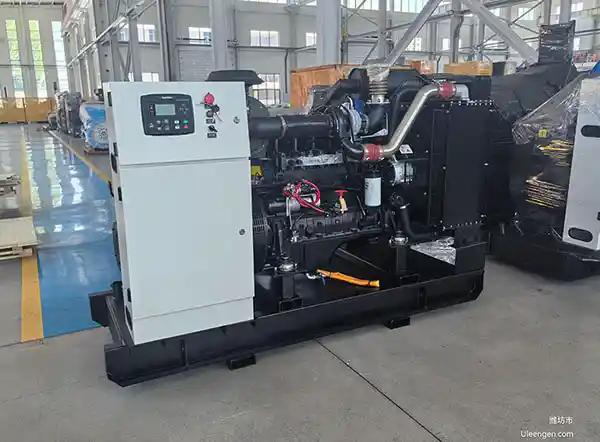
Documented power ranges provide a useful first filter. The next step is model-level confirmation for frequency, phase, rating basis, engine, alternator and enclosure.
Compare the Documented Engine-Family Ranges
The supplier catalog lists the following family coverage. These figures describe catalog ranges. Model availability depends on output, configuration and destination market.
| Engine Family | Catalog Range |
| Perkins | 8-1,800 kW |
| Cummins | 16-2,000 kW |
| Doosan | 40-600 kW |
| Yuchai | 30-3,000 kW |
| Weichai | 20-3,000 kW |
| Deutz | 30-600 kW |
| Isuzu | 20-50 kVA |
| Ricardo | 10-350 kW |
Review Cummins generator configurations after the load brief defines the required power band.
Screen the Perkins generator range with the same duty and site inputs.
Match the Engine Platform to Load Behavior
A set serving cranes or crushers needs response to rapid load steps, while a telecom site may run at a steadier load. Compare the selected engine’s prime and standby output at rated speed with the alternator rating and transient-load study. Screen Deutz generator options through this process within the documented 30-600 kW family range.
Check Local Parts and Service Access
Map the nearest qualified provider, common filter and belt availability, major-parts lead times and language support. Request planned-service part numbers. A remote mining site may hold inventory on site; a city facility may use a nearby service center. Record response time and warranty-diagnosis responsibility.
Which Technical Factors Shape Diesel Generator Performance?
The engine, alternator, cooling system, controller, enclosure and fuel system operate as one set. Review their interfaces before accepting a brand-led proposal.
Review Engine Power and Alternator Rating
Separate engine output from electrical set output and identify prime and standby values. One documented 60 Hz Isuzu configuration pairs a 25 kW prime engine output with a 20 kW/25 kVA prime set rating and a 22 kW/27.5 kVA standby set rating. The values belong to that model and show the need for matched-component data.
Account for Altitude, Temperature and Cooling
Request ratings at stated reference conditions and a site derating calculation. Cooling airflow, radiator arrangement and enclosure ventilation affect output. One documented natural-gas model uses reference conditions up to 1,000 m and 40 C, then states 4% additional derating per 300 m above 1,000 m. Request the applicable engine curve.
Compare Fuel Use at a Stated Load
Compare fuel figures with matching units, load percentages and reference conditions. Request values at 50%, 75% and 100% load where available, then apply the expected operating profile and fuel price. Keep rated and maximum figures in their stated categories, and request the basis for any unit conversion.
Confirm Controller, ATS and Protection Functions
Define automatic start and stop, utility monitoring, alarms, protective shutdowns and remote communication. Catalog controller choices include HGM6120, AMF8, AMF25, DSE6120, DSE7320, HGM410, MRS16, DKG309 and DSE6020. Name the exact controller and add an ATS when the set must start after a utility failure and transfer the load.
How Should You Compare Lifecycle Cost?
Lifecycle cost combines purchase price, fuel, service, consumables, parts lead time and outage exposure. Use one operating scenario for every proposal.
Build a Maintenance and Consumables List
Request the engine-specific schedule and prices for oil, coolant, filters, belts and starting batteries. General set guidance calls for visual checks before daily operation, with weekly checks possible for standby generators. An idle standby set receives a five-minute run every two weeks and one to two hours at 50% load each month when it has carried no load. Six-month checks include protection-device simulation, battery-vent cleaning and tightening exhaust and electrical connections.
Check Warranty Terms and Service Responsibility
The standard warranty states 12 months or 1,500 running hours, whichever occurs first, subject to prescribed maintenance. Ask the current quotation to confirm coverage, start date, labor, travel, parts and claim procedure. Name the party responsible for diagnosis and repair in the destination market.
Price Downtime and Parts Lead Time
Estimate the cost of one hour without power across a realistic repair window. Compare that exposure with a local service contract or an on-site spares kit containing model-specific filters, belts, sensors and controller items.
What Should a Diesel Generator Quotation Confirm?
A precise quotation turns an engine-family choice into a verifiable generator-set configuration. Ask each bidder to answer the same points.
Exact Engine and Alternator Models
Record the engine, alternator and controller models, rated speed, governor type, phase, frequency and voltage. Add enclosure, dimensions, weight and noise data needed for transport and installation.
Prime and Standby Ratings With Reference Conditions
Require both ratings in kW and kVA, with power factor, reference conditions, applicable derating and the load-step basis used in selection.
Factory Test, Enclosure, Tank, Controller and ATS Scope
Confirm the open frame, silent canopy or trailer, plus fuel tank, breaker, batteries, exhaust parts, emergency stop, controller and ATS. One documented Isuzu set includes a silent canopy, 24 V starting, main breaker, control panel, eight-hour base tank, batteries, exhaust components, manual and test report. Its specification states that each unit receives a load test before delivery. Request the purchased configuration’s test scope.
Documentation, Spare Parts and After-Sales Contact
List the manuals, wiring diagrams, test report, packing list, recommended spares and service contact required at handover. For cross-border projects, add document language, shipping terms, commissioning responsibility and remote-diagnosis inputs.
About UleenGen
Shandong Uleen Generator Co., Ltd. supplies sets across eight documented engine families, with catalog coverage from compact Isuzu generators to higher-output Cummins, Perkins, Yuchai Weichai and SDEC ranges. Set formats include open, silent and trailer configurations, with controller and ATS choices matched to the project brief. Product materials cover factory load testing, manuals, test reports and model-specific maintenance guidance. Send the load list, duty, voltage, frequency, site conditions, enclosure needs and destination for a diesel generator project review. The quotation should identify each selected model and commercial term.
FAQ
Q1: Which Engine Brand Fits a Diesel Generator Project?
A: Choose a brand with a model matching your duty, power band, site conditions, load behavior and local service plan.
Q2: Is Cummins or Perkins Better for a Diesel Generator?
A: Yes. Cummins is a US brand with 107 years history since 1919. Perkins is a UK brand with 94 years history since 1932. They are well-known brands suitable for almost all applications.
Q3: How Much Engine Power Should a Generator Set Have?
A: The engine must support electrical output and load steps under site conditions. Calculate the match from running load, starting load, alternator rating and derating data.
Q4: Does Local Parts Availability Matter When Choosing an Engine Brand?
A: Yes. Local filters, belts, sensors, qualified technicians and clear lead times reduce the expected duration and cost of maintenance or repair.
Q5: What Information Should a Diesel Generator Supplier Include in a Quotation?
A: Request exact engine, alternator and controller models; prime and standby ratings; voltage and frequency; reference conditions; enclosure, fuel tank and ATS scope; test documents; warranty terms; spare parts; and service responsibility.


