



contact us
-
3-2-1003 Software park, Weifang Hi-tech Zone, Shandong, China
- +8615095247272
- sales@uleengen.com
-


Diesel Generator Technology for Heavy Industries | UleenGen


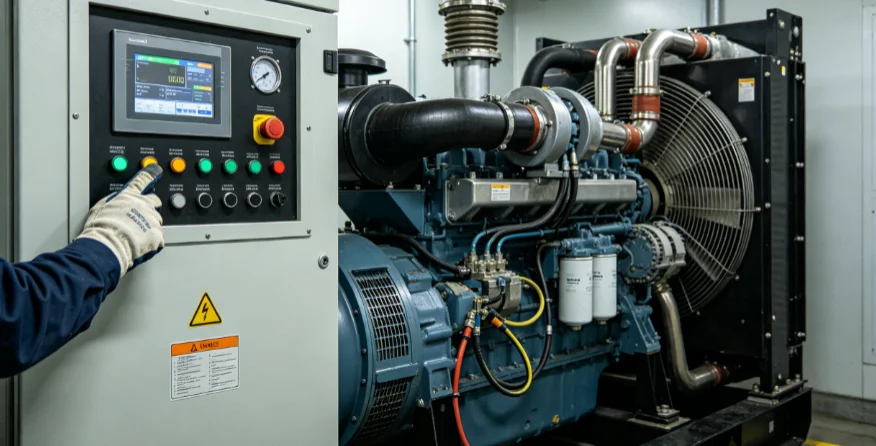
Heavy industries do not have much patience for unstable power. A steel line, quarry crusher, oilfield pump, welding station, or cold storage room can lose money fast when power drops for even a short time. That is why diesel generator technology is still widely used where reliable power matters more than anything fancy.
For buyers, the real question is simple: will the power system start when needed, carry the load, and keep working in a tough site? UleenGen is a professional generator manufacturer focused on intelligent generator sets for industrial users. Its product range covers diesel and gas generator sets, engine-based generator options, structural types, power ranges, marine generators, gas generators, control cabinets, and customized power products.
The company has been active in intelligent generator set manufacturing since 2011, with products used in many countries and regions. This kind of product coverage gives industrial buyers a practical way to compare power capacity, structure, control needs, and site conditions before making a purchase.
Why Does Reliable Power Matter in Heavy Industries?
Reliable power is not just a backup idea. In heavy industries, it protects machines, workers, raw materials, schedules, and sometimes the whole production chain. A small outage may look harmless from an office desk, but on a worksite it can stop conveyors, pumps, ventilation fans, control panels, and safety lighting at the same time.
Power Failure Can Stop More Than One Machine
Heavy industrial sites rarely run only one piece of equipment. You may have motors, compressors, cranes, crushers, pumps, and lighting working together. When the grid fails, the loss is not only the stopped machine. Restarting the whole system can take time, and some processes do not restart cleanly.
A diesel generator gives the site a second power source. For production plants, construction areas, mining sites, and processing facilities, backup power helps keep key loads running while the grid is down.
Downtime Often Costs More Than Fuel
Some buyers focus only on diesel use. That is fair, because fuel cost matters. But downtime can cost much more. One stopped production line may delay delivery, waste materials, or force workers to wait. In cold chain storage, power loss may damage goods. In remote mining, an outage can also slow site transport and safety work. Not very glamorous, but it is real.
How Does Diesel Generator Technology Support Stable Power?
Diesel generator technology works well in heavy industries because it combines engine strength, alternator output, cooling, fuel supply, and control systems. A good industrial generator is not only an engine in a metal frame. It is a full power system built to handle load changes, site stress, and emergency use.
Engine and Alternator Matching Matters
The engine provides mechanical power. The alternator turns that power into electricity. If these two parts do not match the site load, problems show up quickly. Voltage may drop. Starting motors may fail. Fuel use may climb. In worse cases, the generator may trip.
This is why choosing from generator sets by engine type can be useful. It lets you compare different industrial generator options based on site load, working hours, fuel habits, and service needs.
Control Systems Keep the Power Response Clear
Modern diesel generator technology is also about control. Auto start panels, ATS cabinets, and synchronization cabinets help manage power transfer and multi-unit operation. For example, an ATS cabinet can help the system switch between grid power and generator power when needed.
For sites with several generator sets, synchronization can help units share load. This is useful when one large unit is not the best fit, or when power demand changes through the day.
Which Generator Structure Fits Heavy-Duty Sites?
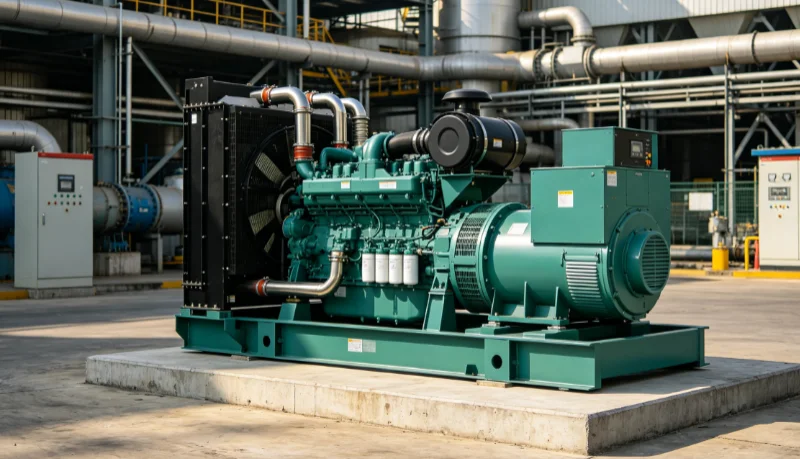
Different heavy industries need different structures. A factory may care about noise. A mining area may care about dust and weather. A temporary construction project may need movement. There is no single best diesel generator for every job, and that is where many bad purchases begin.
Open, Silent, Trailer, and Containerized Types Serve Different Needs
An open type generator set is often used where noise control is less strict and equipment rooms are available. A silent type generator set is better for sites near offices, housing, or public areas. Trailer type units suit temporary projects because they can move from one work area to another. Containerized type units are often used for larger outdoor projects that need stronger protection.
UleenGen lists several generator structure options, including open type, silent type, trailer type, and containerized type generator sets. For heavy industries, this choice should follow the site, not only the price.
Power Range Should Match Real Load
A generator that is too small struggles. A generator that is far too large may waste fuel and run poorly at low load. Buyers should check running load, starting load, future expansion, and critical equipment. For example, a motor may need much higher power at startup than during normal running.
Industrial buyers often compare kVA ranges before choosing a system. This helps narrow the selection before discussing fuel tank size, voltage, runtime, and control cabinet needs.
How Can Maintenance Keep Backup Power Ready?
Even a strong diesel generator needs care. If a standby diesel generator sits for months without inspection, the first real outage may reveal battery failure, old fuel, blocked filters, low coolant, or wiring trouble. That is a bad time to find out.
Routine Checks Prevent Small Faults From Growing
Generator maintenance should include oil, coolant, filters, belts, hoses, batteries, fuel condition, and control alarms. Load testing also matters. Starting the unit with no load does not prove it can carry the real site load.
Fuel and Control Cabinets Deserve Attention
Fuel quality is easy to overlook. Water, dirt, or old diesel can hurt startup reliability. Control cabinets also need clean wiring, correct settings, and regular inspection. UleenGen provides generator control cabinet options such as ATS cabinets and synchronization cabinets, which are important for smart power management in industrial backup power systems.
FAQ
Q1: Why Is Diesel Generator Technology Used in Heavy Industries?
A: It supports reliable power, fast startup, strong load capacity, and stable backup power for demanding industrial sites.
Q2: What Is the Difference Between Standby and Prime Power?
A: Standby power is for emergencies. Prime power is used as a main or regular power source, often at remote sites.
Q3: How Should You Choose the Right Industrial Generator Size?
A: Check running load, starting load, voltage, working hours, site expansion, and critical equipment before choosing.
Q4: Does Generator Maintenance Really Affect Reliability?
A: Yes. Battery checks, fuel care, filter replacement, coolant checks, and load testing all help prevent failure.
Q5: Which Generator Structure Is Better for Heavy Industries?
A: It depends on the site. Open, silent, trailer, and containerized types each fit different work conditions.


