



Contacta amb nosaltres
-
3-2-1003 Parc de programari, Weifang Zona d'alta tecnologia, Shandong, Xina
- +8615095247272
- sales@uleengen.com
-


Generador SDEC vs. especificacions, cost i casos d'ús de Cummins


L'elecció entre un generador SDEC i un generador Cummins comença amb la freqüència, la sortida i la configuració. Actualment, Cummins té la gamma publicada detallada més àmplia i un programa dedicat de 60 Hz. SDEC ofereix diversos models de 50 Hz directament comparables, opcions de motor de 1.500/1.800 rpm, sortida llistada de 480/277 V i quatre tipus d'estructura.
Per a un projecte americà, l'elecció pràctica prové d'un calendari tècnic específic per al model i dos pressupostos construïts amb el mateix abast.
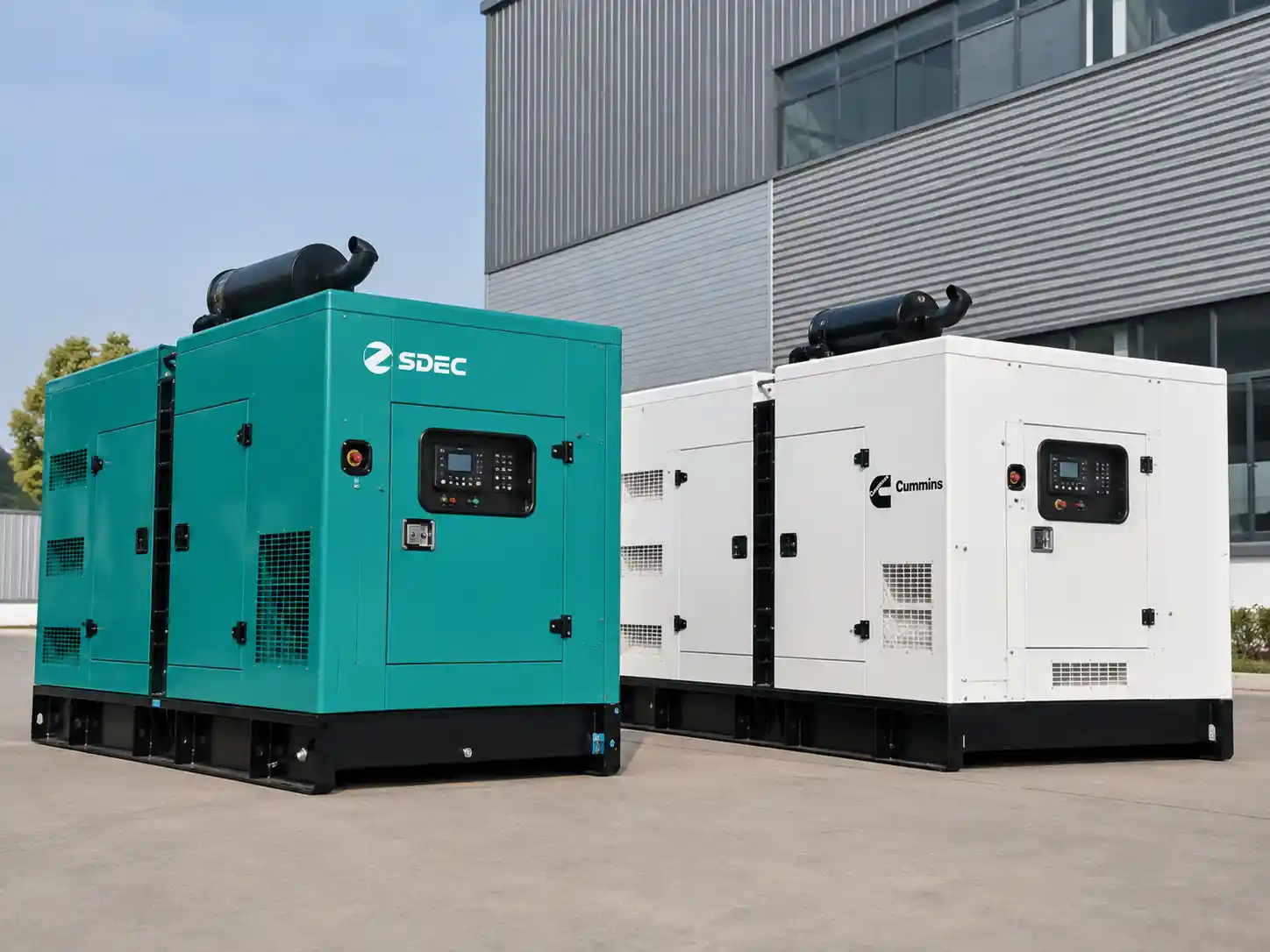
Generador SDEC vs Cummins: Comparació ràpida
Les xifres següents es van revisar el 10 d'agost de 2026. Els rangs de sèries introductòries i els calendaris detallats dels models utilitzen abastos diferents, de manera que cada xifra roman lligada a la seva freqüència i format indicats.
| Element de comparació | SDEC | Cummins |
|---|---|---|
| Gamma introductòria | 15-1.875 kVA | 20-2.500 kVA |
| Horari detallat de 50 Hz | 50-1,200 kW | 16-1,600 kW |
| Horari detallat de 60 Hz | Taula de models no disponible | 20-1,260 kW |
| Opcions de voltatge llistades | Inclou 480/277 V | Inclou 480/277 V |
| Tipus d'estructura | Obert, silenciós, remolc, contenidoritzat | Obert, silenciós, remolc, contenidoritzat |
| Preus igualats publicats | No disponible | No disponible |
Cummins ofereix a un comprador americà més models publicats de 60 Hz per preseleccionar. La SDEC requereix un calendari de 60 Hz confirmat. Ambdues sèries enumeren opcions de configuració que poden canviar el pressupost final.
Com es comparen les especificacions publicades?
Comença amb la freqüència, la potència, la unitat i la base nominal. Després, compara el motor, l'alternador, la quantitat de combustible, les dimensions i el pes.
Rang de potència i freqüència
El detallat Especificacions del generador dièsel SDEC cobreixen 15 models a 50 Hz, des de l'US50GF a 50 kW/63 kVA fins a l'US1200GF a 1.200 kW/1.500 kVA. El rang introductori indica entre 15 i 1.875 kVA; la programació de 15 files proporciona valors a nivell de model.
El detallat Models de generadors dièsel Cummins inclouen conjunts de 50 Hz de 16 a 1.600 kW i conjunts de 60 Hz de 20 a 1.260 kW. El seu rang introductori indica de 20 a 2.500 kVA. El programa de 60 Hz permet una selecció més ràpida de projectes americans.
El subministrament estàndard de la SDEC identifica motors de 1.500/1.800 rpm, i la seva llista de voltatges inclou 480/277 V. Una consulta de 60 Hz encara necessita una programació que mostri la sortida, el voltatge, la fase, el motor i l'alternador.
Exemples de models de 50 Hz coincidents
Tres parells comparteixen la mateixa sortida de 50 Hz. La font etiqueta les xifres de combustible com a consum nominal; el percentatge de càrrega i el mètode de prova no s'especifiquen.
| Sortida de 50 Hz | Model i combustible de la SDEC | Model i combustible de Cummins |
|---|---|---|
| 200 kW / 250 kVA | US200GF, 46 L/h | UC250GF, 46,7 L/h |
| 400 kW / 500 kVA | US400GF, 93 L/h | UC500GF, 93,5 L/h |
| 600 kW / 750 kVA | US600GF, 140 L/h | UC750GF, 140 L/h |
Amb 200 kW, l'US200GF té unes dimensions de 2.860 x 1.100 x 1.760 mm i un pes de 2.700 kg. L'UC250GF fa 3.010 x 1.000 x 1.700 mm i un pes de 2.600 kg. L'accés a l'obra i el disseny aprovat determinen quines dimensions importen.
Aquests exemples proporcionen punts de comparació a nivell de model. Una classificació d'eficiència de tota la marca requereix una base de proves coherent en tota la gamma.
Quant costa un generador SDEC o Cummins?
Les fonts aprovades actuals contenen especificacions i opcions de configuració; els preus de transacció equivalents no estan disponibles. Per tant, una comparació de costos defensable comença amb dues cotitzacions actuals per al mateix servei i abast de l'equip.
Crea dues cites amb el mateix abast
Definiu una sortida de kW/kVA, freqüència, voltatge, fase i servei de funcionament. Especifiqueu l'alternador, el controlador, l'interruptor automàtic o l'interruptor de transferència automàtica (ATS), la carcassa, el dipòsit de combustible, les opcions i els documents.
SDEC llista controladors DSE i ComAp, interruptors ABB o Schneider, ATS, escalfadors, sensors, filtres addicionals i dipòsits externs. Cummins llista controladors SmartGen, Deep Sea i ComAp, diverses marques d'alternadors, ATS, monitorització remota, sincronització, escalfadors, sensors i opcions de dipòsits.
Compareu els elements finals de la línia.
Un total inferior amb un alternador, dipòsit, controlador o carcassa diferent mesura una configuració diferent. Un abast igual crea una comparació de marca-cost vàlida.
Quin generador s'adapta a cada cas d'ús?
El catàleg d'UleenGen enumera treballs de camp, construcció, supermercats, hospitals, fàbriques, mineria, camps petrolífers, centres de dades, telecomunicacions, autopistes, ports i operacions ramaderes. Cada aplicació necessita el seu propi programa elèctric, estructural i de control.
Quan es publica, la selecció de 60 Hz importa
Cummins admet la selecció inicial d'una llista visible de 60 Hz que identifica la potència, el motor, l'alternador, el consum nominal de combustible, les dimensions i el pes.
La selecció de SDEC utilitza una presentació específica del projecte de 60 Hz. Registreu la sortida retornada, el voltatge, el motor, l'alternador, la xifra de combustible, les dimensions i el pes.
Ajustar l'estructura i els controls al projecte
Ambdues sèries enumeren estructures obertes, silencioses, de tràiler i en contenidors. Registreu l'estructura seleccionada i tot l'equipament inclòs perquè cada format canvia l'abast de la cotització.
ATS significa commutador de transferència automàtica, un dispositiu que transfereix la càrrega entre les fonts d'alimentació disponibles. Enumereu per separat els requisits d'ATS, controlador, interruptor, alarmes, funcions remotes i sincronització.
Què hauria de verificar un comprador americà abans de fer una comanda?
Una consulta americana hauria de convertir cada suposició del catàleg en un valor de projecte escrit que inclogui les dades elèctriques, els components, els detalls físics i els documents de lliurament.
Dades elèctriques i del model
Registra la freqüència, el voltatge, la fase, els kW, els kVA i el servei de funcionament. Afegeix el motor, l'alternador, el controlador, l'interruptor o l'ATS, l'estructura, les dimensions, el pes i el dipòsit. Una selecció de SDEC de 60 Hz requereix la programació final del model.
Les opcions de voltatge per a ambdues sèries inclouen 480/277 V, però la comanda encara necessita un voltatge i una fase confirmats. Una llista de voltatges disponibles no és el mateix que una configuració de projecte aprovada.
Documents de prova i lliurament
Les proves de fàbrica de la SDEC indiquen una càrrega del 50%, 75%, 100% i 110%, a més de comprovacions de control i apagada de seguretat. Sol·liciteu el registre del conjunt demanat. Servei i assistència tècnica del generador llavors pot utilitzar el motor, l'alternador, el controlador, els manuals i els documents de prova enregistrats.
Per a Cummins, sol·liciteu el registre de proves, el manual d'operació, el manual de manteniment, la llista d'alarmes i el programa aprovat. Els requisits normatius i d'instal·lació necessiten documents de projecte verificats.
SDEC o Cummins: com hauríeu de decidir?
Trieu entre les dades del model confirmades. Cummins actualment ofereix la gamma publicada detallada més àmplia i un programa visible de 60 Hz. SDEC proporciona sortides de 50 Hz directament comparables, disponibilitat de 1.800 rpm, 480/277 V llistats i les mateixes quatre opcions d'estructura general.
Per a un comprador americà, Cummins permet una preselecció més ràpida del catàleg. Un generador SDEC esdevé comparable quan el seu programa i pressupost de 60 Hz coincideixen amb l'abast de la revisió de Cummins. Seleccioneu per potència, configuració, dimensions, documents i cost pressupostat actual.
Sobre UleenGen
Shandong Uleen Generator Co., Ltd. subministra grups electrògens SDEC i Cummins en configuracions obertes, silencioses, de remolc i en contenidors. L'abast disponible inclou alternadors, controladors, interruptors, ATS, dipòsits de combustible bàsics o externs, escalfadors, sensors, eines, manuals i opcions específiques per a cada projecte. Les proves SDEC enumeren quatre punts de càrrega i comprovacions de control i apagat.
Envieu la càrrega, el servei, els kW/kVA, el requisit de 60 Hz, el voltatge, la fase, l'estructura, el controlador, l'ATS, el dipòsit de combustible, la destinació i els documents necessaris a sol·licita un pressupost de generador equivalentLa resposta pot identificar el model proposat i la configuració completa per a la comparació.
Preguntes freqüents
P1: Un generador SDEC és més barat que un generador Cummins?
A: Els preus de transacció coincidents no estan disponibles a les fonts aprovades. Sol·liciteu la mateixa sortida, dades elèctriques, alternador, controls, carcassa, dipòsit, opcions i documents en ambdues cotitzacions. Els totals mostraran la diferència per a aquest projecte.
P2: Es pot configurar un generador SDEC per a un funcionament a 60 Hz?
A: El subministrament estàndard de la SDEC enumera motors de 1.500/1.800 rpm, i els voltatges disponibles inclouen 480/277 V. El programa detallat actual de la SDEC està etiquetat com a 50 Hz, de manera que una comanda de 60 Hz necessita un programa específic del model confirmat abans de l'aprovació.
P3: Quina sèrie té el rang de potència publicat més ampli?
A: Cummins té el calendari detallat més ampli als materials revisats el 10 d'agost de 2026. La seva taula de 50 Hz cobreix 16-1.600 kW i la seva taula de 60 Hz cobreix 20-1.260 kW. La taula detallada de SDEC cobreix 50-1.200 kW a 50 Hz, mentre que el rang introductori de SDEC indica 15-1.875 kVA.
P4: Com hauríeu de comparar el consum de combustible de SDEC i Cummins?
A: Feu coincidir la sortida i la freqüència i, a continuació, utilitzeu les xifres relacionades amb els models exactes. A 50 Hz, els conjunts de 600 kW que figuren a la llista mostren 140 L/h. El percentatge de càrrega i el mètode de prova no s'especifiquen, així que sol·liciteu la base de prova aplicable.
P5: Quins detalls hauria d'incloure un comprador americà en una sol·licitud de pressupost per a un generador?
A: Incloeu la càrrega, el servei, els kW/kVA, el requisit de 60 Hz, el voltatge, la fase, el motor, l'alternador, els controls, l'estructura, el dipòsit, les dimensions, el pes, la destinació, les proves, els manuals i els documents del projecte. Demaneu al proveïdor que retorni cada element per escrit perquè ambdues cotitzacions comparteixin un àmbit de revisió.


