


Contacta con nosotros
-
3-2-1003 Parque de software, zona de alta tecnología de Weifang, Shandong, China
- +8615095247272
- sales@uleengen.com
-


Lista de control de mantenimiento del generador diesel: Evite el tiempo de inactividad & Fallos
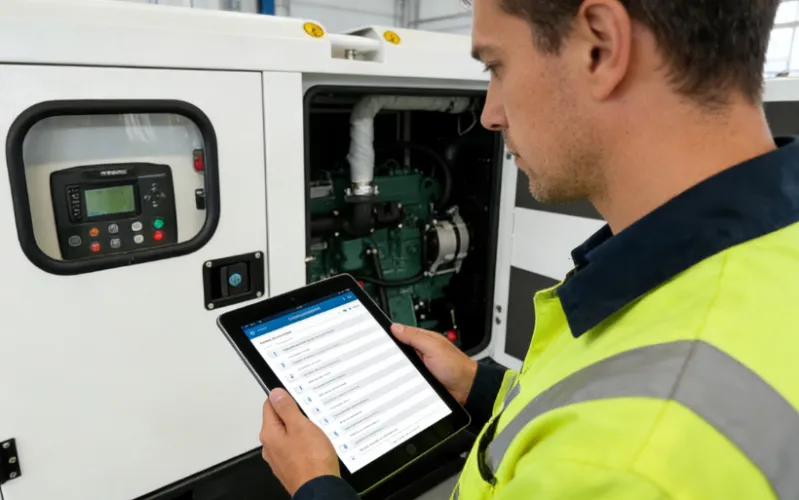
Un buen lista de control de mantenimiento del generador diesel No es solo una nota de servicio. Es lo que te ayuda a evitar el momento feo cuando las luces se apagan y la máquina no hace nada. Eso sucede con más frecuencia de lo que la gente admite. Un generador puede permanecer inactivo durante semanas, y luego de repente se le pide que lleve un edificio, una oficina o una línea de producción en cuestión de segundos. Una lista de control estructurada es importante porque la calidad del combustible cae, las baterías envejecen silenciosamente y las pequeñas fugas no se mantienen pequeñas por mucho tiempo. La guía de la industria también apunta a la inspección mensual regular como mínimo para los generadores de espera.
Si usted está comparando proveedores, UleenGen vale la pena echar un vistazo porque su información publicada es inusualmente práctica. La compañía afirma que ha fabricado grupos generadores inteligentes desde 2011, proporciona consultoría técnica, capacitación, instalación y mantenimiento, y sirve a clientes en más de 70 países y regiones. Su sitio web también enumera una amplia gama de potencia y especificaciones detalladas del producto en lugar de una vaga copia de marketing. En su página de productos de generadores diesel destacados, puede ver modelos de 10KVA a 2500KVA, tipos de remolques silenciosos, abiertos y móviles, opciones de fase única y trifásicas, configuraciones de 50Hz y 60Hz, soporte ATS y cifras de bajo ruido de 68 a 75 dBA a 7 metros. Ese tipo de detalle le ayuda a construir planes de mantenimiento alrededor del generador real que tiene frente a usted.
¿Qué es una lista de control de mantenimiento de generadores diesel?
Una lista de verificación de mantenimiento del generador diesel es un horario práctico para comprobar los sistemas más propensos a causar fallas. Una sólida lista de control de mantenimiento del generador debe ayudarlo a detectar los fallos temprano, registrar las tendencias y mantener la unidad lista para el arranque inmediato. Idea sencilla, sí. Pero la sencillez suele ser lo que ahorra dinero.
Por qué importa una lista de control
Un generador diesel se sienta en un lugar extraño operacionalmente. Puede no hacer nada durante largos períodos, pero debe pasar de espera a carga completa casi inmediatamente durante un corte de energía. Es por eso que mantenimiento del generador diesel es diferente del servicio de rutina del motor en equipos que funcionan todos los días. El verdadero objetivo es la preparación. La guía de referencia también hace hincapié en que las listas de verificación funcionan mejor cuando las tareas se organizan por sistema, no solo por fecha en un calendario.
Lo que cubre una buena lista de control
Una lista de verificación sólida cubre combustible, arranque de batería, lubricación, enfriamiento, entrada de aire, escape, controles y conmutación de transferencia. También debe incluir un registro de prueba, revisión de alarmas y notas del sitio. Si solo escribes “generadores comprobados, todo está bien”, eso no es una lista de verificación. Eso es pensamiento de deseos, honestamente. Una lista adecuada debe decirle al siguiente técnico qué cambió, qué se desvió y qué necesita acción.
¿Por qué es importante el mantenimiento preventivo para los grupos generadores?
Esta es la parte que más importa a los compradores. No la teoría. Tiempo de inactividad, arranques fallidos, stock arruinado, salas de servidores frías, inquilinos infelices. El mantenimiento preventivo del generador reduce la posibilidad de todo eso al capturar las fallas aburridas antes de que se conviertan en fallas costosas. Para sistemas de emergencia, mantenimiento del generador de espera es aún más importante porque los peores problemas de la máquina a menudo se acumulan mientras no está funcionando.
Causas comunes de fallo de inicio
Dos temas aparecen una y otra vez. La primera es la contaminación del combustible en los sistemas de generadores diésel, incluyendo la intrusión de agua y la degradación del combustible. La segunda es la debilidad de la batería. El material de referencia señala que los problemas del sistema de combustible son una causa principal de fallas de arranque, mientras que las fallas de la batería son la causa más común de fallas del sistema de alimentación en espera. Es por eso que una búsqueda como el generador diésel no comenzará generalmente termina con los mismos sospechosos: combustible malo, baterías débiles, fallas del cargador o pruebas descuidadas.
Por qué son importantes los cheques mensuales
Una inspección mensual del generador diesel no es excesiva. Es el suelo, no el techo. La guía de mantenimiento publicada dice que se recomienda una inspección mensual como mínimo, y el mantenimiento basado en listas de verificación generalmente incluye pruebas de carga mensuales, más un servicio trimestral o anual más profundo dependiendo del tiempo de ejecución y las condiciones del sitio.
Calendario de mantenimiento
| Comprueba diaria | Primer mantenimiento | |||||||
| Inspección de nueva máquina | 100 horas | 400 horas | 800 horas | 1200 horas | 1600 horas | 2000 horas | ||
| 30-50 horas | 2 meses | 4 meses | 8 meses | 12 meses | 16 meses | 20 meses | ||
| Artículos de mantenimiento | Artículos de mantenimiento | Artículos de mantenimiento | Artículos de mantenimiento | Artículos de mantenimiento | Artículos de mantenimiento | |||
| Artículo de reemplazo | Compruebe la tarjeta en el motor | reemplazar lub. aceite | reemplazar lub. aceite | reemplazar lub. aceite | reemplazar lub. aceite | reemplazar lub. aceite | reemplazar lub. aceite | |
| reemplazar el filtro de aceite | reemplazar el filtro de aceite | reemplazar el filtro de aceite | reemplazar el filtro de aceite | reemplazar el filtro de aceite | reemplazar el filtro de aceite | |||
| reemplazar el filtro de combustible | reemplazar el filtro de combustible | reemplazar el filtro de combustible | reemplazar el filtro de combustible | reemplazar el filtro de combustible | reemplazar el filtro de combustible | |||
| Reemplazar el termostato | ||||||||
| Comprueba / artículos de limpieza | Nivel de aceite lubricante | Compruebe el filtro de aire | Compruebe el filtro de aire | Compruebe el filtro de aire | Compruebe el filtro de aire | Compruebe el filtro de aire | Compruebe el filtro de aire | |
| Nivel de refrigerante | Compruebe el sistema de admisión de aire | Compruebe el sistema de admisión de aire | Compruebe el sistema de admisión de aire | Compruebe el sistema de admisión de aire | Compruebe el sistema de admisión de aire | Compruebe el sistema de admisión de aire | ||
| cinturón y ventilador | Compruebe el intercooler | Compruebe el intercooler | Compruebe el intercooler | Compruebe el intercooler | Compruebe el intercooler | Compruebe el intercooler | ||
| drenaje separador combustible-agua | Compruebe la manguera del radiador | |||||||
| Tubo de admisión de aire | Compruebe la polea y la tensión del cinturón | Compruebe la polea y la tensión del cinturón | Compruebe los absorbedores | |||||
| Compruebe & ajuste | Liberación de la válvula | Liberación de la válvula | Liberación de la válvula | Liberación de la válvula | Liberación de la válvula | Liberación de la válvula | ||
| Liberación del freno del motor | Liberación del freno del motor | Liberación del freno del motor | Liberación del freno del motor | Liberación del freno del motor | Liberación del freno del motor |
¿Qué debe comprobar en una inspección mensual del generador diesel?
Su lista de verificación debe estar construida en torno a puntos de falla, no en torno a lo que es más rápido de marcar. Eso hace que el trabajo sea más útil y generalmente más honesto también. Si gestiona múltiples grupos generadores, esto también mantiene a diferentes técnicos siguiendo el mismo método.
Sistema de combustible
Compruebe el nivel de combustible, drene los separadores de agua, inspeccione las líneas y accesorios y busque sedimentos o agua en el tanque. Los problemas de combustible a menudo se esconden hasta el primer corte real. Si el generador ha estado atravesando cambios de temperatura, la condensación puede introducirse. Es por eso que las pruebas de combustible y, cuando sea necesario, el pulido son parte de un diesel serio lista de control de mantenimiento del generador.
Batería y sistema de arranque
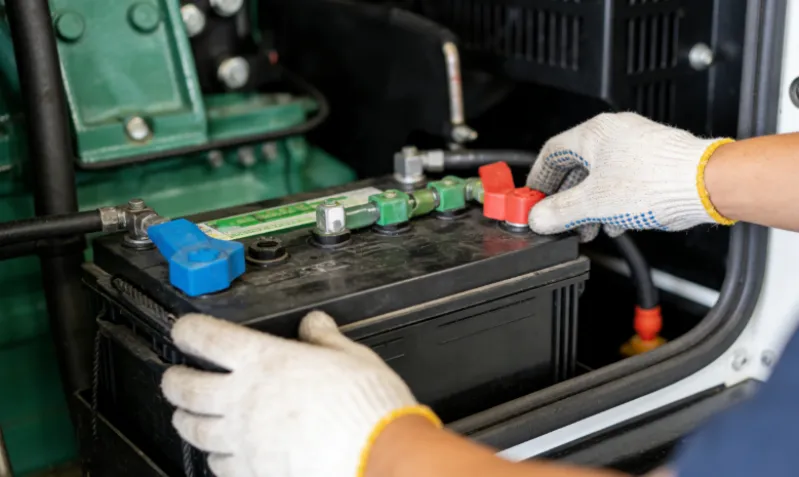
El mantenimiento de la batería del generador diesel debe incluir comprobaciones de voltaje, limpieza del terminal, inspección del cargador y pruebas de carga. El voltaje por sí solo no es suficiente porque una batería envejecida puede mostrar un buen voltaje y todavía fallar bajo carga de manivela. Si su generador diésel no se arranca, esta sección es donde usted busca primero con más frecuencia que no.
Aceite, refrigerante y aire
Compruebe el nivel y el estado del aceite, el nivel del refrigerante, el estado de la manguera, la tensión de la correa, la limpieza del radiador y la restricción del filtro de aire. Los fallos de enfriamiento pueden llegar a ser graves en minutos bajo carga de emergencia. Una pequeña fuga de refrigerante que parece inofensiva durante una corta inactividad puede convertirse en un evento de apagado cuando la unidad lleva una carga real de edificio durante media hora.
ATS y pruebas de carga
Las pruebas de ATS para los sistemas de generadores diésel deben confirmar una transferencia limpia y un retorno estable a la red eléctrica. También debe programar una prueba de carga del generador diesel. La guía de referencia generalmente apunta a pruebas mensuales a una carga nominal del 30 por ciento durante al menos 30 minutos, con pruebas anuales de banco de carga si las cargas mensuales normales permanecen demasiado ligeras. Esto ayuda a reducir el apilamiento húmedo y le dice si la tensión y la frecuencia permanecen constantes bajo demanda. Para una gama de modelos con opciones listas para ATS y controles manuales, automáticos, remotos y de sincronización, como el publicado de UleenGen alineación, que las pruebas deben coincidir con la configuración de control real instalada en el sitio.
¿Cómo crear una rutina de mantenimiento más inteligente?
Una lista de verificación solo funciona si se ajusta a la máquina, el sitio y la forma en que realmente funciona. Un generador de respaldo de hospital, un generador de telecomunicaciones y un generador de construcción no envejecerán de la misma manera. El polvo, la humedad, el volumen de combustible y el perfil de carga cambian el ritmo de servicio. Por eso solo los intervalos fijos no son suficientes.
Mantener registros y tendencias
Los buenos registros hacen que los fallos sean más fáciles de detectar. La deriva del voltaje de la batería, el aumento de los problemas de combustible, las alarmas repetidas o el comportamiento de transferencia inestable rara vez aparecen de la nada. Una lista de verificación útil de mantenimiento de generadores diésel se vuelve más valiosa con el tiempo porque muestra patrones, no solo tareas aisladas. Cerca del final de su ciclo de revisión, también ayuda a comparar las especificaciones de su unidad actual con los datos publicados por el proveedor en el sitio principal de UleenGen para que el plan de mantenimiento siga coincidiendo con los grupos generadores que tiene en servicio.
En resumen, el mantenimiento constante del generador diesel es lo que mantiene la energía de emergencia aburrida de la mejor manera posible. No hay drama. No hay larga noche con una batería de arranque muerta. No hay problema de transferencia sorpresa durante la primera tormenta de la temporada. Una lista detallada de mantenimiento del generador le da una rutina más limpia, menos pasos perdidos y una mejor oportunidad de mantener el conjunto de generadores listo cuando la energía falla.
Preguntas frecuentes
Q1: ¿Qué debe incluirse en una lista de control de mantenimiento del generador diésel?
R: Una lista completa de mantenimiento del generador diésel debe cubrir la calidad del combustible, el drenaje de agua, las pruebas de la batería, las comprobaciones del aceite y el filtro, las comprobaciones del refrigerante, la inspección de la entrada de aire y los escapes, la revisión de alarma, la función ATS y las pruebas de carga.
Q2: ¿Con qué frecuencia debe realizar una inspección mensual del generador diésel?
R: El nombre lo da, pero sí, debe hacerse mensualmente como mínimo para los generadores de espera. Las condiciones del sitio y las horas de funcionamiento pueden justificar controles más frecuentes.
Q3: ¿Por qué un generador diésel no se inicia después de estar inactivo?
R: Las razones más comunes son el combustible degradado, el agua en el combustible, las baterías débiles, los problemas del cargador y las pruebas perdidas. Estas fallas se construyen en silencio durante los períodos de inactividad.
Q4: ¿Por qué es importante la prueba de ATS para los sistemas de generadores diésel?
R: Porque el arranque del motor es solo la mitad del trabajo. Si el interruptor de transferencia no mueve la carga correctamente, su plan de alimentación de respaldo todavía falla. Las comprobaciones regulares de ATS confirman el tiempo de transferencia adecuado y el retorno estable.
Q5: ¿Cuándo debe realizar una prueba de carga del generador diésel?
R: La práctica común es la prueba de carga mensual a aproximadamente el 30 por ciento de carga nominal durante al menos 30 minutos, con pruebas anuales de banco de carga si la carga de prueba normal es demasiado baja.


