
Diesel Generators for Agriculture: Powering Farms, Irrigation & Livestock

Farm work does not wait for the grid. A power cut during irrigation, poultry ventilation, milk cooling, or grain drying can turn into lost crops, animal stress, spoiled products, and missed delivery windows. That is why diesel generators for agriculture and farms are not just emergency machines. They are part of daily risk control.
A good farm diesel generator should match real farm loads, not just look right on a brochure. Pumps, fans, compressors, refrigeration units, feeders, lights, and control panels all behave differently when they start. Some loads pull three to six times more current at startup. This is where the right genset size, structure, fuel tank, and control system matter.
UleenGen focuses on intelligent generator sets for practical power needs, including technical consultation, training, installation, and maintenance. Its product range from 20kva to 2500kva covers generator sets by engine type(Cummins, Perkins, Deutz, Doosan, Isuzu, Weichai, Fawde, Yuchai, Yangdong, Ricardo), structure (silent type, trailer type, containerized type), with options from small farm backup generators to larger industrial gensets.
For agricultural buyers, this means you can match power output, noise level, mobility, and control configuration to the way the farm actually works. The company’s generator sets include diesel generator set and gas generator set. The gas generator fuel with natural gas, biogas, biomass, LPG, oilfield associated gas, landfill gas, etc.
This is useful when one farm needs a simple standby generator, while another needs mobile power for pumps, grain dryers, and remote rural sites.
Why Do Farms Need Reliable Diesel Generator Sets?
Farms depend on steady electricity more than many people think. A short outage may only stop lights in a house, but on a farm it can stop water, air, cooling, feeding, and climate control at the same time. Agricultural generators help keep these systems running when the grid becomes weak, unstable, or unavailable.
Power Loss Can Damage Crops and Daily Work
For irrigation, a failed pump during a dry week can cause crop stress in a few hours. For greenhouses, the problem may be heat, humidity, or poor air circulation. A greenhouse generator keeps fans, pumps, shading systems, and climate controls powered so plants do not face sudden temperature swings.
Livestock Facilities Need Fast Backup Power
Poultry houses and dairy farms are even less forgiving. A diesel generator for poultry farm use should support ventilation fans, water systems, feeding lines, and lighting. A dairy farm generator may need to run milking equipment, vacuum pumps, water pumps, and a milk cooling tank. Once milk temperature rises too much, the loss is not easy to fix.
Where Are Diesel Generators Used on Farms?
Each farm has a different load pattern. Some need standby power only during outages. Others use a genset every day because the site is far from stable grid power. Before buying a diesel generator for farm use, it helps to list the real equipment and the hours it must run.
Irrigation Pumps and Water Systems
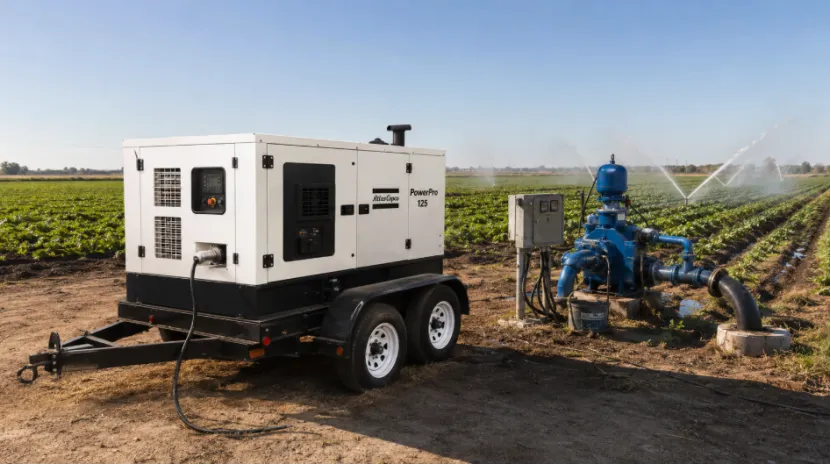
A diesel generator for irrigation pump use must handle motor starting current. Large pumps often need soft starters or variable frequency drives to reduce the starting shock. If you need a generator for farm water pumps, check pump horsepower, voltage, phase, and starting method first. A small mistake here can make the generator trip again and again.
Cold Storage and Milk Cooling
Cold rooms, milk tanks, and farm refrigeration need steady voltage. A generator for cold storage on farms should be sized for compressors, fans, lights, and control systems. For dairy sites, a generator for milk cooling tank protects product quality after milking. It is a boring job, yes, but boring is good when refrigeration is involved.
Grain Dryers and Storage Facilities
A generator for grain dryer must support heaters, blowers, conveyors, and aeration fans. Harvest season is already stressful. If power fails while grain moisture is too high, storage risk rises quickly. Medium-power generator sets are often better here than undersized backup generators.

How Should You Choose a Diesel Generator for Farm Use?
The right choice starts with the load list, not the price tag. If you are asking how to choose a diesel generator for farm use, begin with running load, starting load, daily runtime, site conditions, and mobility needs.
Choose Standby or Prime Power
A farm backup generator is used when the grid fails. A prime power generator for farm operations is used for longer daily running, often in remote rural areas. Standby generators can handle emergency use. Prime use generators need stronger cooling, better fuel planning, and regular service checks.
Match Structure to the Site
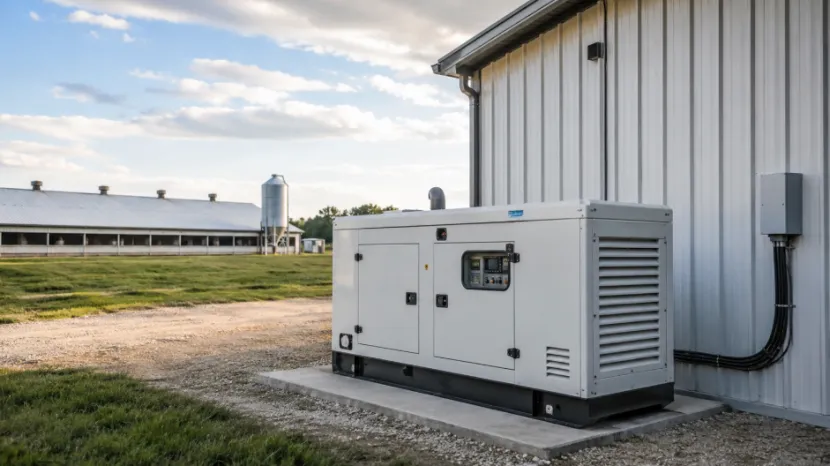
Open type generator sets are common for fixed equipment rooms with good ventilation. A silent diesel generator for farms is better near livestock, workers, homes, or office areas. A low-noise generator for livestock farms can reduce stress around poultry houses and dairy barns. For fields, wells, and seasonal work, a mobile diesel generator for farms or trailer-mounted generator for agriculture gives more flexibility.
You can also review generator sets by structure when comparing silent, open, trailer, and containerized options for different farm layouts.
What Power Range Fits Common Agricultural Applications?
Small farms may only need 10kVA to 50kVA for lighting, small pumps, and basic backup. Poultry farms often need 50kVA to 200kVA, depending on fans and feeding systems. Dairy operations may need 100kVA to 500kVA if milking systems, cooling tanks, and pumps run together. Larger grain drying or cold storage sites may need higher capacity.
Low-to-medium power diesel generator sets fit many agricultural jobs because farm loads are often practical rather than huge. Still, irrigation pumps and dryers can change the calculation fast. Always size the genset for starting current, not only normal running power.
Which Generator Features Matter Most for Farm Work?
A farm generator should be easy to start, easy to service, and tough enough for dust, heat, rain shelters, and long idle periods. Good features reduce downtime when nobody has time to deal with a machine fault.
ATS Cabinet for Automatic Backup
An automatic backup generator for farms can start after a power cut and transfer the load through an ATS cabinet. This is valuable for poultry ventilation, dairy cooling, and greenhouse climate control, where a delay can cause real loss.
Fuel Tank, Cooling, and Remote Checks
Long runtime needs a suitable fuel tank. Dusty areas need more frequent air filter checks. Radiators must stay clean before peak irrigation or harvest season. For remote rural power, an off-grid power generator for farms should also be simple to inspect, with clear alarms and service access.
常见问题解答
Q1: What Size Diesel Generator Is Needed for an Irrigation Pump?
A: A diesel generator for irrigation pump use depends on pump horsepower, voltage, phase, and starting current. For many pump motors, the generator must be sized above the normal running load because startup demand is much higher.
Q2: Should a Poultry Farm Use an ATS With a Diesel Generator?
A: Yes. A diesel generator for poultry farm operation should use ATS when ventilation, water, and feeding systems cannot stop. It helps restore power quickly after grid failure.
Q3: Can a Diesel Generator Run a Farm Irrigation System All Day?
A: Yes, if it is selected as a prime power generator for farm operations and matched with the pump load, fuel supply, cooling system, and daily runtime.
Q4: Is a Silent Diesel Generator Better for Livestock Farms?
A: A silent diesel generator for farms is often better near livestock houses, worker areas, or nearby homes. It lowers noise and makes daily operation less disruptive.
Q5: What Type of Generator Is Best for Remote Farms?
A: A mobile diesel generator for farms or fixed off-grid power generator for farms is usually the best choice. If power must move between wells, fields, and storage areas, a trailer-mounted unit is more practical.