



Свяжитесь с нами
-
3-2-1003 Software park, Weifang Hi-tech Zone, Шаньдун, Китай
- +8615095247272
- sales@uleengen.com
-


Diesel Generator set Grounding Guidelines


1. First, Clarify: What Exactly Does Generator Grounding Protect?
1.1 ► Protecting Personnel—Caging the “Electrical Tiger”
Generators are constantly subjected to high temperatures and intense vibration; consequently, insulation aging and winding-to-casing contact are common occurrences. Should the casing become energized, the grounding system serves as a vital “lifeline” to the earth: leakage current flows into the ground rather than passing through the human body to complete a circuit, thereby effectively cutting the risk of electric shock in half.
1.2 ► Protecting Equipment—Providing the System with a “Zero-Potential Anchor Point”
Stable Voltage Reference: The entire power distribution system uses the grounding electrode as its baseline reference; voltage fluctuations are firmly confined to the millivolt range, preventing erratic voltage swings that could burn out motors.
Instantaneous Power Disconnection During Short Circuits: Protective devices detect ground fault currents and interrupt the power supply within milliseconds, extinguishing potential fire hazards before they even have a chance to escalate.
Protection Against Lightning Surges: Lightning currents are safely dissipated into the earth via the grounding grid, ensuring the generator’s insulation is not instantly destroyed by extreme high-voltage spikes.
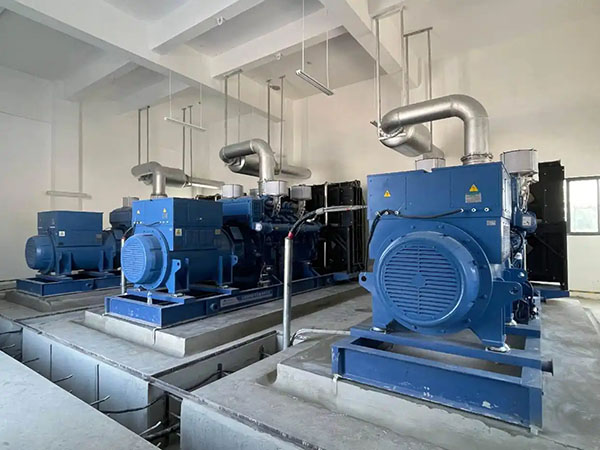
2. Taking Action: Locate the Grounding Point and Establish a Proper Ground Connection
2.1 ► Grounding Location — The “Little Green Dot” on the Casing
Open the generator’s protective cover and look for a bolt bearing a dedicated grounding symbol; this is often accompanied by a small green icon or the letter “E.” This marks the generator’s internal “grounding terminal.”
2.2 ► Grounding Electrode — Utilize “Natural Foundations” Before Considering “Artificial Rods”
Prioritize natural grounding electrodes: the steel reinforcement within building foundations, deep-buried water pipes, railway tracks, etc. These offer a large contact area and low electrical resistance.
Artificial Electrode (Alternative): A 2.5-meter-long, 50×50×5 mm galvanized steel angle bar. Drive it vertically into a layer of moist soil, leaving the top end 0.6–0.8 meters above ground level. Sprinkle salt around the base to lower resistance—this yields immediate results.
2.3 ► Grounding Wire — Copper-Core Yellow-and-Green Cable + Galvanized Hardware: The “Golden Combination”
Select the wire gauge based on power output: 16 mm² is sufficient for generators under 50 kW; for those over 100 kW, opt directly for 50–70 mm².
Use a dedicated bi-color (yellow and green) copper-core cable, which excels in both conductivity and corrosion resistance. Ensure all bolts and nuts are galvanized; with this setup, rust-free performance for a decade is not just a dream.
3. The Final Step: Measure the Grounding Resistance—Ensure It Isn’t Merely “Nominal”
According to the current standard JGJ/T46-2024, grounding resistance values must strictly adhere to three specific thresholds:
Single generator > 100 kVA, or total capacity of parallel units > 100 kVA — R ≤ 4 Ω
Single generator ≤ 100 kVA, or total capacity of parallel units ≤ 100 kVA — R ≤ 10 Ω
In “hard soil zones” with a soil resistivity > 1000 Ω·m, the limit may be relaxed to R ≤ 30 Ω; however, additional resistance-reduction measures are required.


