


contact us
-
3-2-1003 Software park, Weifang Hi-tech Zone, Shandong, China
- +8615095247272
- sales@uleengen.com
-


What Is a Silent Diesel Generator and How Does It Work
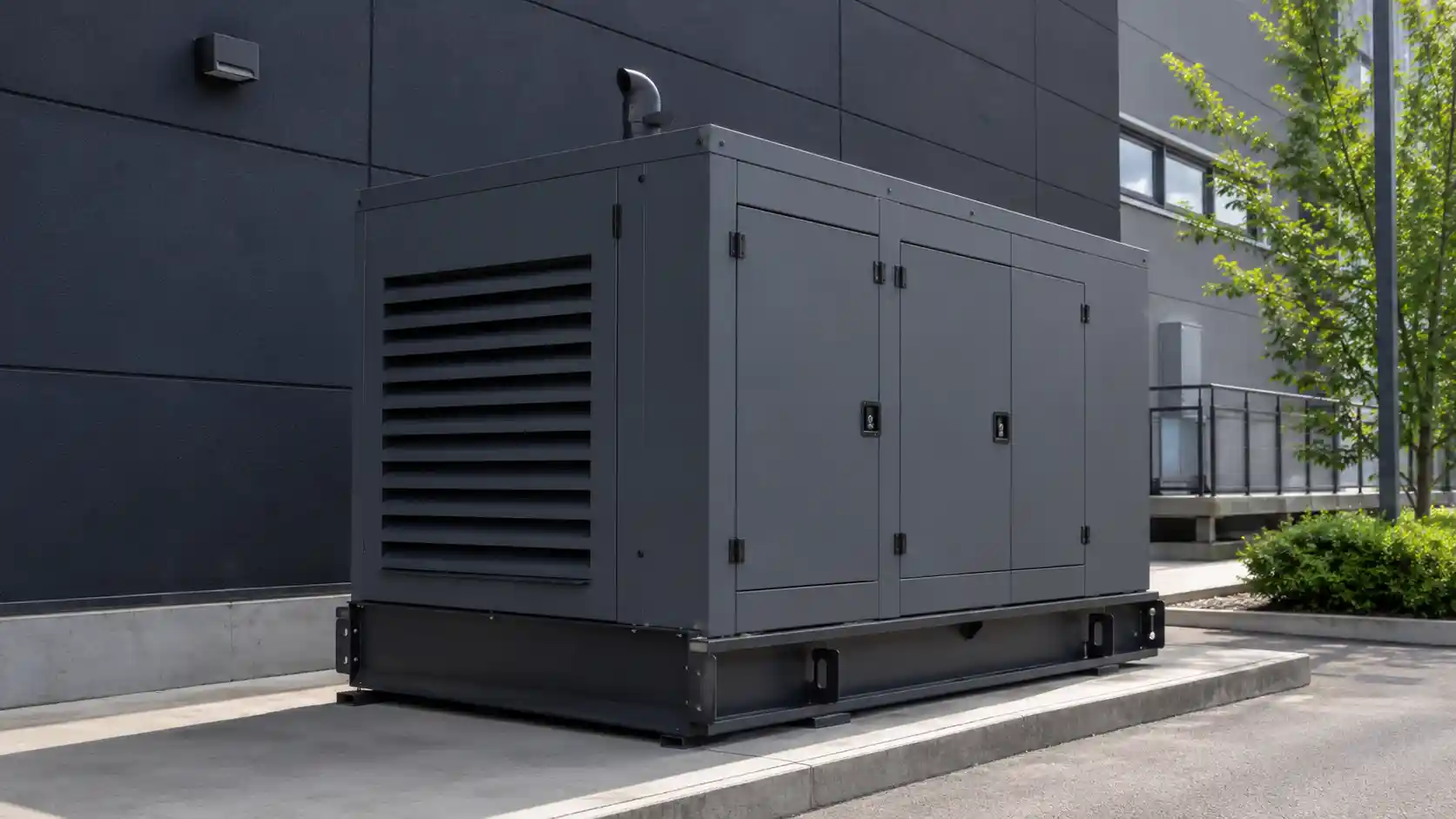
A silent diesel generator is a diesel-powered generator set inside a sound-attenuated enclosure. The engine burns fuel and drives an alternator to make electricity. Its enclosure, muffler, airflow paths and vibration controls reduce the sound that reaches nearby people. B2B buyers should judge the complete system at a stated load, distance and site condition.
What Makes a Diesel Generator “Silent”?
The word “silent” describes a controlled-noise configuration. The set remains audible, while several physical features reduce specific sound paths.
Control Airborne Engine Noise
Combustion, valve motion, gears and the cooling fan create airborne sound. A closed steel canopy contains this energy. Internal treatment absorbs part of it, while sealed joints and fitted doors limit leakage.
Reduce Exhaust Noise
Exhaust pulses carry low-frequency sound. A correctly sized muffler reduces them before gases leave the outlet. Pipe routing, flexible connections and supported joints also affect vibration and back pressure.
Limit Structure-Borne Vibration
The engine and alternator transmit vibration through their mounts, frame and foundation. Resilient mounts interrupt that path. A level foundation and tightened fasteners support stable operation.
Manage Cooling Air Through Controlled Paths
The radiator needs steady airflow through canopy intake and outlet openings. Louvers and baffled passages turn the sound path. Their pressure drop must suit the radiator and fan.
How Does a Silent Diesel Generator Produce Electricity?
The enclosure changes acoustic behavior. Electricity follows the diesel-electric sequence from combustion to controlled output.
Burn Fuel to Turn the Engine
Diesel mixes with compressed air in the cylinders and burns. The pressure moves the pistons and turns the crankshaft. The governor holds rated speed as the electrical load changes.
Drive the Alternator to Produce Electrical Power
The crankshaft turns the alternator rotor. Its magnetic field induces voltage in the stator windings. The winding, rated speed and regulator produce the specified voltage, frequency and phase.
Use the Controller and ATS to Manage Operation
The controller handles start and stop commands, measurements, alarms and protective shutdowns. Options include remote control, remote measurement and communication. An ATS monitors utility power and transfers the load when backup operation begins.
Which Components Reduce Generator Noise?
Each sound source needs a matching component. Use this map when reviewing a quotation.
| Sound Source | Main Control Method |
|---|---|
| Engine and fan | Enclosure panels and acoustic treatment |
| Exhaust pulses | Muffler and supported exhaust path |
| Mechanical vibration | Resilient mounts and rigid base frame |
| Cooling openings | Louvers and baffled airflow passages |
Acoustic Enclosure and Internal Treatment
A documented silent configuration uses a powder-coated steel enclosure. The canopy forms the outer barrier, and internal treatment handles reflected sound. Panel thickness, lining and seals contribute to the measured result.
Intake and Outlet Air Paths
Air inlets feed combustion and radiator cooling; outlets release heated air. Their free area affects sound and temperature. Ask for the airflow requirement and permitted pressure drop.
Exhaust Muffler and Connections
One documented configuration includes a residential muffler. Confirm muffler type, outlet position, pipe diameter and connection scope. Site-installed extensions require engineering review because added restriction can change engine operation.
Mounts, Base Frame and Access Doors
A documented silent canopy includes stainless-steel locks and hinges, a control-panel viewing window, access doors, an integrated base tank and an exterior emergency-stop button. These details support inspection and service.
How Should Buyers Read dB Ratings?
A dB figure becomes useful with stated test conditions. Ask the supplier to place them beside the value.
Check Distance, Load and Measurement Position
Confirm dB(A), distance, load percentage and measurement positions. A reading at 7 meters answers a different site question from a reading near the canopy. Background sound also affects low readings.
Separate Open, Silent and Super-Silent Terms
Open, silent and super-silent labels describe market enclosure classes. Their commercial meaning depends on a stated noise result and test condition. Use a silent and super-silent generator comparison to frame the specification, then request model-specific data.
Account for Walls, Ground and Site Boundaries
Walls, hard ground and narrow yards can reflect sound. Distance, barriers and equipment orientation change the level at a property line. Give the supplier a site plan when the project carries a boundary-noise target.
What Tradeoffs Come with a Silent Enclosure?
Sound attenuation changes airflow, size, weight and service access. Include these effects in the installation review.
Verify Cooling and Derating
The radiator rejects engine heat through restricted enclosure paths. Confirm maximum ambient temperature, altitude and the applicable derating curve. Intake and outlet placement should keep discharged hot air from returning to the radiator inlet.
Plan Space, Lifting and Service Access
One documented 60 Hz, 25 kVA configuration measures 1800 x 750 x 1430 mm and 860 kg as an open set. Its silent version measures 2300 x 1000 x 1580 mm and 1000 kg. Use the purchased model’s values for transport, foundation and clearances.
Inspect Seals, Doors and Exhaust Parts
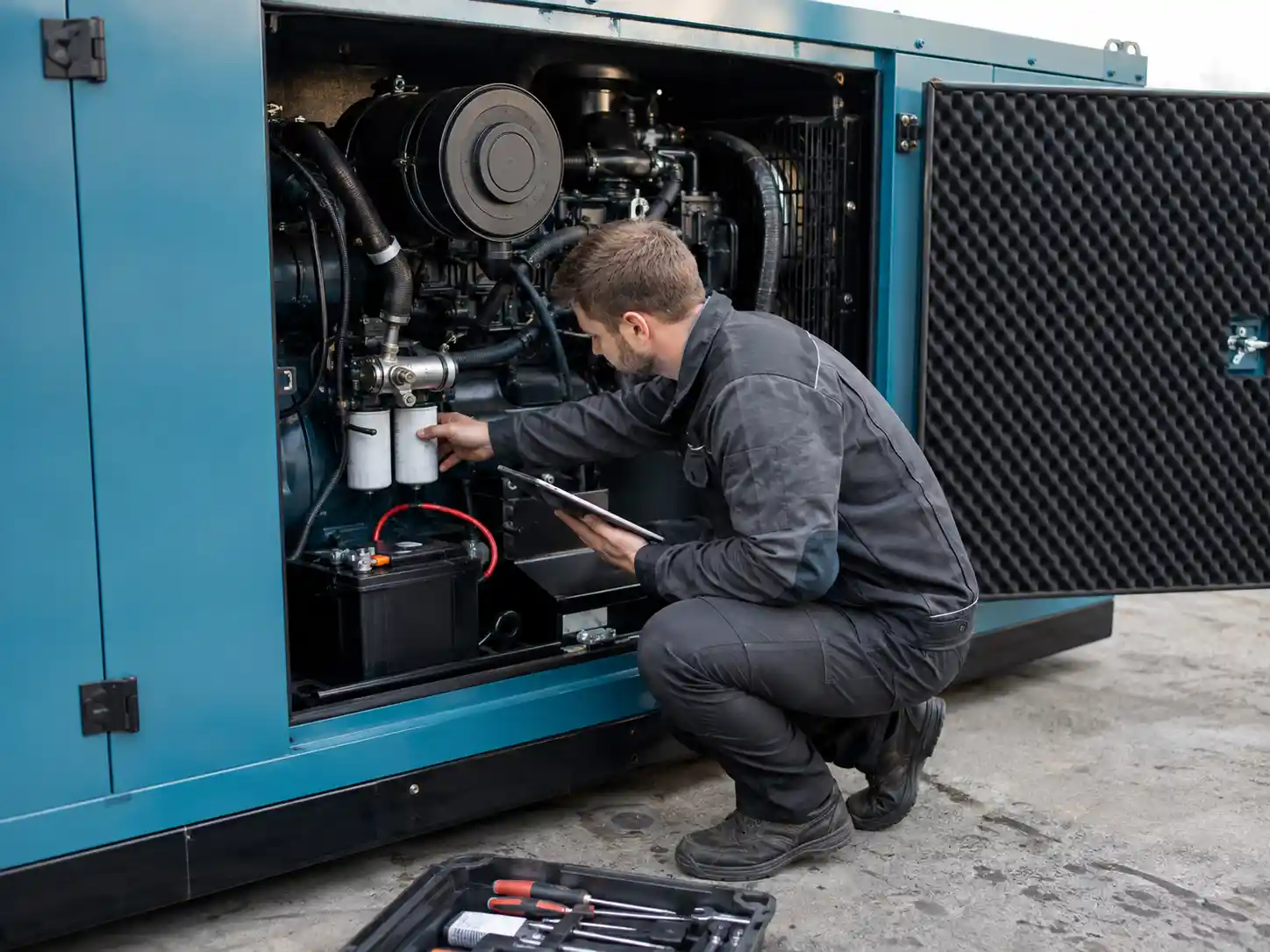
Inspect before daily operation; standby sets may use weekly checks. Run an idle standby set for five minutes every two weeks and at 50% load for one to two hours monthly. Every six months, simulate electrical faults, clean battery-cover vents, tighten exhaust and electrical connections, and observe the controller display.
Where Are Silent Diesel Generators Used?
Sound-attenuated sets serve locations where backup or prime power operates near staff, guests, patients, neighbors or active work areas.
Hospitals, Hotels and Commercial Buildings
Review the load sequence, ATS operation, enclosure placement and measurement point. The hospital and hotel backup power application provides project context.
Data Centers, Telecom and Industrial Facilities
Data centers and telecom sites need automatic starting, alarms and remote status. Factories add motor-starting loads or dust. Select cooling and service access from actual duty.
Construction, Events and Mobile Projects
Construction and mobile projects add lifting, trailer and fuel-runtime needs. Record each operating location, noise target and load profile in the inquiry.
What Should Buyers Check Before Choosing One?
A complete quotation connects electrical performance, acoustic conditions, enclosure scope and service evidence.
Confirm Rating, Duty, Voltage, Frequency and Phase
State running and starting loads, standby or prime duty, voltage, 50 or 60 Hz frequency and phase. Ask for exact engine and alternator models plus prime and standby ratings in kW and kVA.
Specify the Noise Target and Test Conditions
Write the required dB(A) value, distance, load, measurement positions and environment. Include the site-boundary target where local rules apply. The supplier can then select and test the appropriate enclosure.
Review Enclosure, Tank, Controller and ATS Scope
For the documented 60 Hz, 25 kVA model, standard equipment includes a silent canopy, 24 V starting, main breaker, control panel, 8-hour base fuel tank, batteries, exhaust components, manual and test report. A 300 kW silent generator project shows another output and enclosure configuration.
Request Load Testing, Manuals and Service Details
A documented set specification states that each unit receives a load test before delivery and includes a manual and test report. Request the purchased configuration’s test stages, acceptance limits, wiring diagram, maintenance schedule, spare-parts list and warranty terms.
About UleenGen
Shandong Uleen Generator Co., Ltd. supplies generator sets across eight documented engine families, with open, silent and trailer configurations. Product materials cover steel canopies, base tanks, controller and ATS choices, factory load testing, manuals, test reports and model-specific maintenance guidance. Send the load schedule, duty, electrical data, noise target, test distance, site conditions and destination for a silent generator quotation review. The quotation should identify the selected models, enclosure scope, acoustic conditions, accessories, documents and commercial terms.
FAQ
Q1: Is a Silent Diesel Generator Completely Silent?
A: No. It remains audible. The enclosure, muffler, airflow paths and vibration controls reduce the sound reaching nearby people.
Q2: How Does a Silent Diesel Generator Reduce Noise?
A: It controls engine sound with enclosure panels and acoustic treatment, exhaust pulses with a muffler, vibration with resilient mounts and airflow noise with baffled passages.
Q3: What Is the Difference Between Silent and Super-Silent Generators?
A: The labels describe different sound-attenuation packages. Compare them through model-specific dB(A), distance, load and test-environment data.
Q4: Does a Silent Enclosure Affect Generator Cooling?
A: Yes. The enclosure guides cooling air through defined openings, so radiator capacity, airflow restriction, ambient temperature and altitude require review.
Q5: What Should Buyers Compare in Silent Generator Noise Ratings?
A: Compare dB(A), distance, load percentage, measurement positions, background sound and test environment, then check the site-boundary requirement.


