



contact us
-
3-2-1003 Software park, Weifang Hi-tech Zone, Shandong, China
- +8615095247272
- sales@uleengen.com
-


Telecom Tower Generator Sets: Reliable Backup Power


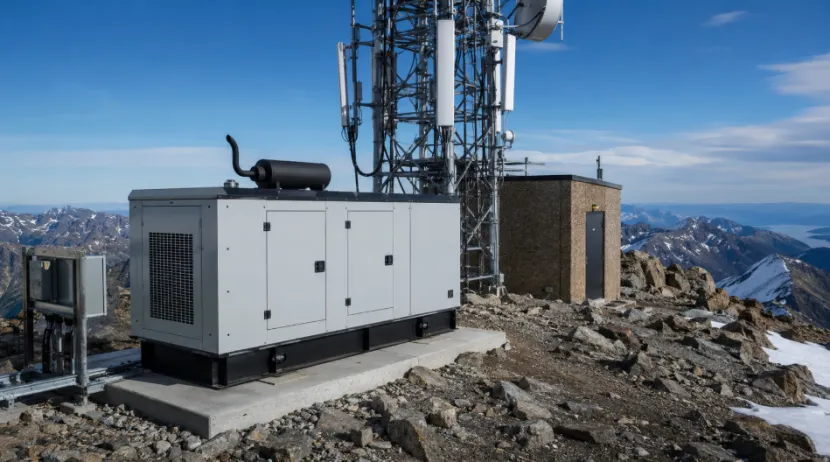
Telecom towers do not fail quietly. When power drops, calls break, data slows, emergency messages may not pass, and a whole rural area can suddenly feel cut off. That is why generator sets for telecom towers are not just spare machines sitting beside a cabinet.
They are part of the network itself. For mountain sites, desert stations, island towers, and roadside base stations, stable power is often the difference between coverage and no coverage.
Why Do Telecom Towers Need Reliable Generator Sets?
A telecom site usually runs radio equipment, rectifiers, battery banks, cooling units, lighting, and security devices. Some loads are small, but they run all day. Others, like air conditioning or battery recharge systems, can create sudden demand. If you manage remote sites, backup power for telecom towers should be planned before the first outage happens, not after a field team gets called out at midnight.
Grid Failure Can Cause Network Downtime
A power outage at telecom towers can create call drops, coverage gaps, and unhappy users. In cities, users may switch to another tower. In remote areas, there may be no second option. This is where a telecom tower generator set protects service continuity. A good telecom generator starts fast, carries the right load, and keeps the site alive until the grid returns.
Remote Sites Need More Than Short Backup
For rural hills, border areas, mines, highways, and farms, remote telecom tower power supply is often harder than the tower construction itself. Weak grid lines, storms, long feeder cables, and poor road access all matter. In some locations, an off-grid telecom tower generator may serve as the main supply for long periods, supported by batteries and scheduled fuel delivery.
What Types of Generator Sets Are Used for Telecom Towers?
Perkins and Cummins stand as two of the world’s leading brands in the field of diesel generator sets. In the telecommunications base station sector, they primarily serve as the core power generators within backup power systems, providing stable and reliable electricity to base stations and ensuring that communication networks remain operational in the event of a mains power outage. Other important factors to should be consider such as load size, runtime, fuel access, noise rules, and maintenance distance. A city rooftop site and a solar-assisted mountain site should not be treated the same. That sounds obvious, but many early quotations still miss this point.
| Genset Model | 50HZ | Diesel Engine | Alternator | Overall Size (mm) | Gross Weight (kg) | ||
| Power (kW) | Power (kVA) | Model | Rated Fuel Consumption (L/h) | Model | |||
| UP10GF | 8 | 10 | 403A-11G1 | 1.9 | S0L1-H1 | 1580x810x930 | 500 |
| UP13GF | 10 | 13 | 403A-15G1 | 2.4 | S0L1-L1 | 1580x810x930 | 520 |
| UP20GF | 16 | 20 | 404A-22G1 | 3.8 | S0L2-G1 | 1580x810x990 | 540 |
| UP25GF | 20 | 25 | 404D-22TG | 4.7 | S0L2-M1 | 1580x810x990 | 540 |
| UP30GF | 24 | 30 | 1103A-33G | 5.6 | S0L2-P1 | 1580x810x1165 | 660 |
| UP40GF | 32 | 40 | 1103A-33TG1 | 7.5 | S1L2-K1 | 1595x810x1150 | 730 |
| UP45GF | 36 | 45 | 1103A-33TG1 | 8.4 | S1L2-N1 | 1595x810x1150 | 730 |
| UP60GF | 48 | 60 | 1104A-44TG1 | 11.2 | S1L2-Y1 | 1580x810x1166 | 780 |
| UP80GF | 64 | 80 | 1104A-44TG2 | 14.9 | UCI224G | 1760x810x1165 | 800 |
| UP100GF | 80 | 100 | 1104C-44TAG2 | 18.7 | UCI274C | 2240x960x1315 | 1030 |
| UP125GF | 100 | 125 | 1106A-70TG1 | 23.4 | UCI274ES | 2240x960x1315 | 1030 |
| UP150GF | 120 | 150 | 1106A-70TAG2 | 28.1 | UCI274F | 2240x960x1315 | 1300 |
| UP180GF | 144 | 180 | 1106A-70TAG3 | 33.7 | UCI274G | 2345x810x1365 | 1300 |
| UP200GF | 160 | 200 | 1106A-70TAG4 | 37.4 | UCI274H | 2240x960x1590 | 1300 |
Diesel Generator Sets for Telecom Sites
A diesel generator for telecom tower applications is still common because it starts quickly, handles changing loads well, and has a mature service path. A telecom diesel generator set fits sites where fuel trucks can arrive on schedule and the grid is unreliable. For a generator set for telecom base station, diesel is often chosen when the buyer wants simple operation and proven field behavior.
DC and Hybrid Power Options
A DC generator for telecom tower can work well in battery-centered systems, since many telecom loads already depend on DC power. A hybrid generator for telecom tower can combine diesel generator power, battery storage, and solar input. This can cut fuel use, but only when the battery size, solar condition, controller logic, and maintenance skill are all realistic.
Which Generator Structure Fits Different Telecom Tower Sites?
The structure of the genset affects noise, cooling, weather protection, transport, and service access. UleenGen offers different types of generator sets including open type, silent type, mobile trailer type, and containerized type options, which helps you match the generators to the site instead of forcing one design everywhere.
Silent, Containerized, Trailer, and Open Designs
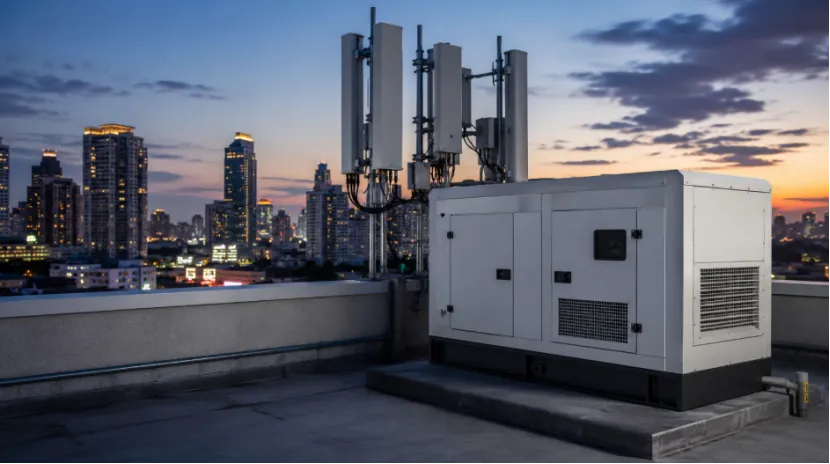
A silent generator for telecom sites fits urban, residential, and rooftop locations where noise complaints are a real risk. A soundproof generator set for telecom tower also helps night operation feel less intrusive. For harsh locations, a containerized generator set for telecom gives stronger protection against dust, rain, heat, and rough transport.
For storms, temporary towers, or repair work, a mobile generator set for telecom emergency power gives fast support. An open type generator set for telecom site can work in a protected equipment room where ventilation and weather shielding already exist.
What Power System Details Should Buyers Check?
A genset is only one part of a telecom power system. The battery bank, ATS, control cabinet, fuel tank, cooling route, cable size, and alarm setup decide whether the site works smoothly. Small details matter. A loose fuel plan or weak battery can make a good machine look bad.
Load Calculation, ATS, and Remote Monitoring
Before buying, ask for generator sizing for telecom tower work based on actual loads. A proper telecom site power load calculation should include radio equipment, rectifiers, battery charging, air conditioning startup, lighting, and future expansion. An ATS generator system for telecom or automatic transfer switch for telecom generator allows the site to shift power automatically after grid failure.
A remote monitoring generator set helps you view voltage, frequency, current, oil pressure, temperature, battery voltage, run hours, and alarms from the operation center. For unattended towers, an auto start generator for telecom tower and a generator control cabinet for telecom sites are not extras. They are practical safeguards.
How Should Telecom Generator Maintenance Be Planned?
Telecom power failures often come from boring things: low fuel, weak battery, dirty filter, poor coolant level, blocked airflow. Not exciting, but very real. Maintenance planning should match the distance and access difficulty of each site.
Fuel, Runtime, and Field Checks
For remote towers, fuel supply for remote telecom generators should be planned around road condition, weather, theft risk, and refilling interval. A long runtime generator for telecom tower can reduce site visits, but it still needs checks.
Monthly load tests, battery inspections, filter replacement, fuel tank cleaning, and maintenance logs help avoid fake reliability. A genset that starts with no load may still fail when cooling and battery charging loads arrive together.
Why Choose UleenGen for Telecom Power Projects?
UleenGen has focused on intelligent generator set research and manufacturing since 2011. Its product range covers diesel generator sets, gas generator sets, generator control cabinets, ATS cabinets, synchronization cabinets, light towers, and customized power products.
The company provides technical consultation, training, installation, maintenance, and lifetime technical support, which is useful when sites are scattered across different regions.
Its power range covers small and large industrial needs, while its generator by structure lineup gives telecom buyers choices for silent, mobile, open, and containerized projects. For buyers who need a practical power solution for telecom infrastructure, the value is not just the genset. It is the matched package.
Stable Power Keeps Networks Online
Reliable power for telecom networks means fewer emergency trips, less telecom tower downtime, and fewer service complaints. With the right telecom tower backup power system, a station can ride through outages, bad weather, and unstable grids. For remote communication network power supply, that steady hum beside the cabinet is easy to ignore. Until the grid fails. Then it becomes the most important machine on site.
FAQ
Q1: What Size Generator Is Needed for a Telecom Tower?
A: The size depends on radio equipment, rectifiers, battery charging load, cooling units, lighting, and future expansion. A site survey and load calculation should come before purchase.
Q2: Is a Diesel Generator Good for Remote Telecom Towers?
A: Yes. Diesel generator sets are widely used because they start fast, handle changing loads, and work well where fuel delivery can be planned.
Q3: What Does an ATS Do in a Telecom Generator System?
A: An ATS switches the site from grid power to generator power automatically when the main supply fails. This is important for unattended telecom towers.
Q4: Can Telecom Generator Sets Support Remote Monitoring?
A: Yes. A remote monitoring setup can show power data, running status, alarms, temperature, oil pressure, battery voltage, and operating hours.
Q5: Which Generator Structure Is Better for Telecom Sites?
A: Silent type suits urban sites, containerized type suits harsh remote areas, trailer type suits emergency recovery, and open type works in protected equipment rooms.


