


contact us
-
3-2-1003 Software park, Weifang Hi-tech Zone, Shandong, China
- +8615095247272
- sales@uleengen.com
-


Marine Generator Fuel Consumption: How Much Diesel Do You Need?
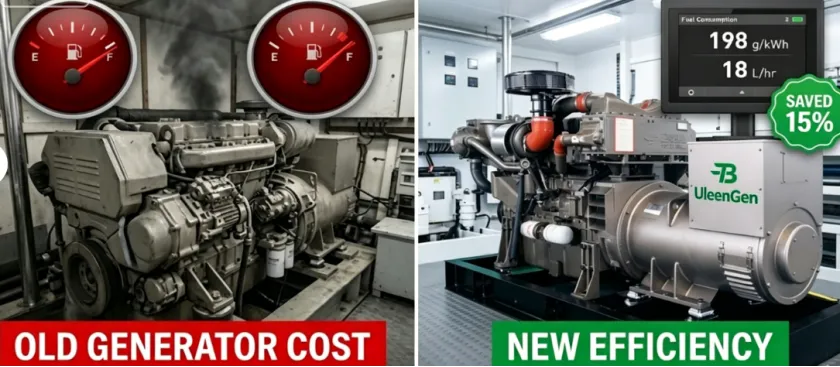
If you run a vessel, fuel cost never stays in the background for long. It shows up every day in the logbook, in trip planning, and in the final operating bill. That is why marine generator fuel consumption gets so much attention. You are not just buying a machine. You are buying every hour it runs. On many boats, high boat generator fuel consumption comes from a simple mistake: the genset is too large for the real onboard load, so it spends too much time running light.
A quick note on the company behind this topic. UleenGen is a generator set manufacturer founded in 2011, with technical consultation, training, installation, and maintenance as part of its stated service scope. Its site also says the company offers a wide power range, holds multiple certifications, and ships to more than 70 countries and regions. That matters here because fuel use is not only about the engine. It is also about how a supplier helps you size, install, and keep the unit working in real conditions. That part gets skipped a lot, honestly, but it usually shows up later in fuel bills and service calls.
Why Marine Generator Fuel Consumption Matters?
Before looking at numbers, it helps to ask what you are really trying to control. Most buyers are not chasing a lab figure. You want stable onboard power without paying for wasted diesel every single day.
Fuel Cost Becomes a Long-Term Operating Issue
A diesel generator can run climate control, galley equipment, battery charging, workshop tools, and safety systems on board. On fishing boats, ferries, yachts, tugboats, and crew boats, those loads can stay on for long hours. So even a small gap in efficiency adds up over a season. If your generator sets burn more fuel than they should, the problem usually is not dramatic at first. It is just steady. And steady is expensive.
The Main Question Is Not Just Power, but Match
Many buyers ask how much diesel does a boat generator use. That is the right question, but it should lead to a second one: how much power do you really need most of the time? A unit that looks safe on paper can still be a poor fit at sea.
How Much Diesel Does a Boat Generator Use?
There is no single answer because real fuel burn depends on power output, load percentage, engine design, and running hours. Still, you can get close enough to make a good buying decision.
Fuel Consumption Is Commonly Measured in g/kWh
On the marine generator page, the rated fuel consumption figures listed for the 50 Hz models mostly sit between 198 and 205 g/kWh. Smaller units such as 30 kW and 50 kW are listed at 205 g/kWh, while larger units such as 400 kW, 600 kW, and 1000 kW are listed at 198 g/kWh. That gives you a practical benchmark for diesel marine generator fuel efficiency when you compare models.
What Does That Mean in Daily Use?
If you want marine generator fuel consumption per hour, you can turn that figure into liters per hour. A rough field formula is: output in kW × fuel consumption in g/kWh, then divide by diesel density. For example, a 100 kW genset rated at 205 g/kWh at full output will use roughly 24 liters per hour. In real life, you may run at 50 to 75 percent load, so the hourly number changes. That is why spec sheet data matters, but load profile matters just as much.
What Affects Marine Generator Fuel Consumption per Hour?
This is where customer concerns usually get real. You can accept normal fuel use. What you do not want is hidden waste.
Load Percentage Changes Everything
A genset is usually happiest in a healthy working range, not idling through long light-load periods and not pushed to the edge all day. If you oversize the unit, you may get poor fuel burn for the actual job. If you undersize it, you risk strain, heat, and unstable service. Either way, the diesel bill goes the wrong way.
Boat Type and Onboard Equipment Matter
The same generator behaves differently on different boats. A yacht may lean on air conditioning, water heating, appliances, and entertainment loads. A workboat may feed cranes, compressors, or winches. A long-haul vessel may care most about battery charging, navigation electronics, and emergency systems during extended voyages. Those are not small details. They shape the true load pattern every day.
How to Choose a Fuel Efficient Marine Generator?
Once you know your common loads, you can make a smarter pick. That is the point where marine generator sizing stops being a theory exercise and starts saving money.
Start with Real Load Lists, Not Guesswork
List your air conditioning, galley appliances, chargers, pumps, lights, navigation gear, and any workshop equipment. Then separate average load from peak load. A lot of buyers only look at the highest number. That tends to lead to oversized diesel generator sets.
Look for a Marine-Ready Specification
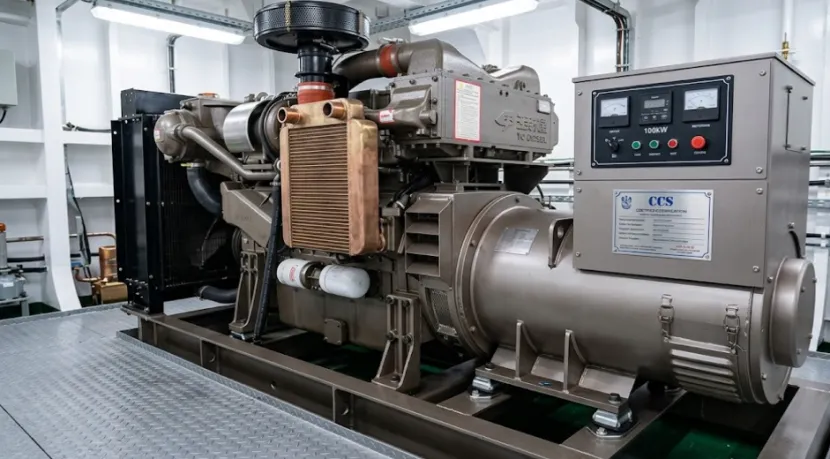
The marine generator on the company page is described as a 4-stroke, water-cooled genset using a sea water heat exchanger, with 50/60 Hz options, a 10 to 1000 kW power range, and a CCS certificate. Those points matter because you want a set built for vessel duty, not a land use generator pushed into a marine job. If you are comparing options, this is the boring but useful stuff to check first.
How to Reduce Marine Generator Fuel Consumption?
You cannot remove fuel cost, but you can cut waste.
Match the Unit to the Real Duty Cycle
Choose a genset that spends most of its life in a sensible load range. This is often the biggest fix for how to reduce marine generator fuel consumption.
Keep Service Simple and Regular
A supplier that offers consultation, installation support, and maintenance can help you avoid common setup and service errors. Fuel burn does not stay low by accident. Basic things matter. Filters matter. Cooling performance matters. Even wiring and control setup matter more than people expect.
FAQ
Q1: How much diesel does a boat generator use per hour?
A: It depends on generator size, load, and rated fuel consumption. A practical estimate comes from kW output and the g/kWh figure on the spec sheet.
Q2: What is a good fuel consumption rate for a marine generator?
A: On the referenced marine page, rated values run from 198 to 205 g/kWh, which gives you a useful benchmark for current diesel generator sets.
Q3: Does a bigger marine generator use more fuel?
A: At full load, yes, but the real issue is sizing. A larger unit running too lightly can waste fuel for your actual onboard demand.
Q4: How to choose the right marine generator size?
A: Start with your real onboard loads, then compare average load, peak load, and daily running hours. That gives you a much better sizing result than choosing by guess.
Q5: How to reduce marine generator fuel consumption?
A: Use the right size, avoid long low-load operation, and keep the genset maintained. In daily operation, those three steps usually matter more than any sales promise.


