



Contacta amb nosaltres
-
3-2-1003 Parc de programari, Weifang Zona d'alta tecnologia, Shandong, Xina
- +8615095247272
- sales@uleengen.com
-


Natural Gas Generators in Africa and South America: Fuel Supply Limits, Real Costs, and Runtime Risks
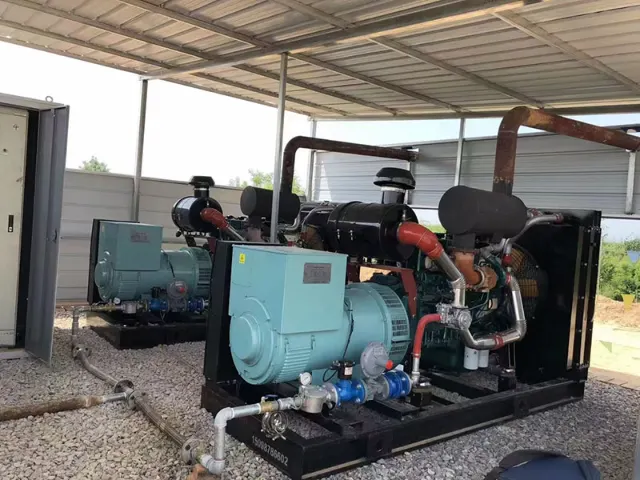
When your grid drops often, two questions show up before you even talk price. What gas does a generator use at your site, and can that fuel arrive every time you need it. Then the practical one: how much gas does a generator use when it runs for hours, not a quick test run. In Africa and South America, those answers shape pipe sizing, storage space, runtime plans, and the money you will spend each month.
What Gas Does a Generator Use in Real Projects and Why It Matters in Developing Power Markets
Fuel choice is not a small detail. A “gas generator” can mean pipeline natural gas, LPG, treated biogas, or oil field gas. Each fuel brings its own limits on pressure, quality, delivery, and safety checks. If fuel is unstable, your generator plan turns into daily firefighting, even if the hardware is solid.
Gas Generators vs Natural Gas Generators: Fuel Type Basics for Buyers
In tenders, people still label everything as gas generators, even when the fuel is pipeline natural gas. Keep the terms straight during selection. Natural gas generators fit best when pipeline gas or a regulated gas supply is available and pressure stays within spec. LPG can work where pipelines are thin, but storage and refill timing become part of operations. Biogas and landfill gas can be a good match for certain sites, but gas cleaning and stable composition matter.
If you want a quick site check, ask three things. Is gas available every day. Is pressure stable. Can delivery keep up during long outages. If one answer is “maybe,” plan a buffer or a fallback.
How Much Gas Does a Generator Use and Why “Per Hour” Numbers Can Mislead
How much gas does a generator use per hour depends on load. A generator that runs at 30–40% load often burns gas in a less efficient zone. That pattern is common in mixed-use buildings where only critical loads run. A useful early estimate is a mid-load factor, then you tighten it with the engine fuel map.
Also, do not treat one number as universal. Heat, altitude, and gas quality can shift consumption. A hot day plus weak gas pressure can change your plan fast.
Natural Gas Generator Fuel Consumption: How Much Gas Does a Generator Use at 50%, 75%, and 100% Load
This section is where you stop guessing and start planning. You do not need a perfect figure on day one, but you do need a repeatable method. Start with load level, calculate hourly fuel flow, then check whether your fuel system can support that flow during the longest outage window.
How Much Gas Does a Generator Use per Hour? Load-Based Consumption Table
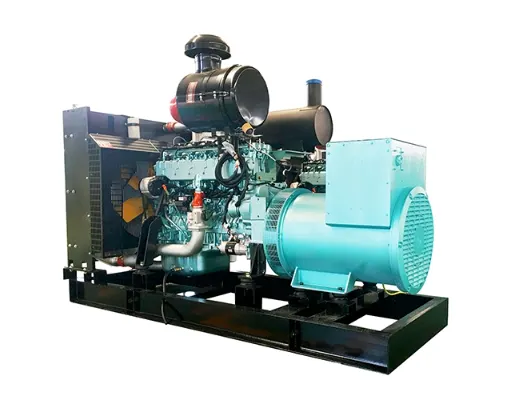
For the Ricardo series gas generator range (often used around 120–250 kW prime power), the product reference lists natural gas consumption: 0.29 NM3/kw.h, and notes 50HZ/60HZ availability.
Using that 0.29 reference value at 75% load gives a practical starting estimate:
| Potència primària (kW) | Typical Load (75%) (kW) | Estimated Gas Use (Nm³/h) |
|---|---|---|
| 120 | 90 | ~26 |
| 150 | 113 | ~33 |
| 200 | 150 | ~44 |
| 250 | 188 | ~54 |
Now turn that into a real question: if your site expects 10 hours of outage time, a 200 kW class plan can land around 440 Nm³ per day at that load band. That number often decides whether pipeline capacity is enough, or whether you need on-site fuel planning.
Natural Gas Consumption for Generators at Partial Load: Why 50%–75% Is Common
Most sites do not run “everything” during an outage. You keep lifts, pumps, fire systems, security, servers, and some cooling. You cut decorative loads. That pushes many projects into the 50–75% zone. It is normal, and it is why the 75% line is often more useful than the 100% line.
If you see a proposal that only shows full-load numbers, ask for partial-load figures. It changes the fuel plan.
Natural Gas Generators in Africa: Fuel Supply Constraints, Gas Pressure Fluctuation, and Runtime Planning
In many African cities, the project does not fail because of kW. It fails because fuel reality was treated like a footnote. Pipeline coverage can vary by district. Pressure can swing with demand. Delivery can get delayed. If you plan for best-case fuel, you get worst-case downtime.
Fuel Supply in Africa: Pipeline Gas Availability and On-Site Alternatives
Where pipeline gas is stable, natural gas generators in Africa can be a strong fit for long runtime needs. Where pipelines are limited, projects often lean on LNG regas, LPG vaporization, or local fuels such as oil field gas, biogas, and landfill gas. The Ricardo series fuel list commonly includes natural gas/methane gas, oil field gas, biogas, landfill gas, LPG, and biomass gas, with a note that special gas projects should share gas composition for a proper plan.
That last point is not marketing fluff. Gas composition decides how the engine behaves, and how stable the output feels.
Gas Pressure Fluctuation and Its Impact on Natural Gas Generators
Pressure drop does not only reduce output. It can trigger alarms, derating, and unstable combustion. That leads to the annoying cycle where the generator starts, trips, restarts, and trips again. You lose time, and you burn fuel while going nowhere.
If your gas source has pressure swings, plan regulation, filtration, and clear operating limits early. Then confirm behavior during commissioning, not after handover.
Gas Generator Runtime in Africa: How Fuel Logistics Affects Sizing
Runtime is not only storage size. It is delivery cadence, site access, and refill timing. If deliveries are uncertain, an oversized plan can backfire. A smaller plan that matches critical loads can run longer on the same fuel availability. That is a quieter win, but it is still a win.
Natural Gas Generators in South America: Fuel Cost Volatility, Supply Stability, and Long Runtime Operation
In South America, pipeline access can be better in many areas, so the fuel conversation shifts. The big risk often becomes cost swings, contract terms, and what happens when industrial demand peaks. You still need a fuel plan. It just looks different than in Africa.
Pipeline Gas Availability in South America: What Changes for Gas Generators
Better gas access can make natural gas generators in South America attractive for industrial parks and commercial sites. It also adds new checks: metering rules, spare pipeline capacity during peak hours, and what your supplier guarantees when the grid is unstable.
Do not assume “pipeline” means “unlimited.” Many sites learn that lesson the hard way.
Gas Generator Operating Cost in South America: Fuel Price Volatility and Budget Risk
Operating cost is not only “gas per hour.” It is tariff structure, contract terms, demand charges, and the cost of long runtime during grid events. If finance asks for one clean number, give a range tied to load and hours. That avoids budget drama later.
Long Runtime Natural Gas Generators: Planning Continuous Operation for Commercial Sites
Long runtime changes maintenance rhythm. Filters, plugs, oil checks, and inspection windows become routine. If your site cannot support that schedule, reliability drops. It often happens at the worst time, right before a holiday or a high-sales weekend.
Real Operating Cost of Natural Gas Generators: Beyond Fuel Consumption per Hour
Fuel maps matter, but they are not the whole bill. Early quotes often miss the “quiet costs,” then you pay for them during commissioning. Put these items on the table early. It makes supplier comparison easier, too.
Gas Generator Operating Cost Drivers: Fuel Price, Transport, Storage, and Metering
Even with pipeline gas, metering and regulation hardware can be meaningful costs. With LNG or LPG, transport and storage can dominate. A simple model works well: expected load band, hours per day, days per month, plus a delivery plan and a service plan.
Maintenance Costs for Natural Gas Generators Under Long Runtime Conditions
Long runtime means more service events. Parts are not exotic, but downtime is expensive. Plan for service access, spare consumables on site, and a maintenance calendar that matches your duty type.
Oversized Gas Generators and Low-Load Running: Hidden Cost and Reliability Risks
Oversizing feels safe, but low-load running can mean poor efficiency and more deposits over time. A better approach is to size around real critical loads, then add redundancy if uptime is the true requirement.
EPC Checklist for Natural Gas Generators: Runtime, Redundancy, and Gas Generator Sizing
EPC work moves faster when you use a short checklist that forces real answers. It also cuts rework after delivery. That alone can save weeks.
Runtime Assumptions for Gas Generators: Standby vs Prime vs Continuous
Define duty type early. Standby for short outages is not the same as prime power for daily gaps. Continuous duty is different again. Duty type changes engine selection, cooling design, and the maintenance plan.
Gas Generator Sizing for Unstable Grids: Starting Loads, Peak Loads, and Fuel Buffer
Sizing is not only kW. It is also starting loads, peak loads, and fuel buffer. Add motor starting for pumps, compressors, and lifts. Then build a fuel buffer plan. A fuel plan with no buffer is not a plan.
One Larger Gas Generator or Multiple Generator Sets: Redundancy Trade-Offs
Multiple generator sets can match load better and add redundancy. One larger gas generator can simplify installation. Your site layout, service access, and fuel limits usually decide the better option.
When Natural Gas Generators Make Sense in Africa and South America and When They Don’t
Natural gas generators make sense when fuel is stable, runtime is planned, and service support is realistic. They struggle when fuel supply is uncertain, pressure swings get ignored, or the project relies on best-case assumptions. In some sites, diesel generators or hybrid power can be more practical, even if gas looks cheaper in a spreadsheet.
Conclusion: How to Reduce Fuel Supply Risk and Control Natural Gas Generator Operating Cost
You can treat how much gas does a generator use as a math problem, but projects treat it as a risk problem. Start with load bands and runtime. Map fuel supply reality. Size the generator plan and the fuel system together. Do that, and natural gas generators can be a steady answer for Africa and South America.
Uleengen Brand Snapshot
Shandong Uleen Generator Co., Ltd. (Uleengen) positions itself as a professional manufacturer of intelligent generator sets since 2011, with 10+ years of industry experience and a factory floor area of 20,000+ square meters. It also states 6,000+ generators delivered worldwide and supply to 70+ countries and regions. If you are sourcing for a project, the support list matters as much as the catalog. Uleengen highlights technical consultation, training, installation, and maintenance support, plus after-sales service with 24/7 free technical support, response within 12 hours, lifetime support across product series, and on-site support for special projects. That combination fits the real buyer concern: you do not only need equipment, you need a partner that helps you keep power stable after the container arrives.
FAQ
Q1: What gas does a generator use if pipeline natural gas is not stable?
A: You can see projects use LPG, treated biogas, oil field gas, or landfill gas. The key is gas quality and pressure control, not just the fuel name.
Q2: How much gas does a generator use per hour for a 150 kW class plan at 75% load?
A: A rough estimate uses the supplier’s fuel reference. Using 0.29 NM3/kw.h as a reference, 75% load on 150 kW lands around the low 30s Nm³/h, then you confirm with the exact engine map.
Q3: Why do natural gas generators trip more often when gas pressure swings?
A: Low or unstable pressure can cause unstable combustion and protective shutdowns. Good regulation and clear operating limits reduce those events.
Q4: What is the easiest way to plan runtime for Africa projects with uncertain fuel delivery?
A: Start with a realistic critical-load list, then match generator sizing to that load band. Add a fuel buffer plan that fits delivery cadence and site access.
Q5: Should you choose one larger gas generator or multiple generator sets for an unstable grid?
A: Multiple generator sets can add redundancy and match load better. One larger gas generator can simplify installation. The right choice depends on your load profile, service access, and fuel limits.


