



Contacta con nosotros
-
3-2-1003 Parque de software, zona de alta tecnología de Weifang, Shandong, China
- +8615095247272
- sales@uleengen.com
-


Gas Generator Project Checklist: Fuel Supply, Safety and Installation Reviews


Choosing the generator is only one line in a gas-generator project. The fuel source, package connection, installation location and contractor scope have to fit together. A gap in any one of these can leave the buyer comparing an equipment offer against assumptions that nobody has confirmed.
Start by collecting the project inputs and naming the person responsible for each technical decision. Fuel characteristics and site approvals vary with the source, package and jurisdiction; a buyer’s checklist cannot settle them in place of the responsible gas designer, equipment documents or local authority.
Use this as a coordination checklist. Pipe sizing, pressure settings, ventilation, hazardous-area classification and operating instructions require project-specific review by qualified professionals.
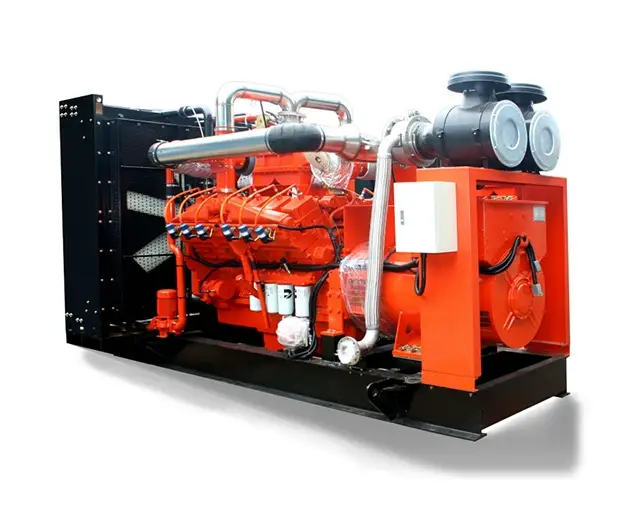
Define the fuel source before comparing equipment
Write down the proposed source before reviewing a model: utility pipeline, site supply or another arrangement. “Gas” alone does not tell the equipment supplier what fuel basis to check. Name the supplier or engineer who will provide the applicable fuel information.
Ask that person for the fuel documents relevant to the offered configuration, including the properties and supply conditions the designer needs to confirm. A natural-gas product description does not establish compatibility with every gas composition or supply arrangement.
The fuel basis should be linked to the generator model and revision under consideration. If the fuel source changes during planning, the equipment supplier and responsible gas designer should review whether the earlier selection and interface documents remain valid.
El UleenGen gas generator range is a starting point for identifying product families. It does not establish that a particular model accepts a project’s fuel source. Confirm fuel compatibility against the exact equipment documentation and the project’s approved basis.
Map the fuel interface and its owners
Put the package connection on a current drawing and mark the scope boundary beside it. The fuel supplier, gas contractor, generator supplier, electrical contractor and project engineer may each own a different part; the drawing and contract should make those handoffs explicit.
Record the interface questions that remain open:
- Which party confirms the fuel characteristics and available supply conditions?
- Which party designs and installs the upstream fuel system?
- Which connection point and equipment boundary appear on the current drawing?
- Who reviews any required treatment, filtration, pressure regulation or isolation equipment?
- Which documents must be approved before installation proceeds?
- Who verifies the completed interface before commissioning?
Check every answer against the contract scope. “By others” is not an owner. If the drawing leaves a task between two contractors, assign it before the installation package is treated as complete.
Do not infer pipe size, operating pressure or connection details from a different installation. Those values depend on the exact model, fuel and site design. The project’s qualified gas designer and the equipment’s applicable documentation should establish them.
Review the site and installation documents together
Review the site using a plan that matches the generator configuration now being quoted. Mark the proposed location, access route, adjacent equipment and utility connections; then list the current civil, mechanical, electrical and control drawings used for the review.
The site team should confirm which local reviews apply, who is responsible for obtaining them and what evidence is required before construction or commissioning. Requirements depend on jurisdiction and project scope. This checklist does not determine whether a permit, inspection or specific safety measure is legally required.
Have the gas, generator, electrical, exhaust and site-safety owners review the same location revision. If the set moves, send the revised plan back to each affected owner; the fuel route, access and document responsibilities may have changed together.
Keep each review tied to a document revision. If the location, fuel source, generator model or connection point changes, record the affected drawing and send it back to the relevant owner. Do not carry forward an earlier approval without confirming that its assumptions still apply.
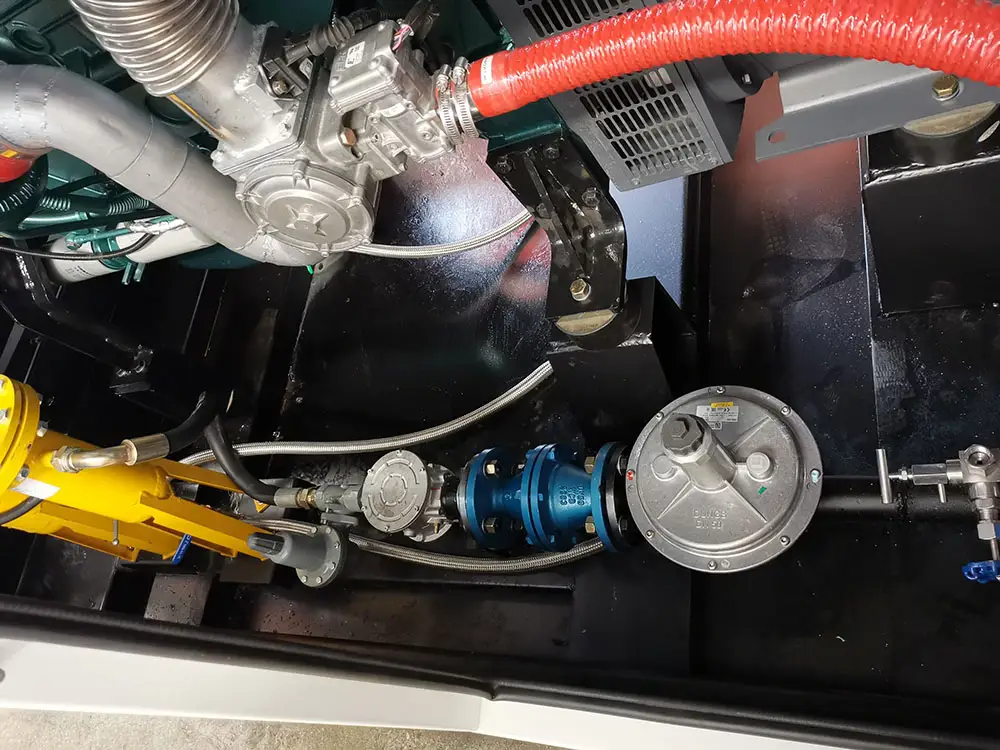
Put safety responsibilities in writing
Gas-related safety decisions belong to qualified project professionals and the authorities responsible for the site. The buyer’s role is to make sure those responsibilities are assigned and documented, not to improvise a design or operating procedure.
Before work begins, clarify who is responsible for:
- The site-specific risk assessment and applicable approval process.
- Design and installation of the gas supply interface.
- Inspection and acceptance of completed work.
- Control of access to the work area during installation and testing.
- Emergency arrangements and communications for the site team.
- Training and operating instructions for the people who will use the equipment.
The precise controls and sequence depend on the project and local requirements. Do not use a generic checklist to decide gas detection, isolation, ventilation, pressure testing or hazardous-area controls. Ask the responsible qualified parties to define those measures in the project documents.
Where responsibilities cross contractor boundaries, list the handover point and the evidence each party must provide. A signed drawing, approved procedure, inspection record or commissioning document may be required by the project, but the responsible authority determines which records are applicable.
Confirm the generator’s operating scope
A buyer should compare an offer against the duty the project actually needs. Record whether the generator is intended for standby, prime or another project-defined role, and ensure the supplied rating basis matches the expected use. Avoid relying on a single power number without checking its conditions and the included configuration.
The electrical schedule should identify voltage, frequency, phase, control interfaces and the loads that the project expects the set to support. Any model-specific rating or performance statement must be confirmed from the original documentation for the offered configuration. Do not assume that a specification in a product example applies to another model.
Fuel availability also affects the project plan. Ask the fuel supplier to document the expected supply arrangement and any conditions the generator designer needs to consider. If the project relies on a pipeline or another continuous source, identify who confirms its availability and what the project’s contingency assumptions are. Do not treat assumed fuel continuity as a generator capability.
For questions about a particular configuration, use the official service pathway and provide the model reference, fuel basis and project duty. This allows the request to be reviewed against the right documents rather than a general product description.
Build a document register before installation
Keep one project register for the decisions that still need an owner, a source document or a response. It is not a place to copy engineering calculations. Use it to show where the approved information resides and whether the person responsible has reviewed it.
|
Review item |
Evidencia a solicitar |
Responsible party |
|
Fuel source and characteristics |
Applicable supplier information and project fuel basis |
Fuel supplier and gas designer |
|
Generator fuel compatibility |
Exact model documentation for the proposed fuel |
Generator supplier |
|
Fuel-system boundary |
Current drawing showing connection point and scope split |
Project engineer and gas contractor |
|
Site installation basis |
Current site plan and applicable discipline drawings |
EPC or site engineering lead |
|
Local approvals and inspections |
Project-specific register of required reviews and evidence |
Owner, authority liaison and qualified contractors |
|
Commissioning handover |
Approved test and acceptance documents for the installed configuration |
Commissioning lead and responsible engineers |
Use revision numbers and dates so teams can distinguish current documents from superseded drafts. Each open row should have a named owner and a next action. “Pending confirmation” without an owner is difficult to close.
Review changes before they reach site
A late change in fuel source, equipment model, generator location or contractor scope can invalidate assumptions elsewhere in the design. When a change is proposed, identify which documents and responsible parties need to review it.
The change record should capture the original basis, the proposed revision, the affected interfaces and the evidence needed to close the review. If a change affects a local approval or inspection, the responsible project party should confirm whether further authority review is required. Do not assume that an earlier permit or inspection automatically covers a changed design.
Before installation is treated as ready, reconcile the selected equipment, fuel basis, current drawings and assigned responsibilities. Any unresolved technical or regulatory question should remain visible as an open item rather than being hidden by a general statement that the package is “standard.”
For a project document review, contact UleenGen with the proposed generator configuration, fuel-source information and current interface drawing. Keep the request specific about which model or connection question needs confirmation. A clear scope helps the project team identify what can be answered from equipment documentation and what must be resolved by the site’s qualified gas and engineering professionals.
Keep the handover tied to the installed configuration
Before handover, compare the delivered unit identity with the final drawings, fuel basis and commissioning record. The pack should describe the configuration on site, not an earlier model or superseded layout.
Store open items with their owners and disposition. If a required document is still pending, state who will provide it and when the responsible project party expects to close it. Do not mark an installation question complete because a similar document exists for another site or model.
Leave unresolved rows in the handover with an owner and due action. That gives the operator and service team a clear baseline and lets the next project change be compared with the approved configuration instead of reconstructed from email.
For a first-party introduction, de UleenGen can be linked to the project’s selected product family and service scope; the model-specific confirmation still belongs in the approved technical documents.


