



اتصل بنا
-
3-2-1003 حديقة البرمجيات ، منطقة ويفانغ للتكنولوجيا العالية ، شاندونغ ، الصين
- +8615095247272
- sales@uleengen.com
-


How to Choose the Right kVA for a Deutz Diesel Generator


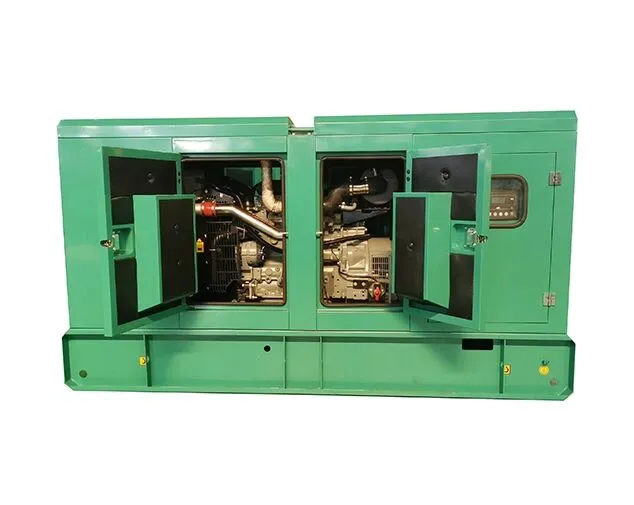
When you start looking at a Deutz generator for a project, the first big question is not the brand itself. It is the size. More exactly, the kVA. Get the kVA wrong and even a good Deutz diesel generator will waste fuel, trip on overload, or run so lightly loaded that the engine never works as it should. Get it right and the generator set feels quiet in the background, doing its job day after day.
This guide takes you through how to pick the right Deutz generator kVA for true projects. Not just book cases. The aim is easy. It helps you choose a Deutz diesel generator that fits your loads. It matches your site. And it suits your work cycle without paying too much or taking dumb risks.
Why Correct kVA Sizing Matters for Any Deutz Generator
Every Deutz diesel generator is designed to work in a certain load window. When the kVA is too small, the engine runs at high load most of the time. You see voltage dips, frequent alarms, hot exhaust, and in the worst case early wear. When the kVA is too large, the unit idles along at low load. Fuel burns, but the engine never reaches proper working temperature and wet stacking or carbon build-up starts to appear.
You also have another problem. Many sites today are not simple resistive loads. You may have motors, pumps, welding machines, compressors, and small electronics on the same Deutz generator. These loads have high starting current and non-linear behavior. Correct kVA sizing is not only about the total kW. It is also about how that kW behaves when you press the start button.
Key Factors That Determine the Right kVA for a Deutz Diesel Generator
Before you jump into numbers, it helps to look at the main factors that control Deutz diesel generator sizing. Once you see how each factor works, the calculation part becomes much easier.
Total Running Load and Starting Load Requirements
Your first step is to list all the loads that will run on the Deutz generator. Lights, air conditioners, pumps, fans, welders, compressors, office equipment. For each item, you need the running power. Many nameplates show kW or W, and sometimes only current and voltage.
Then you look at starting load. Motors and compressors can draw three to seven times their running current at start. One big motor may decide the whole Deutz generator kVA if you start it on its own. For some sites, it is better to stagger starts or use soft starters instead of buying a very large generator set just to cover one hard start.
Power Factor and kW to kVA Conversion
Generators are rated in kVA. Most loads are rated in kW. The link between them is power factor. For many industrial and commercial sites, you can work with a power factor around 0.8 as a simple rule.
If your loads add up to 80 kW at a power factor of 0.8, the apparent power is 80 ÷ 0.8 = 100 kVA. That 100 kVA is the starting point for your Deutz diesel generator sizing. Some sites, such as those with many motors or welding machines, may have lower power factor. In that case the required kVA will rise for the same kW.
Duty Cycle: Standby, Prime, or Continuous Operation
You also need to decide how the Deutz generator will work over time. A standby generator set only runs during grid outages. A prime power generating set runs many hours per day with load swings. A continuous duty generating set may run almost 24/7.
For prime or continuous duty, you normally do not want the Deutz generator working at 100% of rated kVA all day. Many engineers aim for a typical operating range of about 70% to 80% of rated kVA in long-hour jobs. That gives you some room for load steps, hot days, and future growth without stressing the engine.
Site Conditions: Heat, Dust, Altitude, and Fuel Quality
Deutz engines are widely used because they cope well with harsh environments, but physics still counts. High ambient temperature, poor ventilation, and high altitude all reduce the amount of power you can safely pull from any engine. If your site is in a hot or high region, you may need to move up one kVA size to get the same real capacity on the ground.
Dust and dirt also affect cooling. Air-cooled Deutz generators need clean airflow around the package. Water-cooled units need clean radiators and fan paths. Bad fuel quality can cause incomplete combustion, lower effective power, and more stress on the injection system. In that kind of project, a slightly larger kVA gives you a safer buffer.
Maintenance Access and Remote Operation
If your site is in a city with easy access to service teams and parts, you can work closer to the theoretical kVA. If it sits on a remote hilltop, in a quarry, or at a telecom tower hours away, maintenance visits will be less frequent. For those jobs, a more conservative Deutz generator kVA and a stable load profile reduce the risk of surprises between visits.
Step-By-Step Method for Deutz Generator kVA Calculation
Once the key factors are clear, the actual مولد ديزل دويتز sizing process follows a simple sequence. You do not need complex software to get a good first answer.
Step 1 — List All Loads in kW or W
Write down each load, its running kW or W, and whether it is critical or not. Add up the running power. Many people like to separate loads into groups: lighting, HVAC, process equipment, office, and so on.
Step 2 — Identify Starting Loads and Peak Demand
From that list, mark all loads with motors or compressors. For each, apply a reasonable starting multiplier. For example, a pump motor may require four to six times its running power at start. If several motors start together, you may need to consider the sum of their starting kVA.
Step 3 — Apply a Safety Margin
After you have the highest expected kVA during start and the total running kVA, add a safety margin. For many Deutz generator applications, a margin of 20% to 25% is a good starting point, especially for prime and continuous duty. This margin helps when the site is hot, dusty, or when fuel quality is not always perfect.
Step 4 — Convert kW to kVA Based on Power Factor
Make sure all your calculations use kVA, not just kW. If your site has a mixture of resistive and inductive loads, you can work with an overall power factor such as 0.8. Running kVA is total running kW divided by power factor. Do the same with starting kW.
Step 5 — Match the Load With the Correct Deutz Generator Range
Once you have a final kVA figure, you can map it to a Deutz generator range. For small workshops and farms, this may be below 50 kVA. For construction sites and mid-size plants, 60 to 200 kVA Deutz diesel generators are common. For larger industrial plants with continuous duty, you may look at 200 kVA and above. The exact match will depend on the Deutz engine series and the alternator configuration your supplier offers.
Example kVA Selection Scenarios for Deutz Diesel Generators
Real projects often make the theory clearer. Even simple numbers help you picture what a Deutz generator has to handle on site.
Farms and Workshops (20–60 kVA)
A small workshop may have a few motors, a compressor, some lights, and tools. Running power looks modest, but starting current from motors and compressors can be sharp. A Deutz diesel generator in the 20 to 60 kVA range often works well here, as long as you account for the worst-case starting combination and leave a little room for future tools.
Construction Sites (60–150 kVA)
Construction sites often use welders, pumps, mixers, and cranes. Loads move, cables get extended, and users plug in whatever is available. In this case, you should treat starting load seriously. A Deutz generator sized in the 60 to 150 kVA range with good transient performance will usually give you a stable site and fewer complaints from the crew.
Telecom and Remote Stations (15–40 kVA)
Telecom towers and remote monitoring stations run mostly low loads, but they run for long hours. Here, the focus is on fuel use, maintenance intervals, and stable low to medium loading. A small Deutz diesel generator, correctly sized in the 15 to 40 kVA band, can run for years with planned maintenance and steady fuel supply.
Industrial Plants (150–300+ kVA)
Factories and processing plants tend to have heavier motors, compressors, and possibly production lines that must not stop. For these projects, you should treat the Deutz generator as part of the core process. kVA must cover starting current of the biggest drives, plus some headroom for expansion. It is often smarter to choose a slightly larger Deutz generator kVA than to fight overload trips during production.
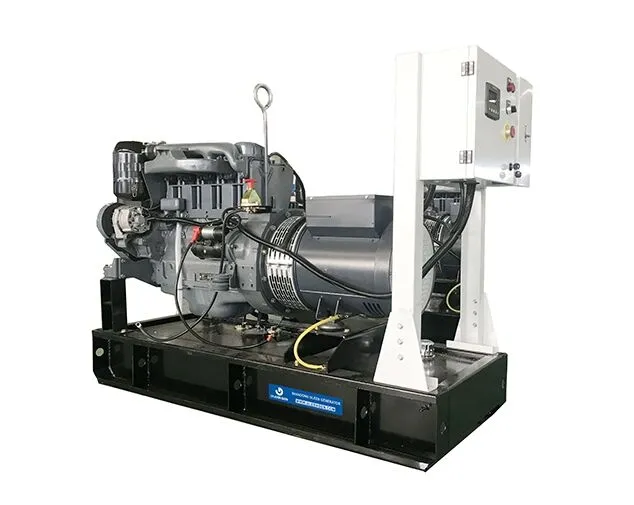
Common Sizing Mistakes When Choosing a Deutz Generator kVA
Many sizing problems repeat from site to site. Knowing them helps you avoid the same pain. Some people treat kW and kVA as the same thing. Others ignore starting current and size only for running load. Some forget to consider high temperature, altitude, or very dirty environments.
Oversizing can look safe, yet a very large generator running at low load wastes fuel and may suffer from wet stacking. Undersizing is even worse, because repeated overload makes the engine run hot and shortens life. Another common mistake is ignoring future growth. If you know more loads are coming, it can be cheaper to allow for them now instead of changing the generator later.
Why Deutz Diesel Generators Benefit From Proper kVA Sizing
Deutz engines have a strong reputation in tough environments, but they still respond best when the kVA matches the job. Proper Deutz diesel generator sizing lets the engine reach and keep a healthy working temperature, burn fuel cleanly, and handle load steps without drama.
When you size a Deutz generator with your site in mind, you avoid both overloads and lazy low-load running. You also give yourself more predictable fuel use and maintenance intervals. In the long run, correct kVA sizing is one of the simplest ways to get the full value from the Deutz name you decided to trust.
Uleengen as Your Deutz Generator Partner
أولينغن is a maker focused on diesel and gas generating sets from around 5 kVA up to 2000 kVA for diesel and up to 2500 kVA for gas. You can pick open-type, silent, container, or trailer units to match unlike jobs. The company builds generating sets to GB/T2820-97 and IEC generator standards and holds CE, ISO9001, and ISO14001 certifications.
For Deutz generator users, Uleengen works with well-known engine and alternator brands. These include Deutz, Cummins, Perkins, Weichai, Yuchai, SDEC, Baudouin, Leroy Somer, Stamford, Mecc Alte, and Marathon. The team backs export jobs in many lands. So you can talk about load shapes, site spots, and fuel grade. And get real kVA sizing tips instead of plain list answers.
FAQ
Q1: How do you start sizing a Deutz generator kVA?
A: Begin with a full list of loads, note both running and starting power, convert total kW to kVA using a realistic power factor, then add a safety margin and match the result to a Deutz generator range.
Q2: Do motors change Deutz diesel generator sizing a lot?
A: Yes. Motors, pumps, and compressors often draw several times their running current at start. If you do not allow for that, the Deutz generator may struggle, so motor loads often drive the final kVA choice.
Q3: Can you run a Deutz generator at full kVA all the time?
A: For short periods it is fine, but for prime or continuous duty it is better to run at around 70% to 80% of rated kVA. That gives you a margin for hot days, load spikes, and longer engine life.
Q4: How do site conditions affect Deutz diesel generator sizing?
A: High temperature, altitude, dust, poor ventilation, and variable fuel quality all work against the engine. In those cases, a slightly higher kVA rating and good installation practices help the Deutz generator stay stable.
Q5: Can Uleengen help pick the right kVA for your project?
A: Yes. Uleengen can review your load list, site data, and duty cycle, then suggest a Deutz diesel generator size and model range that fits your real conditions instead of just the nameplate totals.


