



contact us
-
3-2-1003 Software park, Weifang Hi-tech Zone, Shandong, China
- +8615095247272
- sales@uleengen.com
-


Natural Gas Generator vs Diesel Generator: Total Cost of Ownership Explained
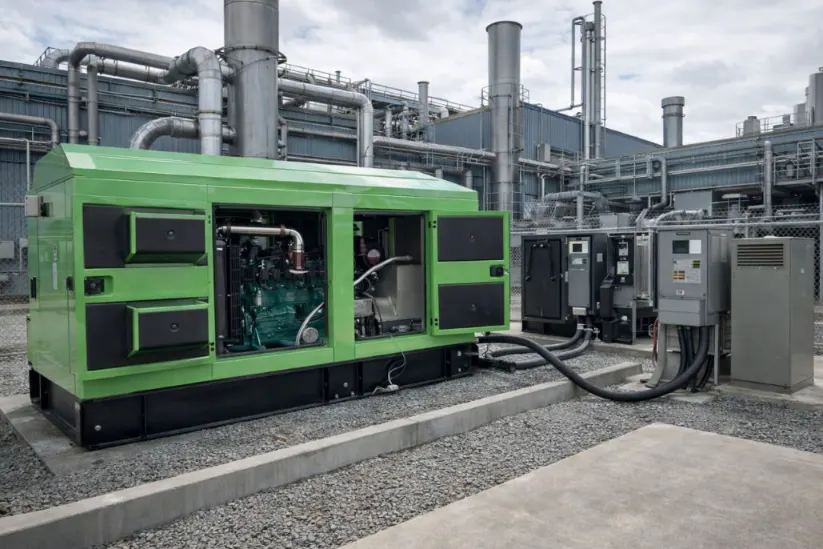
When you compare a natural gas generator to diesel generators, the first number that grabs attention is purchase price. It feels clean and fits a spreadsheet. Then the site starts running, the fuel invoices arrive, and the story changes. Total cost of ownership (TCO) is where most projects win or bleed—especially when the generator runs for long hours, sits in a strict emissions zone, or supports a process line that hates surprises.
This article stays away from brand debates and “best choice” talk. It focuses on what drives cost across years: fuel, service, downtime risk, and compliance. The goal is simple: help you choose the right generator sets based on the costs you actually pay, not the costs you hoped for
What Total Cost of Ownership Means in Generator Projects
TCO is the full price tag of keeping power available for the life of the asset. It includes obvious expenses like fuel and planned service. It also includes ugly costs that show up later, like forced shutdowns, permit upgrades, and waiting for parts at the worst time.
Upfront Cost vs Lifecycle Cost
Upfront cost includes more than the generator sets themselves. It often includes:
- Site prep and foundations
- Exhaust routing and ventilation
- Fuel system work (diesel tank, bund wall, piping; or gas pressure regulation and metering)
- Controls integration (ATS, synchronization, remote monitoring)
- Commissioning and load testing
A diesel genset can look cheaper on day one, especially if the site already stores diesel. A natural gas generator can look cheaper after year one if the site runs many hours and has stable gas supply.
A Practical TCO Checklist
Before debating fuel type, map the real duty cycle. Ask:
- Is this standby power for rare grid outages, or prime power that runs daily?
- What is the yearly runtime: 50 hours, 500 hours, or 5,000+ hours?
- What is the cost of downtime per hour for your operation?
If downtime is expensive, TCO is not optional. It is the whole decision.
Fuel Cost Comparison: Natural Gas vs Diesel
Fuel is the biggest long-term cost driver for many sites. It is also the easiest to misjudge because price, logistics, and quality behave differently for gas and diesel.
Fuel Price Stability and Supply Reality
Diesel prices swing with global supply shocks and local logistics. Remote sites often pay a “delivery tax” that never appears in procurement talk. If fuel trucks get delayed, power risk goes up.
Natural gas pricing is often steadier when tied to pipeline supply or a long-term contract. That does not mean “cheap.” It means “predictable,” and predictability protects budgets.
A quick reality check:
- If the site has reliable pipeline gas, fuel planning becomes simpler.
- If gas arrives as LNG/CNG with complex logistics, the advantage can shrink.
Consumption and Efficiency
Efficiency depends on load, ambient temperature, maintenance discipline, and tuning. Still, two patterns show up often:
- Diesel generators tend to stay strong at high load and handle step loads well.
- Natural gas generator sets can deliver attractive operating cost when gas pricing is favorable, especially in steady-load applications.
If you have a supplier spec that lists gas consumption (for example, ≤0.286 Nm³/kWh for a certain power class), that number is useful for budgeting. Just avoid treating it like a promise for every site. Real-world consumption shifts with load and gas quality.
Fuel Infrastructure Costs
Fuel type also changes what you must build.
| Cost Item | Diesel Generators | Natural Gas Generator Sets |
| Fuel storage | Tank + containment + fire measures | Often none for pipeline gas |
| Fuel delivery | Truck logistics + stock management | Pipeline contract, or LNG/CNG logistics |
| Quality risk | Water, sediment, long storage issues | Gas pressure stability, methane content, contaminants |
| Permits | Varies by region | Often easier in stricter emissions zones |
This is where projects sometimes get it backwards. Diesel looks “simple” until the site realizes it must manage fuel as a daily operation. Gas looks “easy” until the site realizes pressure regulation and gas supply reliability must be treated like core infrastructure.
Maintenance and Service Cost Differences
Maintenance is not just oil changes. It is how often you stop, how long you stop, and how painful each stop becomes.
Service Rhythm and Wear Patterns
Diesel generators are mature and widely serviced. They can run hard for long periods, but fuel quality and filter discipline matter. Neglected fuel systems become downtime machines.
Natural gas generator sets burn cleaner in many conditions, which can reduce some soot-related issues. On the other hand, gas systems introduce parts and checks that diesel teams may not be used to, such as ignition components and gas train inspection.
The practical TCO question is not “which has less maintenance.” It is:
- Can your site team handle the required maintenance without delays?
- Can parts arrive fast enough for your schedule?
Parts, Tools, and Service Support
In many regions, diesel parts and technicians are easier to find. Gas support depends heavily on engine platform and local network. If the site is remote and relies on local workshops, that difference matters more than any brochure claim.
Downtime Risk: The Cost That Breaks Budgets
Fuel and maintenance are predictable. Downtime is not. And downtime costs rarely stay “small.”
A one-hour outage at a warehouse is annoying. A one-hour outage at a process plant can turn into:
- scrapped batches
- restart losses
- safety checks and re-permitting steps
- missed production targets
Prime Power vs Standby Power Changes Everything
If your generator sets run as prime power, the choice is less about emergency response and more about continuous stability. Heat, ventilation, load steps, and control logic become cost drivers.
If your generator sets run as standby power, you care about start reliability, transfer behavior, and whether fuel is usable after months of storage.
A Simple Downtime Cost Example
Imagine a site where downtime costs $2,000 per hour (lost output, labor idle time, restart waste). A single 8-hour outage becomes $16,000, and that number ignores reputation damage and contract pressure. If a slightly higher-capex choice cuts those events in half over the year, TCO shifts fast.
This is why “cheap upfront” can become “expensive forever.”
Environmental and Compliance Costs
Emissions and noise rules are not just paperwork. They can force upgrades, change site approvals, and block projects from running in certain zones.
Emissions and Project Approvals
In regions with tighter emissions rules, natural gas generator sets often face fewer hurdles than diesel generators. That can reduce compliance spending and shorten approval timelines. If your project timeline is tight, that time value is real money.
Noise and Urban Constraints
If the installation is near people—commercial buildings, urban facilities, public infrastructure—noise limits can push you into better enclosures, better exhaust treatment, and better layout. Those costs apply to both fuel types, but gas is often perceived as more “city-friendly,” which can help with approvals.
Choosing the Better TCO Fit for Your Application
A clean way to decide is to match fuel type to operating reality.
When Natural Gas Generator Sets Often Win on TCO
- Stable gas supply is available (pipeline or dependable gas logistics)
- Long runtime per year (prime power, high duty cycle)
- Emissions and permitting pressure is high
- Budget predictability matters as much as raw cost
When Diesel Generators Still Make Sense
- Remote sites with no gas access
- Mobile or temporary projects
- Standby systems with low annual runtime
- Situations where diesel supply is already part of site logistics
One small, human note: projects love simple stories. “Gas is cheaper,” or “diesel is safer.” Real sites are messier. The right answer is usually the one that fits your fuel reality and your downtime tolerance, not the one that sounds good in a meeting.
Conclusion: Choose the Cost You Actually Pay
Natural gas generator sets and diesel generators can both deliver reliable backup power. TCO decides which one makes financial sense over time. Fuel pricing, supply reliability, service capability, downtime exposure, and compliance pressure are the real inputs.
If your site runs many hours and has stable gas, natural gas generator sets can shift cost in your favor. If your site is remote and diesel logistics are already mature, diesel generators can still be the practical solution. The best move is to stop treating the generator as a purchase item and start treating it as an operating system with a long bill attached.
Uleengen: A Practical Partner for Gas and Diesel Generator Projects
Shandong Uleen Generator Co., Ltd. (Uleengen) focuses on generator sets built for real operating conditions, not showroom specs. Since 2011, Uleengen has supplied diesel generators and natural gas generator sets across a wide power range for industrial, commercial, and project-based applications. Support covers multiple engine platforms and control options, including common controller choices such as Smartgen and Deepsea, plus configurations like ATS, auto-start, and synchronization for multi-genset projects. For buyers who care about long-term cost, Uleengen’s value is in system matching: helping you align duty cycle, fuel conditions, site constraints, and control logic so the generator sets behave well under real load. If your project needs predictable backup power cost—not just a low purchase number—Uleengen can support selection, integration, and factory testing to reduce risk before the equipment reaches site.
FAQ
Q1: Is a natural gas generator always cheaper to run than diesel generators?
A: Not always. It depends on gas pricing, supply stability, and runtime. If the generator runs many hours and gas is reliable, operating cost can drop. If gas logistics are complex, the advantage can fade.
Q2: For standby power, does TCO still matter that much?
A: Yes, just in a different way. Standby systems often fail due to fuel aging, poor testing habits, or transfer issues. Low runtime does not mean low risk.
Q3: What usually causes TCO surprises after purchase?
A: Downtime and site constraints. A generator that looks fine on paper can trigger schedule losses when ventilation is weak, load steps are harsh, or parts support is slow.
Q4: Does emissions compliance push projects toward natural gas generator sets?
A: In many regions, yes. Gas often faces fewer emissions hurdles than diesel. That can reduce upgrade spending and shorten approval timelines.
Q5: What should you prepare before asking a supplier for a quote?
A: Load profile, expected yearly runtime, fuel supply details, site temperature/altitude, and how much downtime the operation can tolerate. With that, a supplier can match generator sets to reality instead of guesswork.


