



contact us
-
3-2-1003 Software park, Weifang Hi-tech Zone, Shandong, China
- +8615095247272
- sales@uleengen.com
-


Diesel Generators for Remote Mining Sites: Surviving Dust, Heat, and 24/7 Loads


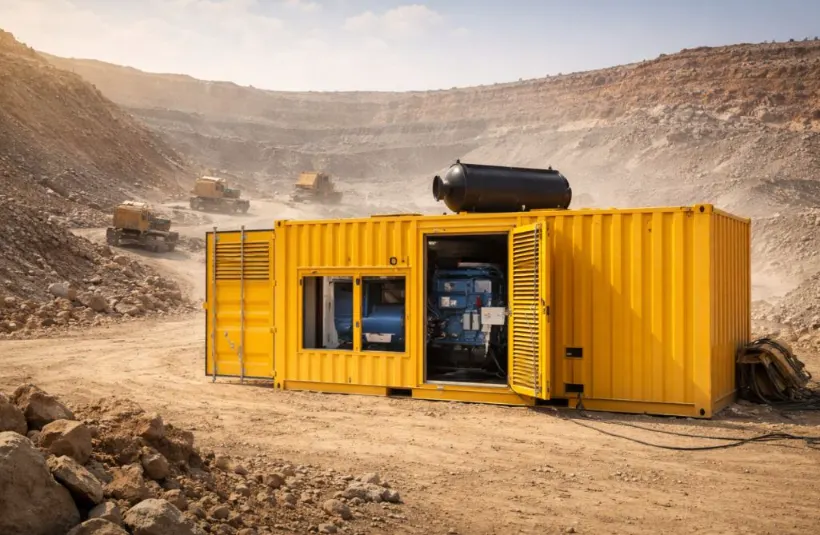
In a remote copper mine in the Andes or a gold excavation site in West Africa, the power grid is usually just a dream. The site runs on diesel. When the power stops, everything stops. Crushers go silent. Conveyor belts halt. Pumps stop clearing water. For a site manager, silence is the most expensive sound in the world.
Mining environments are brutal. They destroy weak equipment. Remote site power solutions must handle three big enemies: fine dust, extreme heat, and constant vibration. Standard backup generators often fail here. They are not built for the job. That is why experienced project managers choose a containerized generator set. It is not just a machine; it is a power station inside a fortress.
The Enemy: Why Standard Generators Fail in Mines
Most commercial generators are built for city basements or clean factory yards. Put them in a mine, and problems start fast.
The Dust Factor: Mining creates huge clouds of fine rock dust. This dust is like sandpaper. If it gets inside the engine, it destroys cylinders and pistons. Standard paper air filters clog up in hours. This chokes the engine. It loses power and smokes.
Thermal Derating: Mines are often in deserts or tropical jungles. Temperatures can hit 45°C or more. A standard radiator is designed for 40°C. When you add dust to the radiator fins, cooling drops. The engine overheats. The safety system shuts it down. This is called “thermal derating,” and it kills productivity.
Physical Abuse: Flying rocks. Heavy rain. Constant movement by cranes and trucks. A standard sheet-metal canopy dents easily. It rusts quickly. Once the enclosure breaks, water gets into the alternator.
The Fortress Solution: Advantages of Containerized Generator Sets
For power needs above 500kVA, a containerized generator set is the industry standard for mining. These units are built inside standard ISO shipping containers (20ft or 40ft).
Structural Integrity: The container is made of heavy corrugated steel. It is certified with a CSC plate. This means it can be stacked and shipped by sea or truck without extra packing. It can take a beating. Stones, hail, and rough transport do not hurt the engine inside.
Walk-in Maintenance: This is a huge advantage. Standard “silent” generators are tight. Mechanics have to stand outside to fix them. Imagine changing an oil filter during a sandstorm or a monsoon rain. It is impossible to keep dirt out. A containerized unit has a “walk-in” design. There is space around the engine. The mechanic steps inside, closes the door, and works in a clean, lit space. This keeps the engine safe during service.
Security: Fuel theft and vandalism are risks in remote areas. A container has heavy steel doors and robust locks. It protects the batteries, fuel lines, and control panel from unauthorized access.
Engineering for the Extremes: Customization Options
Uleengen builds these units to survive. But for a mine, specific upgrades are needed. A diesel generator for mining is not an off-the-shelf product. It needs customization.
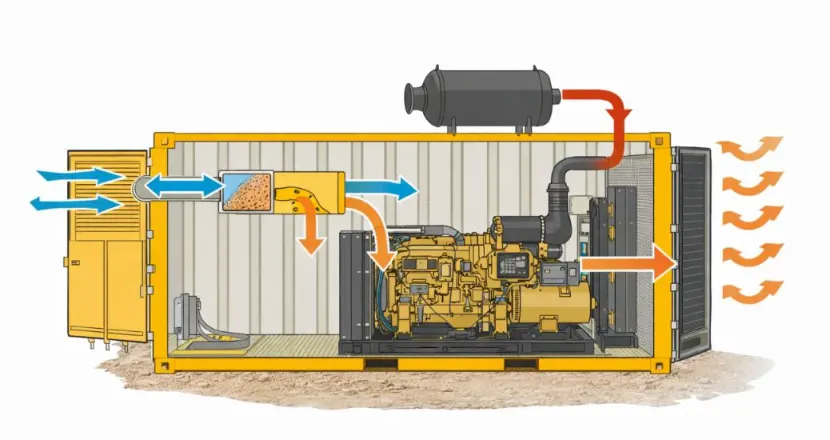
Dust Filtration Systems: Standard filters are not enough. For mining, Uleengen installs heavy-duty, dual-stage air filters. Often, a “cyclonic” pre-filter or sand trap is added. This spins the air to remove heavy dust before it even touches the paper filter. This extends service intervals significantly.
High-Ambient Cooling: To beat the heat, the cooling system is upgraded. A “tropical radiator” is used. It has a larger core and wider fin spacing. It is designed to run at 50°C ambient temperature without overheating. The wider spacing also lets dust pass through instead of clogging the fins.
External Fuel Connections: A mine runs 24/7. You cannot stop to refuel. The internal tank is only for emergencies. The container is fitted with a 3-way valve system and quick-connect points on the outside. This allows the generator to draw fuel directly from a large external bulk tank for weeks of non-stop running.
Engine Choices: Reliability Meets Cost
The heart of the system is the engine. The choice depends on the budget and the location.
Cummins / Perkins: These are the global standard. For large international mining corporations, they are the top choice. Parts are available globally. The resale value is high. They are perfect for projects where prime power generator reliability is the only thing that matters.
Weichai Power: For contractors watching their budget, Weichai is a smart alternative. Modern Weichai engines are built tough. They are simpler than some Western engines. This makes them easier to fix in the field. For mines in Africa or South America, where logistics are hard, a rugged Weichai engine often offers a better return on investment.
Uleengen: Your Power Partner for Remote Projects
Building a containerized generator set requires more than just an engine. It requires fabrication skills. Shandong Uleen Generator Co., Ltd. (Uleengen) is a specialized manufacturer. The company builds the containerized shell, installs the soundproofing, and engineers the airflow.
Uleengen applies high-grade anti-corrosion paint to withstand humidity and chemicals. Before shipping, every unit undergoes a full load bank test. This proves it can handle the load steps of crushers and pumps. Whether the project needs a single 800kW unit or a synchronized 5MW power plant, Uleengen delivers ready-to-run solutions.
Conclusion: Powering the Excavation
In the mining business, there is no grid to save you. The generator is the only lifeline. Do not let dust and heat kill the project. By choosing a robust containerized generator set with proper filtration and cooling, the site stays running.
Reliable power means the gold keeps coming out of the ground. Contact Uleengen to discuss the specific specs for your next remote project.
FAQ
Q1: What is the difference between a silent canopy and a containerized generator?
A: A silent canopy is a thin metal box, good for cities. A containerized generator uses a standard shipping container (ISO). It is much stronger, allows walk-in maintenance, and is easier to ship globally.
Q2: Can Uleengen install a larger fuel tank inside the container?
A: Yes. A daily service tank is usually included. However, for mining, it is best to use the installed 3-way valve to connect to a large external bulk tank for continuous operation.
Q3: How do you handle dust filtration for mining generators?
A: Uleengen uses heavy-duty, dual-stage air filters. For very dusty sites, sand traps or cyclonic pre-filters are added to separate dust before it reaches the engine.
Q4: Is the containerized generator easy to transport?
A: Yes. It has a CSC certificate. It ships exactly like a standard 20ft or 40ft freight container. It can be stacked on ships and locked onto standard container trucks.
Q5: What power range is available in containerized type?
A: Usually, the containerized design starts from 500kVA. It goes up to 2500kVA or more. Smaller units are typically housed in standard silent canopies, but custom small containers are possible.


