



Contacta con nosotros
-
3-2-1003 Parque de software, zona de alta tecnología de Weifang, Shandong, China
- +8615095247272
- sales@uleengen.com
-


Costos ocultos de tiempo de inactividad de la energía marina del generador diésel cuando ocurre un fallo en el mar


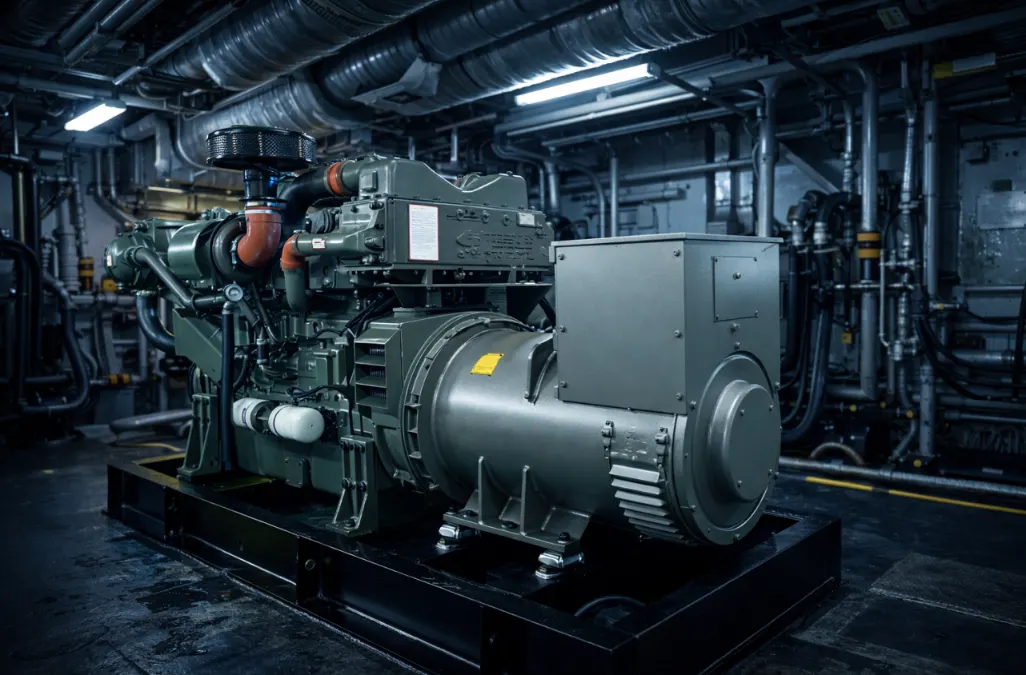
Introducción: Tiempo de inactividad en el mar no es un artículo de línea
Si compras un sistema marino generador diésel de la misma manera que compras un generador terrestre, los números parecen limpios. Precio, consumo de combustible diesel marino, intervalos de servicio, hecho. Entonces ocurre un verdadero apagón en el mar, y la hoja de cálculo deja de ayudar. Los costos ocultos de la energía se muestran rápidamente, porque el tiempo de inactividad en el mar no es “comodidad perdida”. Se pierde el control.
Este artículo se mantiene alejado de consejos de reparación y conversación de marca. Se centra en lo que más importa a los tomadores de decisiones: lo que realmente impulsa el costo del tiempo de inactividad en una empresa. sistema generador diesel marinoPor qué esos costos se ignoran temprano y cómo enmarcar las opciones para que un conjunto de generadores respalde las operaciones en lugar de convertirse en un riesgo que siga gestionando.
Por qué los costos del tiempo de inactividad marino son estructuralmente subestimados
En el papel, el tiempo de inactividad parece un evento de mantenimiento. En la práctica, el tiempo de inactividad es un evento operativo. Esa diferencia es todo el problema.
El tiempo de inactividad en el mar es operativo, no opcional
En tierra, un corte a menudo se convierte en un dolor de cabeza de programación. Llama a un técnico, cambia cargas, espera. En un buque, la energía soporta la navegación, las comunicaciones, las bombas, la refrigeración y los sistemas de seguridad. Incluso cuando la propulsión no es eléctrica, el barco todavía funciona con una potencia estable. Cuando el generador se dispara, la siguiente decisión rara vez es “arreglarlo más tarde”. Es “lo que puede seguir funcionando en este momento”.
Es por eso que el costo del tiempo de inactividad en el mar crece más rápido de lo que la mayoría de los equipos de proyecto esperan. No es solo el recuento de horas. Son las elecciones forzadas que la hora crea.
Por qué los modelos presupuestarios pierden la realidad marina
Muchos presupuestos se construyen alrededor del costo operativo. Combustible, aceite, filtros, servicio planificado. Esos son reales. Pero los proyectos marinos también pagan por cosas que nunca aparecen como un artículo de línea.
Un corte corto puede significar una ventana de marea perdida, un retraso en el amarre, un cambio de ruta, tiempo adicional en el puerto o una tripulación mantenida en espera mientras el horario se desliza. Nada de eso se siente como un “costo generador” durante la adquisición. Se siente como "operaciones" más tarde. Esa separación es exactamente cómo los costos ocultos de energía sobreviven al proceso de aprobación.
Costo de operación versus costo de tiempo de inactividad en sistemas marinos de generadores diésel
Aquí hay una manera directa de pensar en ello. El costo operativo es el costo que espera. El costo del tiempo de inactividad es el costo que no se puede posponer.
El costo que puedes medir frente al costo que no puedes retrasar
El coste operativo del generador es fácil de medir. Puede predecir el consumo de combustible diésel marino en función del ciclo de trabajo. Puedes valorar los consumibles. Puede planificar ventanas de servicio.
El costo del tiempo de inactividad es diferente. Es el valor del tiempo, el valor de la estabilidad y el valor de no forzar decisiones arriesgadas. Cuando la energía se vuelve inestable, el vaso no se "detiene". Se degrada. Las cargas caen. El enfriamiento se apreta. Las alarmas se acumulan. Un pequeño evento eléctrico se convierte en un evento del sistema.
Si alguna vez has entrado en una sala de máquinas después de un viaje, conoces el estado de ánimo. Es caliente, fuerte y un poco tenso. Esta tensión también forma parte del costo del tiempo de inactividad. Se presenta como opciones de operación conservadoras que reducen la eficiencia durante días.
Por qué la opción más barata se convierte en la más cara
El bajo precio de compra del conjunto generador diesel marino puede parecer inteligente cuando solo compara el costo operativo. Pero las condiciones marinas castigan suposiciones débiles.
A paquete marino generador diesel que no coincida ligeramente con el perfil de carga todavía puede ejecutarse. Sólo corre más cerca del borde. Ese borde es donde comienzan los viajes molestos, los problemas de temperatura y la tensión inestable. El resultado no es un gran fracaso. Es un patrón de interrupciones más pequeñas que lentamente reescriben su horario.
En otras palabras, no "pagas" por la elección equivocada una vez. Lo pagas en fragmentos.
Activadores de tiempo de inactividad comunes en aplicaciones de generadores diesel marinos
El tiempo de inactividad rara vez comienza con un defecto dramático. Por lo general comienza con un estrés previsible, pero no tratado como una entrada de diseño.
Tensión de carga continua en condiciones reales del mar
Muchos grupos generadores marinos operan en el modo de alimentación principal, no en el modo de alimentación de espera. Eso importa. La carga continua lo cambia todo: el equilibrio térmico, los patrones de desgaste y la tolerancia del sistema para pequeños problemas.
Los proyectos de tierra a menudo suponen aire fresco generoso, fácil acceso y descarga de carga flexible. Un buque tiene menos espacio, mayor calor ambiental y menos sistemas "agradables de tener". Incluso una sala de máquinas básica de un buque de carga puede sentirse como una caja cerrada cuando el buque está en aguas cálidas y el generador está funcionando duro durante horas.
Si el perfil de carga incluye una demanda constante larga más cambios de paso frecuentes, el conjunto de generadores necesita suficiente reserva para absorber esos cambios sin caer en un funcionamiento inestable.
Refrigeración, ventilación y límites de espacio
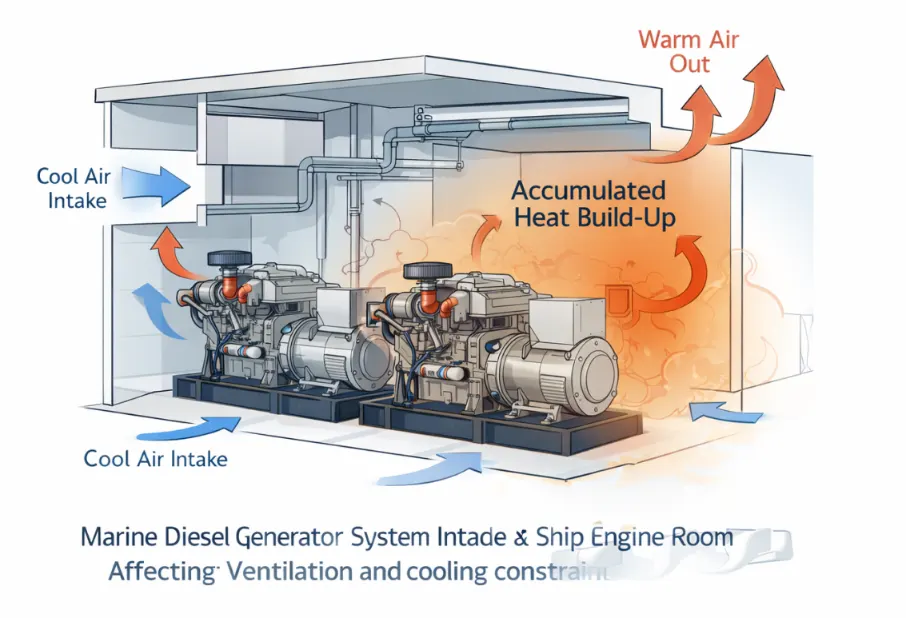
Las instalaciones marinas comprimen muchos equipos en espacios estrechos. Los límites de refrigeración y ventilación no solo reducen la eficiencia. Reducen el margen de error.
Cuando el calor no puede salir del espacio lo suficientemente rápido, todo corre más caliente de lo esperado. Eso incluye controles, cableado y componentes del alternador. El sistema se vuelve sensible. Una restricción menor en el flujo de aire, un intercambiador de calor ligeramente sucio o un ventilador que no está funcionando según las especificaciones pueden convertirse en un evento de avería del motor. No porque el motor es débil, sino porque el sistema generador diésel marino no puede respirar.
Esta es una de las razones por las que la “potencia de placa” no es un ancla seguro para las decisiones de generadores diésel marinos. La potencia real es lo que el sistema puede llevar sin derivar a la tensión térmica.
Variabilidad de calidad del combustible y realidad del almacenamiento
La disponibilidad de combustible no es lo mismo que la utilizabilidad del combustible. La calidad del combustible marítimo varía según el puerto, el proveedor y las condiciones de almacenamiento a bordo. La contaminación, el agua y la inestabilidad durante el almacenamiento prolongado pueden aumentar el riesgo.
Aquí es donde el costo del tiempo de inactividad se arrastra. Los problemas de combustible no siempre detienen el generador de inmediato. A menudo causan arranques duros, combustión inestable o lenta deriva de rendimiento que desencadena alarmas más tarde, en el peor momento.
Si su barco depende de la potencia a bordo durante largos tramos, la logística del combustible se convierte en parte de la fiabilidad, no en una adquisición reflexionada.
Por qué el tiempo de inactividad marino no puede ser "arreglado más tarde"
Las operaciones marinas castigan las decisiones retrasadas. Cuando algo sale mal, el reloj no se detiene, y el océano no le importa.
Sin taller, sin intercambio fácil
En tierra, un conjunto generador problemático puede ser intercambiado, mantenido o reemplazado por una presión operativa menor. En el mar, la capacidad libre es limitada. El acceso es limitado. La ventana de mantenimiento es real, pero pequeña. Y el costo de “esperar hasta el puerto” puede ser mucho más alto que el costo de la pieza.
Así que la verdadera pregunta es: ¿con qué frecuencia el sistema te obliga a entrar en esa esquina?
Cascadas de tiempo de inactividad más rápidas que fallas en tierra
Los sistemas de energía marina están estrechamente acoplados. Cuando una sección se vuelve inestable, otras secciones se ven afectadas rápidamente. La prioridad de carga se convierte en una herramienta de emergencia, no en una herramienta de planificación.
Es por eso que la falla interna del motor es solo parte de la historia. El mayor riesgo es la inestabilidad en cascada a través de cargas eléctricas que nunca estaban destinadas a ver apagones o transferencias frecuentes. El impacto se extiende, y se extiende rápidamente.
Cómo las decisiones marinas del generador diesel deben ser enmarcadas en su lugar
Si el objetivo es menos sorpresas operacionales, el marco de decisión tiene que cambiar. No un poco. Muchas.
Empieza con la tolerancia al fallo, no con el precio de compra
Una pregunta útil no es “cuál es el costo por kW”. Es “qué tipo de tiempo de inactividad puede tolerar este buque”.
Si la respuesta es “casi ninguno”, entonces el sistema necesita reserva, gestión de carga limpia y diseño térmico realista. Si la respuesta es “algún tiempo de inactividad es aceptable”, el sistema todavía puede necesitar reserva, solo menos. De cualquier manera, la tolerancia a la falla impulsa la lógica del diseño. El precio sigue.
Piensa en sistemas, no en máquinas individuales
Generador diesel marino es un componente. El sistema es el activo.
La fiabilidad a nivel de sistema proviene de cómo el conjunto generador interactúa con las cargas, la refrigeración, la ventilación, los controles y el suministro de combustible. También proviene de cómo el trabajo de potencia principal difiere del trabajo de potencia de espera, y cómo se espera que el conjunto de generadores responda durante cargas de paso y carreras largas.
Por eso es bueno Uleengen Los equipos pasan más tiempo en prioridades de carga y escenarios operativos que en folletos brillantes.
Conclusión: El costo real de la energía en el mar se ha perdido el control
Los costos ocultos de la energía en los proyectos marinos no se esconden porque son raros. Se esconden porque viven fuera del presupuesto del generador. Se presentan como retrasos, opciones limitadas, exposición al riesgo y estrés operacional.
Cuando se selecciona e integra un sistema marino generador diésel alrededor del ciclo de trabajo real y los límites de instalación reales, los tiempos de inactividad se vuelven menos frecuentes y menos graves. Cuando se selecciona como equipo terrestre, el tiempo de inactividad se convierte en un impuesto repetitivo.
El objetivo es simple: mantener el control. La energía estable mantiene los horarios estables. Mantiene a la tripulación tranquila. Evita que los pequeños problemas se conviertan en grandes. Ese es el único “ahorro de costes” que importa en el mar.
Uleengen: un socio práctico para grupos generadores marinos
Shandong Uleen Generator Co., Ltd. (Uleengen) construye conjuntos generadores inteligentes para clientes que se preocupan por el tiempo de actividad, no por los esloganes. Desde 2011, Uleengen se ha centrado en generadores diésel y grupos generadores en una amplia gama de potencia, y soporta múltiples plataformas de motores, incluyendo Yuchai, Cummins, Perkins, Deutz, Weichai y más. La cobertura del producto incluye opciones de generadores marinos, opciones de generadores de gas y soluciones de control como paneles de arranque automático, paneles de sincronización y configuraciones ATS, con opciones comunes de controladores como Deepsea, Smartgen, ComAp y Deif. Uleengen también destaca los estándares de fabricación y los sistemas de calidad, incluyendo las certificaciones de gestión ISO y los estándares de generadores ampliamente utilizados, además de las certificaciones del mercado internacional utilizadas en proyectos de exportación. Si su proyecto marino necesita un conjunto de generadores que coincida con ciclos de trabajo reales, límites de instalación reales y expectativas de servicio reales, Uleengen se posiciona como un socio de energía que habla en términos de ingeniería y entrega en términos de proyecto.
Preguntas frecuentes
Q1: ¿Por qué el tiempo de inactividad en el mar se siente mucho más caro que el tiempo de inactividad en tierra?
R: Porque el tiempo de inactividad en el mar obliga a elegir operaciones de inmediato. No solo está perdiendo energía, está perdiendo opciones, y eso puede convertirse en pérdida de programación rápidamente.
Q2: ¿Importa el consumo de combustible diésel marino si el tiempo de inactividad es el costo principal?
R: Es importante, pero rara vez es la mayor sorpresa. El combustible es predecible. El costo del tiempo de inactividad no lo es, y tiende a golpear cuando el buque tiene la menor flexibilidad.
Q3: ¿Cuál es la causa "silenciosa" más común de tiempo de inactividad del generador marino?
R: Límites de flujo de calor y aire. Los límites de enfriamiento y ventilación disminuyen su margen, y se acumula una pequeña tensión hasta que el generador comienza a tropezar o a derivar.
Q4: La potencia principal vs la potencia de espera suena como papeleo. ¿Por qué debería importarte?
R: Porque cambia lo que el sistema está construido para hacer. Un generador que vive en servicio de potencia principal necesita diferentes reservas y expectativas diferentes que el servicio de potencia de espera.
P5: ¿Si tiene redundancia, eso resuelve el problema del tiempo de inactividad?
R: Ayuda, pero no es un escudo mágico. La redundancia funciona cuando la prioridad de carga, el comportamiento de transferencia y el diseño térmico se manejan bien. De lo contrario, todavía puede tener inestabilidad en cascada.


